Yoga and the Power of the Moon/Yielding
/
Launch of Artemis II on April 1. Experience a front row seat by watching my videos of the Artemis II launch on my Bluesky page.
……………………
On April 1, I got to witness the launch of Artemis II. It was a moment I will never forget. In my mind, this represents the pinnacle of human achievement. I was 10 years old back in 1969, and I can still remember seeing the seeing the images on our black and white TV of Neil Armstrong landing on the moon in July of that year. Seeing Artemis II’s launch this month was a wonderful bookend to my childhood memories from 57 years ago.
So, it feels appropriate this month for me to reflect on the aspect of yoga that is associated with the moon aspect of our being. It’s called yin yoga and it is a practice that is very near and dear to me. Many years ago, I suffered from some very debilitating injuries when I was dancing. Almost miraculously, around 1991, I happened to stumble upon a book that described practices that I later came to realize was yin yoga. I practiced the exercises over the course of around six months or so. And the result was that I experienced profound healing – both physically and psychically.
Whereas the yang – more active and forced – hatha style of yoga reflects the “sun” aspect of our being, yin yoga reflects the “moon” aspect. Yin yoga practice focuses on being more receptive and yielding. It is a calming, cooling and quiet practice. Rather than expanding outward like the sun, in yin yoga we move inward like the moon which is tethered to the earth and the sun. As such, we kind of just go along for the ride. It is more passive, more feminine, intuitive, and even dark and mysterious.
According to Chinese philosophy, we cannot exist without both yin and yang. Each balances the other. And within each are held seeds of the other. We experience the cycle of yin and yang daily as darkness awakens to light at sunrise, which then later recedes back into darkness at moonrise. Without the sun, the moon couldn’t shine at night and thus keep the sky illuminated during our dark, reflective hours. And without the moon, the sun’s energy might overwhelm us; thus the moon acts as a receptacle for that energy and cools it down to something that can be useful to us.
In yin yoga practice, one holds the poses for at least 30 seconds. At around that point the body relaxes naturally as it instinctively knows you’re not going to harm it. Depending on the pose, they can be held up to 5 minutes. Rather than energetically working the muscles to build heat, one relaxes and surrenders into each pose so that the connective tissues – the ligaments, tendons and fascia – can stretch and open up. These require a slower approach or else they might tear.
Back in the early 90s, my body had become beaten up from many years of dancing and doing gymnastics. I remember at one point pulling a hamstring and being in so much discomfort that walking up stairs was painful. Surely, I had come to a fork in the road in my career and had to figure out different strategies for working with my body. So, I remember embarking on a long slow road to recovery by pulling way back in my effort. I decided that instead of doing 100% of my effort to try holding back and doing 50% or less. “No pain, no gain” was out. I said “yes” to ease, less, and lightness. After six months or so, I not only experienced no pain when walking up stairs, but also my range of motion increased to the point where I could kick higher than before and do the center splits. In fact, my karate sensei (teacher) back in 1992 liked what he saw and in one of our demonstrations had me land in the center splits with a loud “ki-ai”. Before my experiments with yin yoga, I am fairly sure I would not have been able to do that.
I think the aspect of yin yoga that is so profound and potentially life-altering is the practice of yielding. Essentially, you’re not forcing things to happen but rather yielding to the circumstances in each pose. For example, if you’re practicing a forward-bend, you just let gravity drop you forward, lower and lower. You don’t force your head to drop down to touch your knees. It’s a drip-by-drip approach, one that if you were to practice for a long time, one day your head would have no choice but to touch your knees as you relax down and forward.
And there’s the rub. I think the practice of yielding in whatever circumstances life should surprise us with can have profound effects. The Chinese philosopher, Lao Tzu wrote in the Tao Te Ching Chapter 76, summarized as: “Rigid behaviour will kill you.”:
When alive, the body is supple, yielding.
In death, the body becomes hard, unyielding.
Living plants are flexible,
In death, they become dry and brittle.
Therefore, stubborn people are disciples of death, but
Flexible people are disciples of life.
In the same way,
Inflexible soldiers cannot win (a victory).
And the hardest trees are readiest for an axe to chop them down
Tough guys sink to the bottom, while
Flexible people rise to the top.
And elsewhere, Lao Tzu also wrote:
“Water is fluid, soft, and yielding, but water will wear away rock which is rigid and cannot yield. As a rule, whatever is fluid, soft, and yielding will overcome whatever is rigid and hard. This is another paradox. What is soft is strong.”
I think the lesson for all of us is that while at times in life we may be inclined to bull-doze our way to creating some particular outcome, we’d be better off in the long run by trying a softer, more yielding approach. As an example, I can think of numerous examples of cruelty happening in the world right now. For me personally, I just try to chip away at that evil by executing as many quiet acts of kindness as I can. My small acts may not be flashy, but I do have faith that my subtle acts will ultimately have powerful effects. Such opportunities to quietly right the wrongs we see are available to us all the time.
Another Chinese philosopher, Liezi, wrote:
“Develop flexibility and you will be firm; cultivate yielding and you will be strong."
Perhaps one way to interpret this is that by using our “sun” energy to heat the body in a hatha style yoga practice, our muscles will become both flexible and firm. But by practicing yielding in a yin yoga style of practice, we will awaken the connective tissues of our body to the point that the traumas – both physical and psychic – can be released. Whatever we can let go can only help make us stronger.
Don’t underestimate the power of your feminine side, your moon side. Yielding to it might just be what you need to heal and get you further ahead than you could have imagined. Just ask the Artemis II astronauts. After all, it’s the moon energy that brought them back home safely to us.
May you be happy, …
May you be healthy, …
May you practice “yielding”, …
And may the positive outcomes that result from your yielding benefit folks closest to you and from there spread out to All Beings Everywhere.
Aloha and Metta,
Paul Keoni Chun
……………………
Images from this past month that reminded me of the power of yielding.
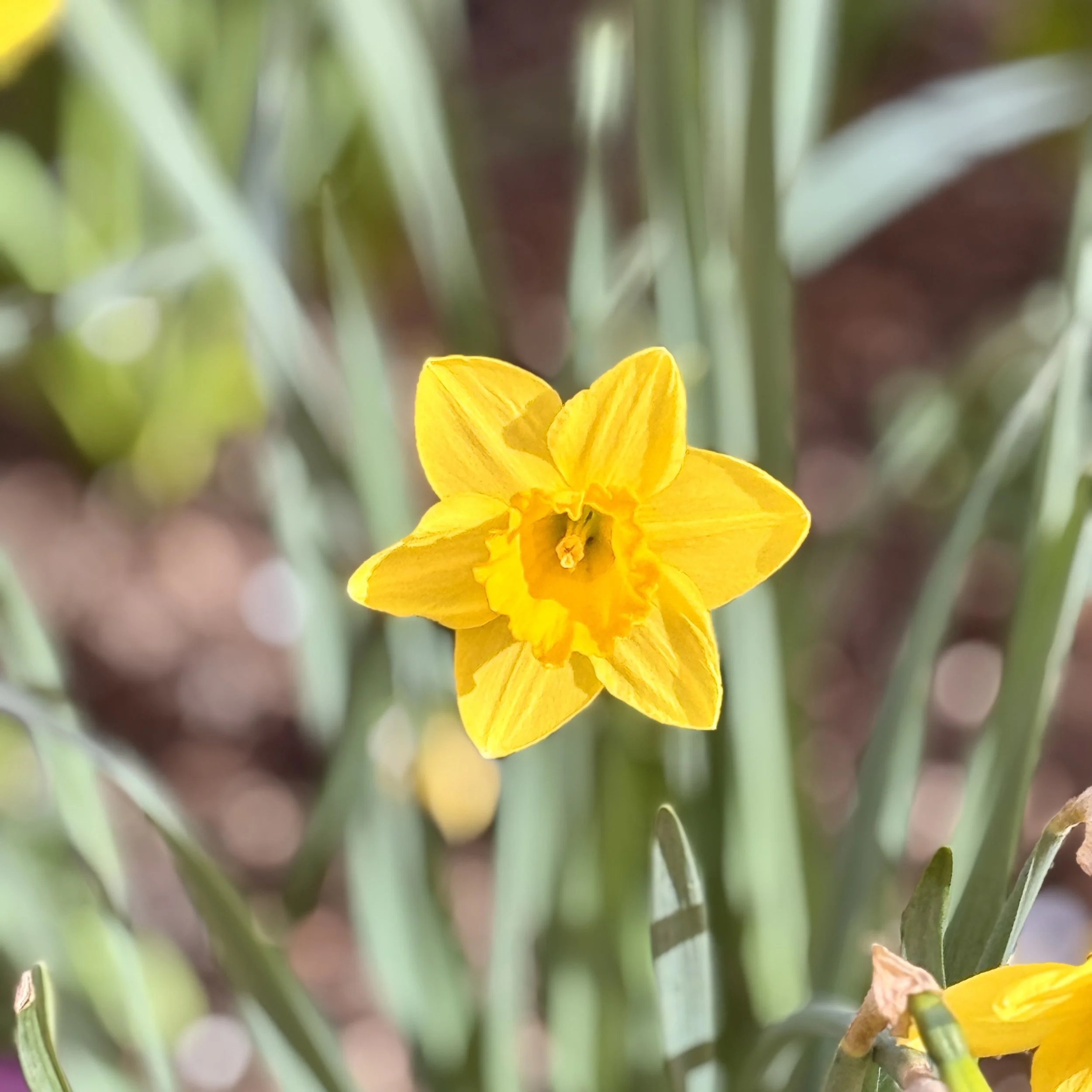
As the arrival of spring deepens, plants like this Narcissus are yielding to the power of the sun's energy while staying firmly rooted to earth's receptive energy.
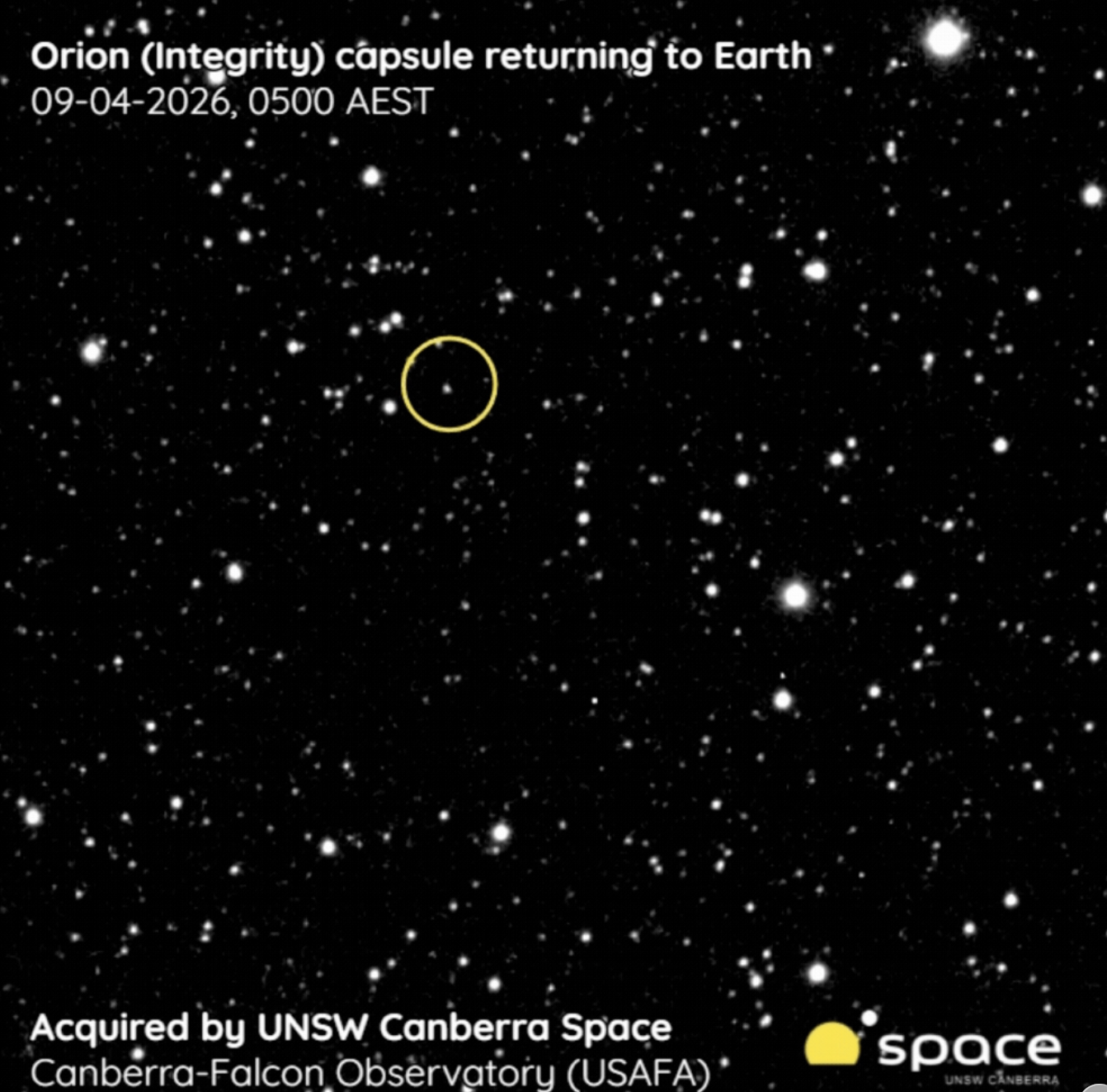
My brother, Dr. Francis K. Chun, is a Professor of Physics at the U.S. Air Force Academy and is the principal investigator for the Academy's world-wide Falcon Telescope Network and its new 1-meter telescope. After the conclusion of the Artemis II mission, he shared images shot from one of the telescopes he oversees of the Orion capsule Integrity (inside yellow circle) as it returns to Earth. Looking at this image reminds that much of space is dark, mysterious and yielding.
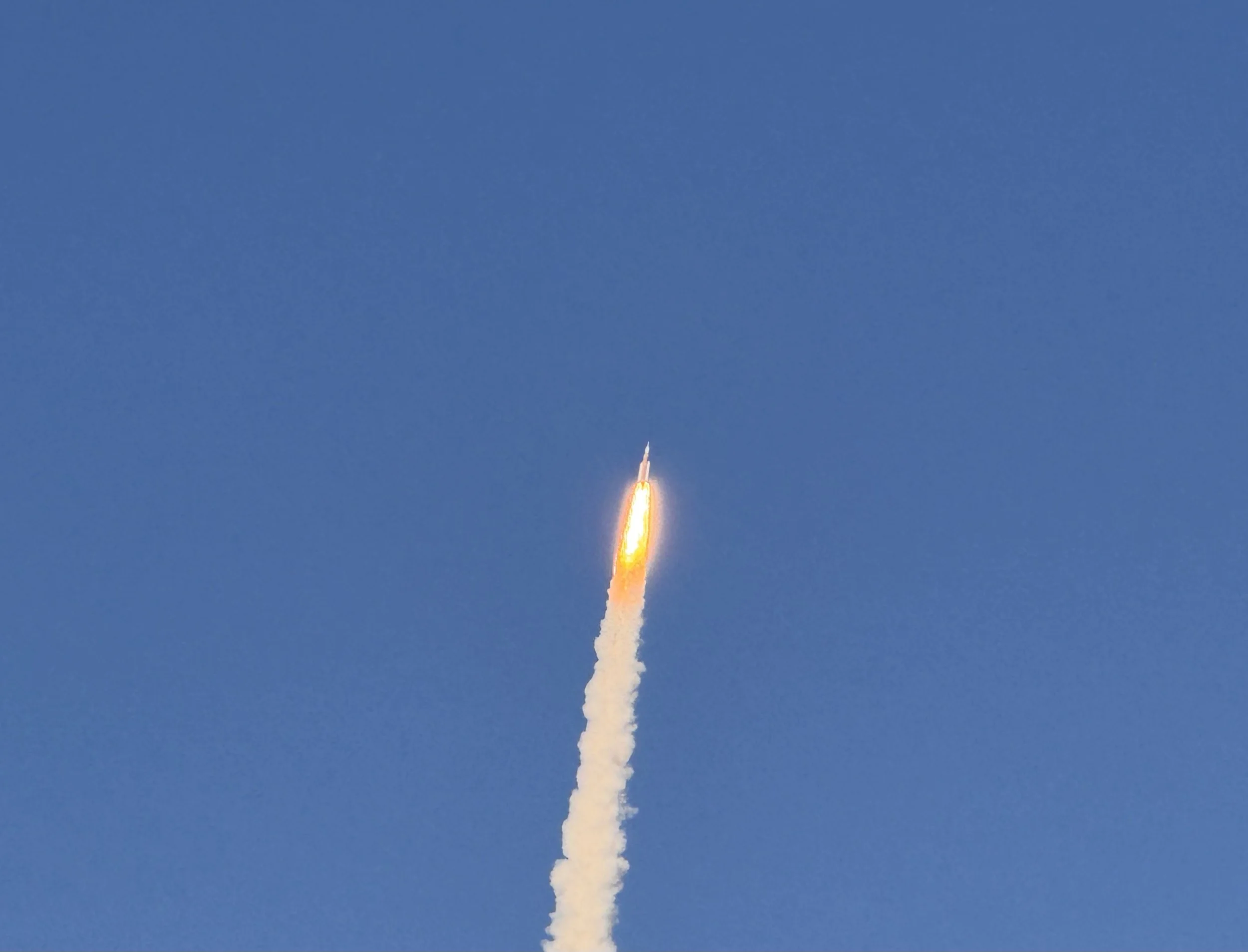
I captured this image just around 50 seconds after lift-off. All I can think is that the astronauts inside at this point are simply yielding to the powers thrusting them into the deep unknown.
Capturing tonight's (April 30, 2026) full moon, was the perfect bookend to my month. I yielded to the circumstances and this is the result. Amazing.
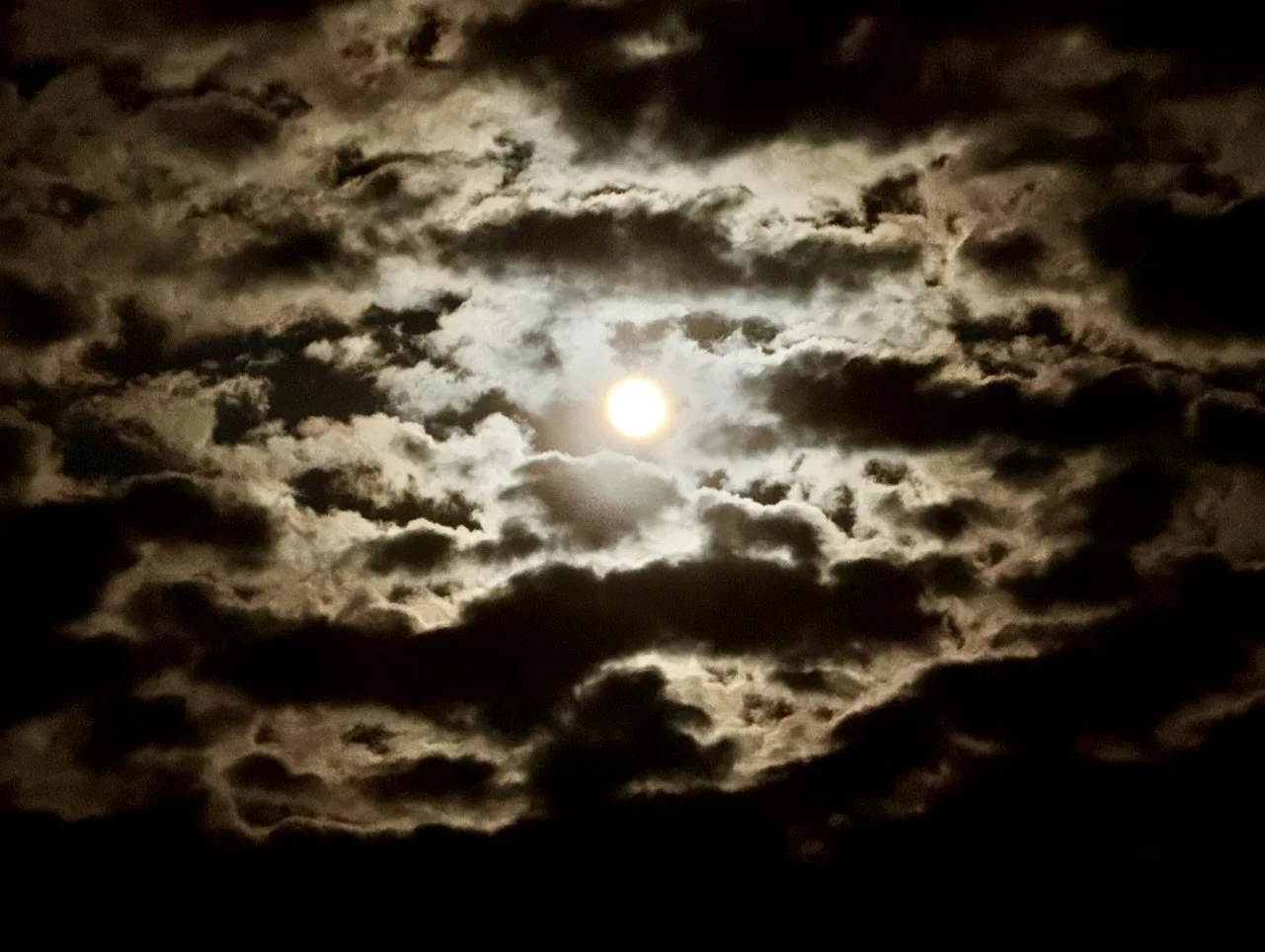
Photo Credits:
Photos of the Artemis II launch, the Narcissus flower, and the moon on April 30th shot by me.
Photo of Integrity by Tarik Errabih, UNSW Canberra Space.