
Yoga and the Art of Neighboring
/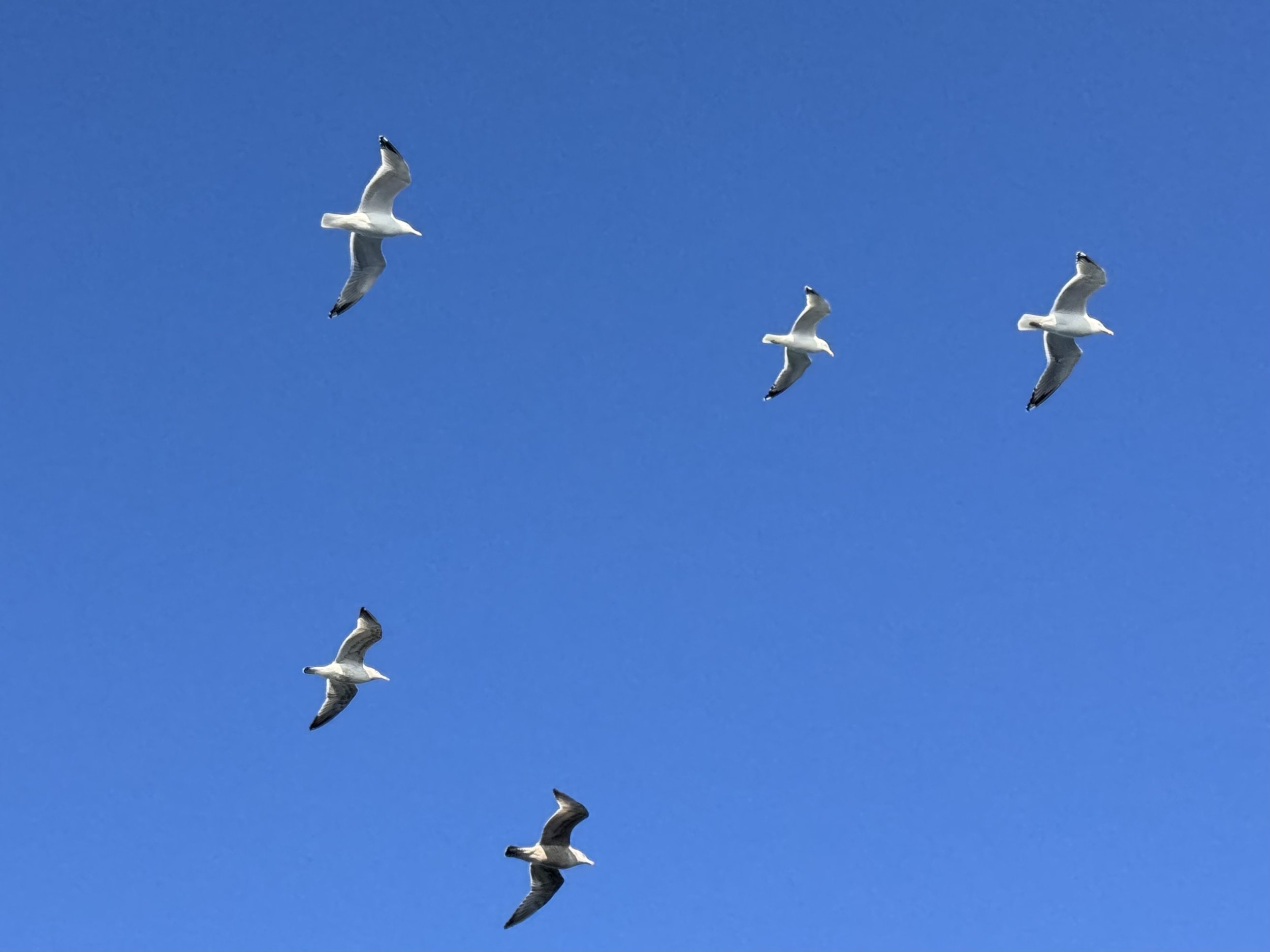
While riding on the Lewes to Cape May Ferry last week, my husband and I saw these birds flying together overhead. I immediately thought -- they clearly understand that their strength comes in numbers and in looking out for one another.
……………………
This is a sacred week for Christians, as we commemorate and celebrate the resurrection of Jesus Christ. When Jesus of Nazareth was asked, “what is the most important thing?”, he said: “Thou shalt love the Lord thy God with all thy heart, all thy soul, all thy mind and all thy strength. Love thy neighbor as thy self.” Jesus was reminding us that we are all interconnected and we strengthen that interconnection through the art of “neighboring” – looking out for one another.
The NY Times Opinion writer, Thomas Friedman, wrote a beautiful essay this month called Why Minnesota Matters More Than Iran for America’s Future in which he amplified how “neighboring” became a thing during the recent ICE raids in Minnesota. It is a long but worthwhile read. As someone who practices yoga and meditation, a few parts of his essay felt relevant to these contemplative practices. Here are several passages from Thomas’ essay (which I’ve edited for clarity) which anyone who practices yoga can relate to:
… [Recently,] I spent time in my native state, Minnesota, [and saw something] I’d never seen in [my] nearly 50 years [of being a journalist]: a spontaneous uprising of civic activism propelled by a single idea — I am my neighbor’s keeper, whoever he or she is and however he or she got here.
It was one of the most courageous battles ever fought by American men and women not in uniform. It was led by moms ready to donate their breast milk to strangers and dads ready to drive someone else’s kids to school because the parents, terrified of ICE agents, were too afraid to go out outdoors. It was neighbors ready to hit A.T.M.s to help out neighborhood restaurants and businesses deciding not to open — thus forgoing their income — for fear that masked ICE agents might drag away their cooks or dishwashers or desk clerks.
And the best part was this: At a time when we have a president so shameless that he insists on putting his name on every public building he can, these good Samaritans of all colors and creeds acted without fanfare. “There were hundreds of leaders of this movement,” Bill George, a longtime Twin Cities business executive, said to me, “and I don’t know a single one of their names.”
As yogis and meditators, I think the practice of “neighboring” is a real-life example of what the practices themselves are trying to lead us to realize – that we are all connected.
The Buddhist and Hindu story of Indra’s Net suggests that each one of us are a jewel in the infinite net of reality, and therefore in some way connected to each other. Each of us are a reflection of everyone else, and we can see a part of ourselves when we look at others. According to this article on Indra’s Net by Sand, “When any jewel in the net is touched, all other jewels in the node are affected. This speaks to the hidden interconnectedness and interdependency of everything and everyone in the universe ….”
In other words, if you really want to know and experience the Infinite, try finding it by looking at your reflection in other people. And if you really want your reflection to shine bright, keep your own jewel shining bright by doing good deeds for those around you at your part of the net so that others nearest to you can have their jewel remain shining bright as well. Understanding that we are all connected is a pathway to realizing the Infinite.
And less we become discouraged and believe we are powerless to the evil forces taking hold in our country, Thomas later writes to remind us:
… [this] private ICE army — “governed by strength” and “force” — was sent packing by a bunch of moms and dads armed only with cellphone cameras and whistles, ready to walk out on a freezing morning in bathrobes and bunny slippers, to defend their neighbors, some of whom they barely knew.
We don’t have to do great and heroic things as individuals. We just have to “do small things with great love” – as Mother Teresa said – in conjunction with our neighbors. And when enough unknown, non-famous, non-headline-grabbing people consolidate their individual powers through their small quiet collective actions, something huge can result. As Thomas points out in the essay, “Neighboring” won this battle over an army that believed it could govern by strength and force.
Thomas shares many remarkable stories (all worth a read) about individual acts of humanity, individual acts of refusing to see those who are different than we are as “other.” And in so shining their individual jewels further through these small acts of kindness, together each of these individuals illuminated a collective light that was bright enough to push darkness away.
Thomas continues:
Minneapolis, St. Paul and even lots of small rural towns look more like the world today than ever before. And the world looks more like Minnesota today than ever before. And so the great governing challenge in Minnesota, to my mind, is a microcosm of the great governing challenge facing America today: Can we make “out of many, one” — our great national project since our founding — when the “many” is now so much more diverse, even more than it was just 10 years ago.
If Minnesota can model that, maybe America can model it, too. And if America can model that, it could become our greatest political export to the world in the 21st century — as much as democracy was 250 years ago.
Why? Because today, as my friend Dov Seidman, an author and expert on leadership, likes to say: “Interdependence is no longer our choice. It is our condition.”
All the big existential challenges humanity faces today are planetary in scale — how to manage A.I., climate change, nuclear proliferation, pandemics and global migrations with so many people on the move. All of these challenges require planetary-scale collaboration. Either we figure that out soon — or we’re heading for a really bad century together.
As our yoga practices deepen, we move incrementally closer and closer with each practice towards realizing “out of the many, one.” Yoga is nudging us toward experiencing, even if for just a brief moment, the non-dual nature of reality.
And as yoga continues to proliferate and spread into more underserved communities, the community itself is becoming more and more diverse. Yoga has made great progress towards being “for everybody and for every body.”
And to Dov Seidman’s point, as yogis we are naturally inclined toward the realization that, indeed, interdependence is our collective condition. With each practice, we gain the insights that lead us to experiencing that awareness more and more.
I’d like to leave you with a wonderful story called “Night and Day” that I received from the School of Practical Philosophy:
The master asked his disciples: "How do we know when the night is over and the day has arrived?" The disciples pondered the master's question.
One answered: "Master, night is over and day arrives when you can see a house in the distance and determine if that's your house or the house of your neighbor."
Another disciple responded: "Night is over and day arrives when you can see an animal in the field and determine if it belongs to you or to your neighbor."
A third disciple offered: "Night is over and day has arrived when you can see a flower in the garden and distinguish its color."
"No, no, no," thundered the master. "Why must you see only in separations, only in distinctions, only in disjunctions? No. Night is over and day arrives when you look into the face of the person beside you and you can see that she is your sister, he is your brother. That you belong to each other. That you are one. Then, and only then, will you know that night has ended and day has arrived."
Unknown Author
To me, Yoga and the Art of Neighboring is a natural off-the-yoga-mat next step to our on-the-mat practice. Each breath we take in each asana we execute helps to clear our vision enough to the point where see less and less separation between ourselves and others. And off-the-yoga-mat and out-in-the-world, we become more and more inclined to look out for our neighbors, to help them when they need help, and in so doing, keeping our own jewel shining. That bright light emanating from our very own soul will illuminate the safety net that is always there around us, for us, and for each other.
May you be happy, …
May you be healthy, …
May you practice “neighboring” more and more, …
And may whatever positive outcomes that result from your neighboring, may they benefit folks closest to you and from there spread out to All Beings Everywhere.
Aloha and Metta,
Paul Keoni Chun
……………………
Images from this past month that reminded me of the art of neighboring
We visited the Zoo Tampa this month and were delighted to see this shy porcupine up close. The zoo staff really do look out for every creature under their care.

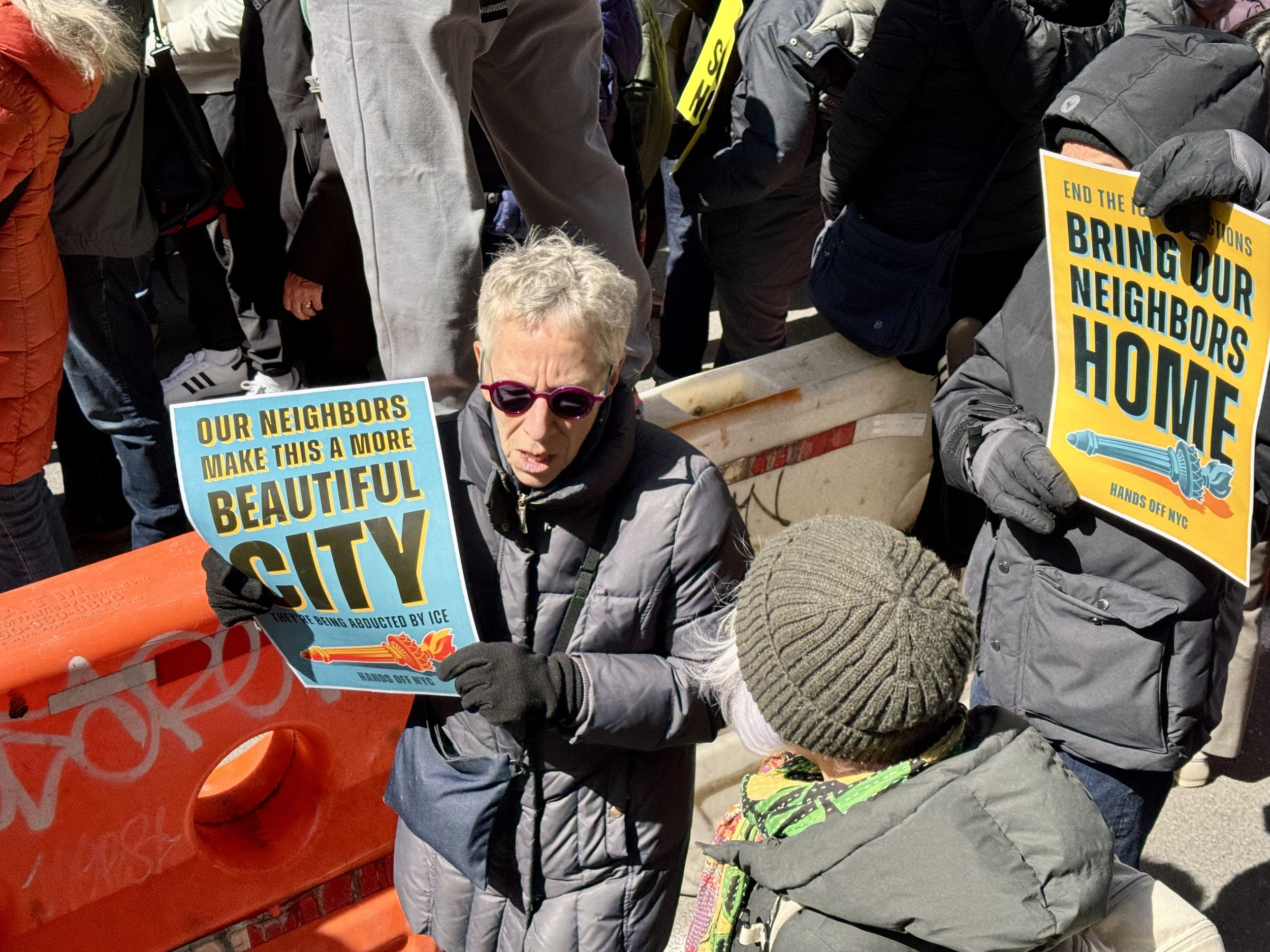
At the No Kings Rally in Manhattan on March 28, folks banded together to support their neighbors.
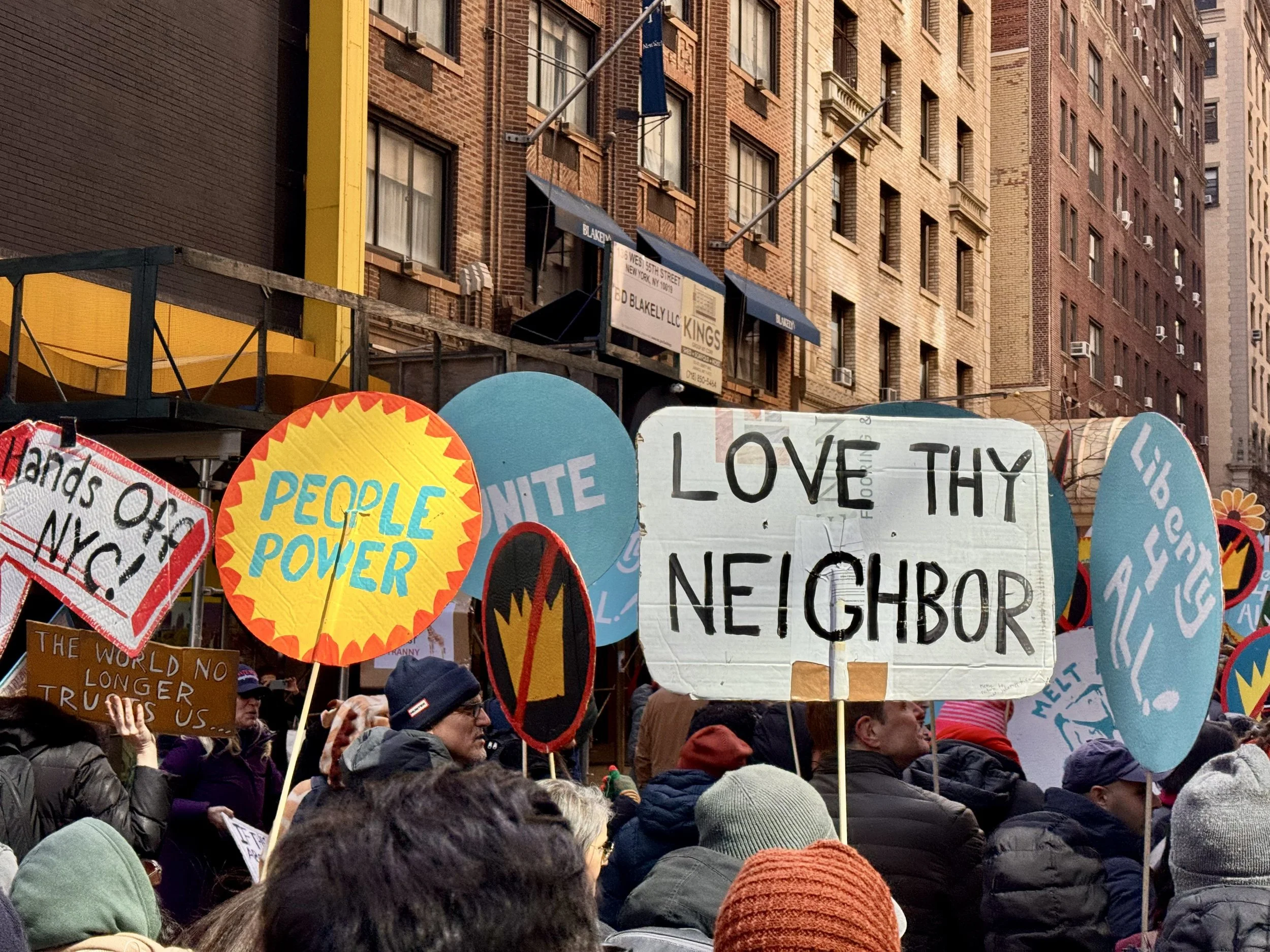
At the No Kings Rally, these folks were truly practicing yoga-off-the-mat. Surely, they see themselves in others and others in themselves.
Parakeets enjoying the morning sun at The Celery Fields in Sarasota, Florida. They probably have a greater chance of survival when they stick together.
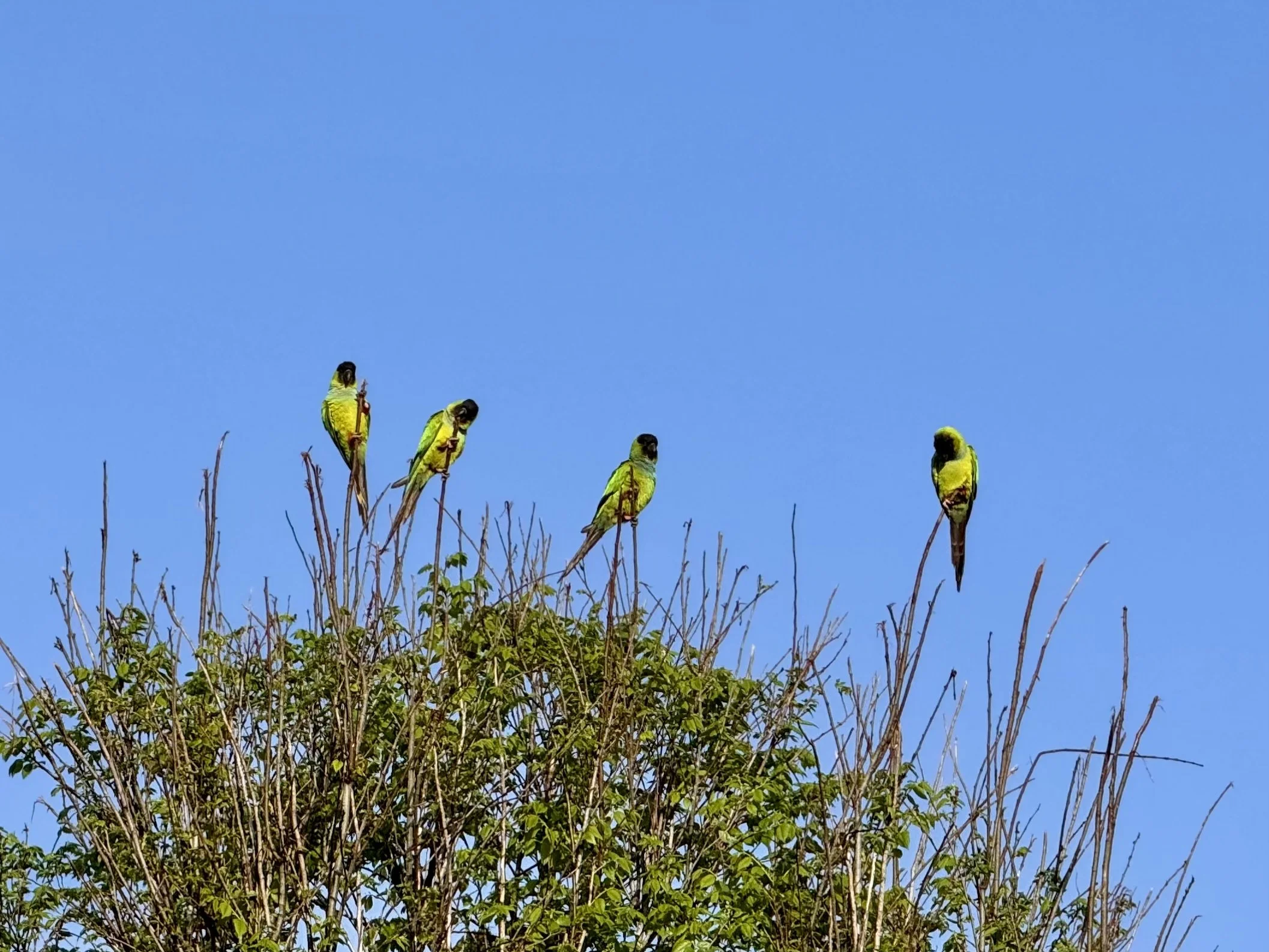
Photo Credits:
Photos from around Delaware, New Jersey, Florida and New York all shot by me.