Yoga and the Power of the Moon/Yielding

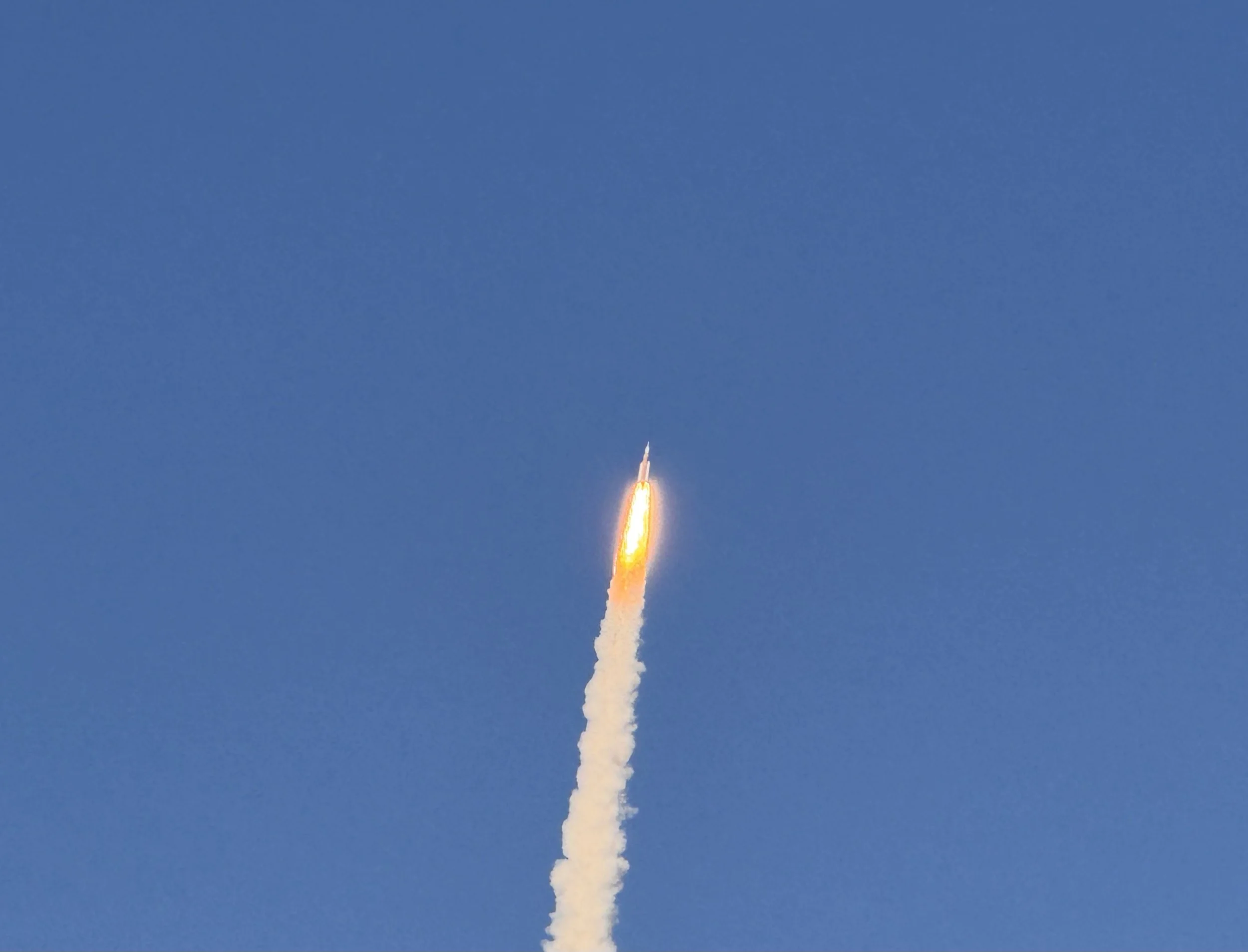
Launch of Artemis II on April 1. Experience a front row seat by watching my videos of the Artemis II launch on my Bluesky page.

……………………

On April 1, I got to witness the launch of Artemis II. It was a moment I will never forget. In my mind, this represents the pinnacle of human achievement. I was 10 years old back in 1969, and I can still remember seeing the seeing the images on our black and white TV of Neil Armstrong landing on the moon in July of that year. Seeing Artemis II’s launch this month was a wonderful bookend to my childhood memories from 57 years ago. 
 
So, it feels appropriate this month for me to reflect on the aspect of yoga that is associated with the moon aspect of our being. It’s called yin yoga and it is a practice that is very near and dear to me. Many years ago, I suffered from some very debilitating injuries when I was dancing. Almost miraculously, around 1991, I happened to stumble upon a book that described practices that I later came to realize was yin yoga. I practiced the exercises over the course of around six months or so. And the result was that I experienced profound healing – both physically and psychically.
 
Whereas the yang – more active and forced – hatha style of yoga reflects the “sun” aspect of our being, yin yoga reflects the “moon” aspect. Yin yoga practice focuses on being more receptive and yielding. It is a calming, cooling and quiet practice. Rather than expanding outward like the sun, in yin yoga we move inward like the moon which is tethered to the earth and the sun. As such, we kind of just go along for the ride. It is more passive, more feminine, intuitive, and even dark and mysterious.
 
According to Chinese philosophy, we cannot exist without both yin and yang. Each balances the other. And within each are held seeds of the other. We experience the cycle of yin and yang daily as darkness awakens to light at sunrise, which then later recedes back into darkness at moonrise. Without the sun, the moon couldn’t shine at night and thus keep the sky illuminated during our dark, reflective hours. And without the moon, the sun’s energy might overwhelm us; thus the moon acts as a receptacle for that energy and cools it down to something that can be useful to us.
 
In yin yoga practice, one holds the poses for at least 30 seconds. At around that point the body relaxes naturally as it instinctively knows you’re not going to harm it. Depending on the pose, they can be held up to 5 minutes. Rather than energetically working the muscles to build heat, one relaxes and surrenders into each pose so that the connective tissues – the ligaments, tendons and fascia – can stretch and open up. These require a slower approach or else they might tear.
 
Back in the early 90s, my body had become beaten up from many years of dancing and doing gymnastics. I remember at one point pulling a hamstring and being in so much discomfort that walking up stairs was painful. Surely, I had come to a fork in the road in my career and had to figure out different strategies for working with my body. So, I remember embarking on a long slow road to recovery by pulling way back in my effort. I decided that instead of doing 100% of my effort to try holding back and doing 50% or less. “No pain, no gain” was out. I said “yes” to ease, less, and lightness. After six months or so, I not only experienced no pain when walking up stairs, but also my range of motion increased to the point where I could kick higher than before and do the center splits. In fact, my karate sensei (teacher) back in 1992 liked what he saw and in one of our demonstrations had me land in the center splits with a loud “ki-ai”. Before my experiments with yin yoga, I am fairly sure I would not have been able to do that. 
 
I think the aspect of yin yoga that is so profound and potentially life-altering is the practice of yielding. Essentially, you’re not forcing things to happen but rather yielding to the circumstances in each pose. For example, if you’re practicing a forward-bend, you just let gravity drop you forward, lower and lower. You don’t force your head to drop down to touch your knees. It’s a drip-by-drip approach, one that if you were to practice for a long time, one day your head would have no choice but to touch your knees as you relax down and forward. 
 
And there’s the rub. I think the practice of yielding in whatever circumstances life should surprise us with can have profound effects. The Chinese philosopher, Lao Tzu wrote in the Tao Te Ching Chapter 76, summarized as: “Rigid behaviour will kill you.”:
 
When alive, the body is supple, yielding.
In death, the body becomes hard, unyielding.
 
Living plants are flexible,
In death, they become dry and brittle.
 
Therefore, stubborn people are disciples of death, but
Flexible people are disciples of life.
 
In the same way,
Inflexible soldiers cannot win (a victory).
And the hardest trees are readiest for an axe to chop them down
Tough guys sink to the bottom, while
Flexible people rise to the top.
 
And elsewhere, Lao Tzu also wrote:
 
“Water is fluid, soft, and yielding, but water will wear away rock which is rigid and cannot yield. As a rule, whatever is fluid, soft, and yielding will overcome whatever is rigid and hard. This is another paradox. What is soft is strong.”
 
I think the lesson for all of us is that while at times in life we may be inclined to bull-doze our way to creating some particular outcome, we’d be better off in the long run by trying a softer, more yielding approach. As an example, I can think of numerous examples of cruelty happening in the world right now. For me personally, I just try to chip away at that evil by executing as many quiet acts of kindness as I can. My small acts may not be flashy, but I do have faith that my subtle acts will ultimately have powerful effects. Such opportunities to quietly right the wrongs we see are available to us all the time.
 
Another Chinese philosopher, Liezi, wrote:
 
“Develop flexibility and you will be firm; cultivate yielding and you will be strong."
 
Perhaps one way to interpret this is that by using our “sun” energy to heat the body in a hatha style yoga practice, our muscles will become both flexible and firm. But by practicing yielding in a yin yoga style of practice, we will awaken the connective tissues of our body to the point that the traumas – both physical and psychic – can be released. Whatever we can let go can only help make us stronger.
 
Don’t underestimate the power of your feminine side, your moon side. Yielding to it might just be what you need to heal and get you further ahead than you could have imagined. Just ask the Artemis II astronauts. After all, it’s the moon energy that brought them back home safely to us.
 
May you be happy, …
May you be healthy, …
May you practice “yielding”, …
And may the positive outcomes that result from your yielding benefit folks closest to you and from there spread out to All Beings Everywhere.
 
Aloha and Metta,
Paul Keoni Chun

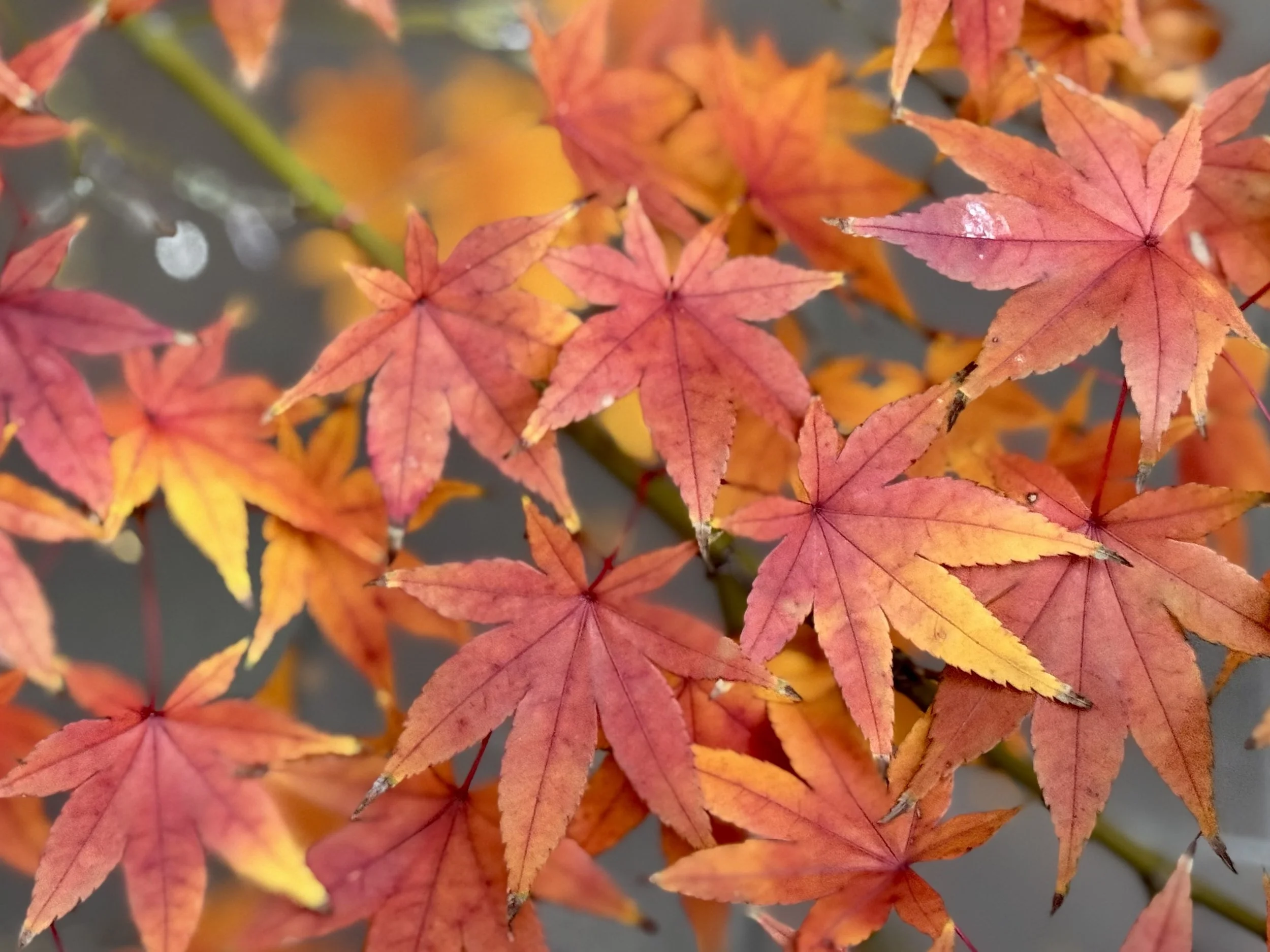
Images from this past month that reminded me of the power of yielding.

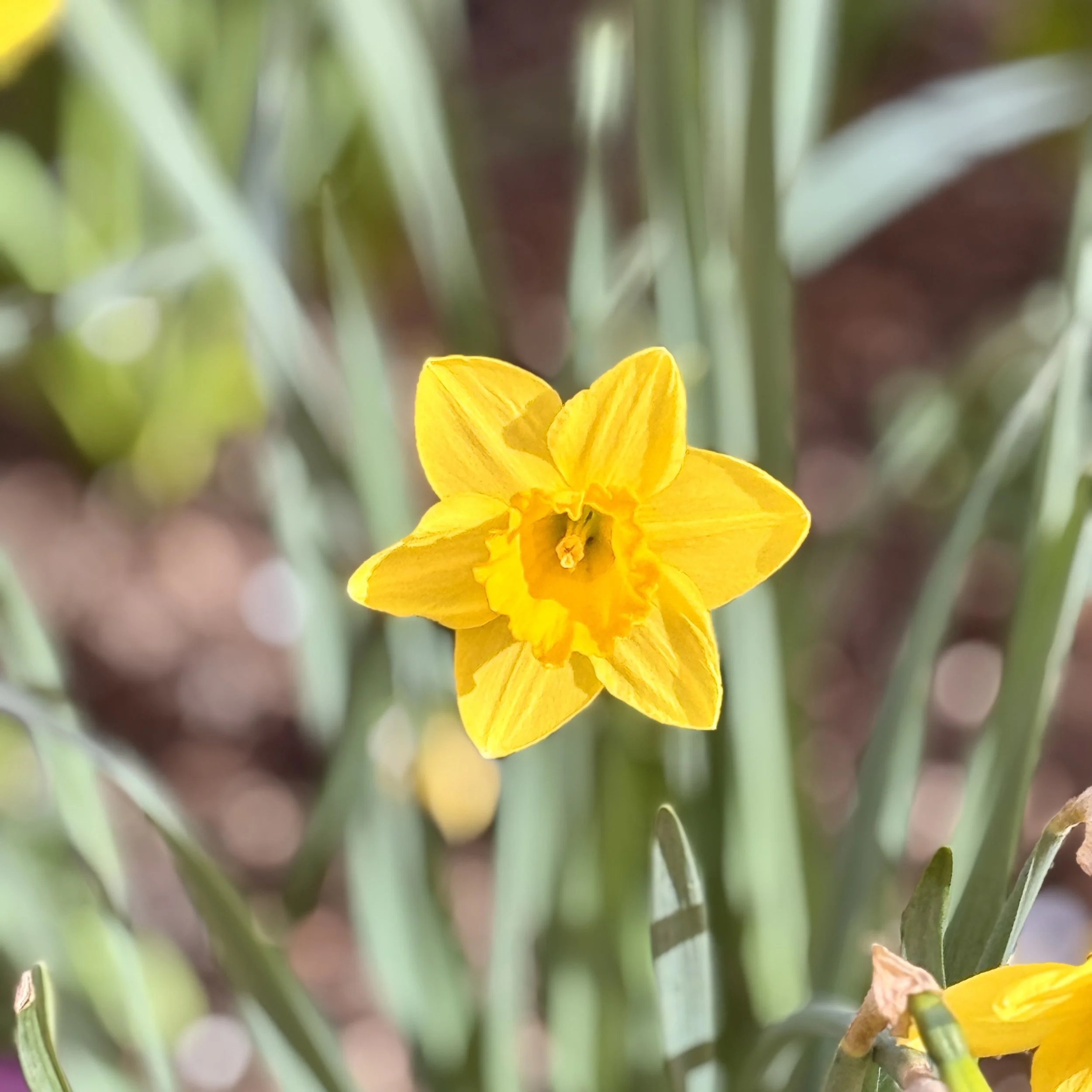
As the arrival of spring deepens, plants like this Narcissus are yielding to the power of the sun's energy while staying firmly rooted to earth's receptive energy.

My brother, Dr. Francis K. Chun, is a Professor of Physics at the U.S. Air Force Academy and is the principal investigator for the Academy's world-wide Falcon Telescope Network and its new 1-meter telescope. After the conclusion of the Artemis II mission, he shared images shot from one of the telescopes he oversees of the Orion capsule Integrity (inside yellow circle) as it returns to Earth. Looking at this image reminds that much of space is dark, mysterious and yielding.

I captured this image just around 50 seconds after lift-off. All I can think is that the astronauts inside at this point are simply yielding to the powers thrusting them into the deep unknown.

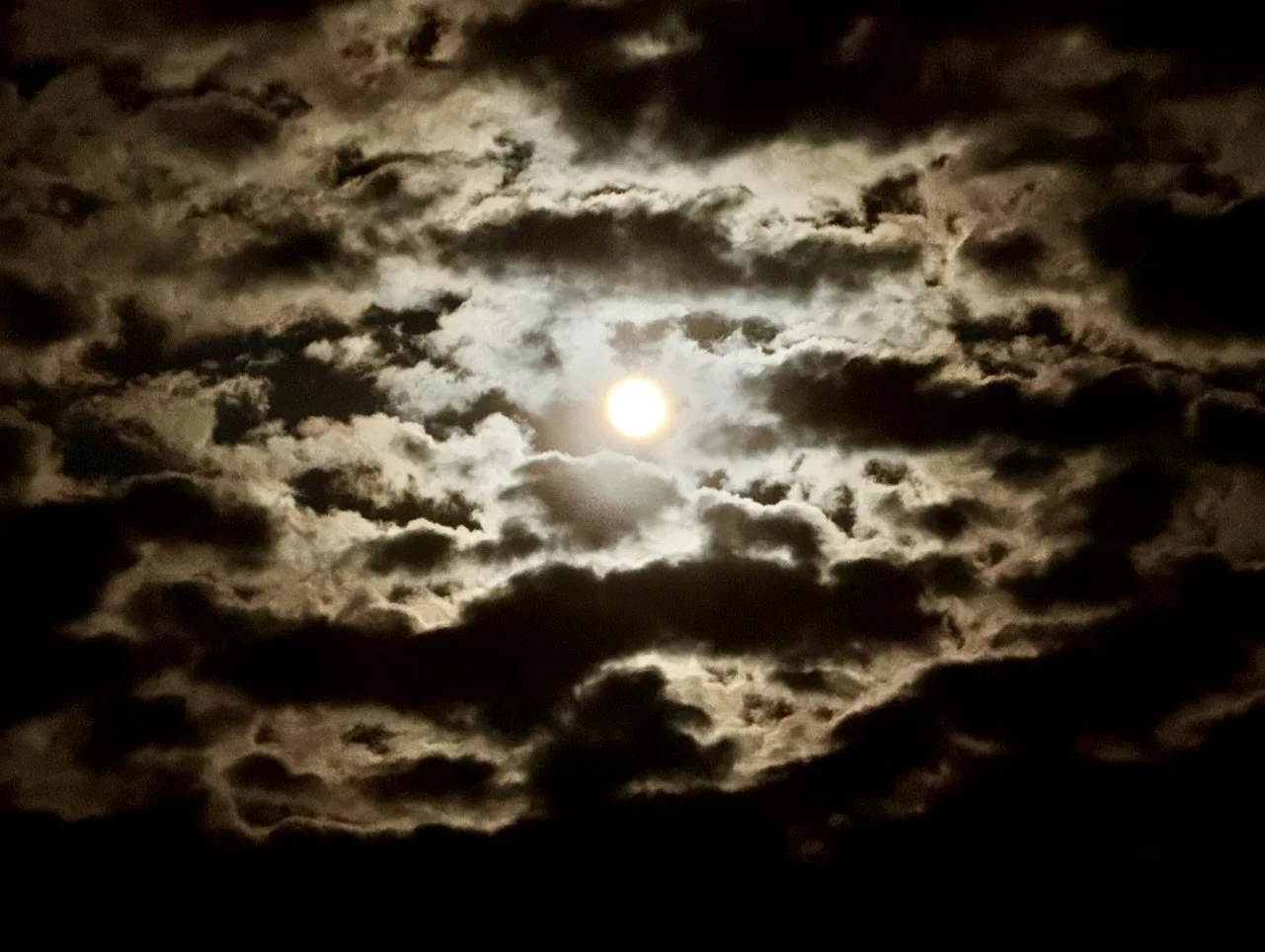
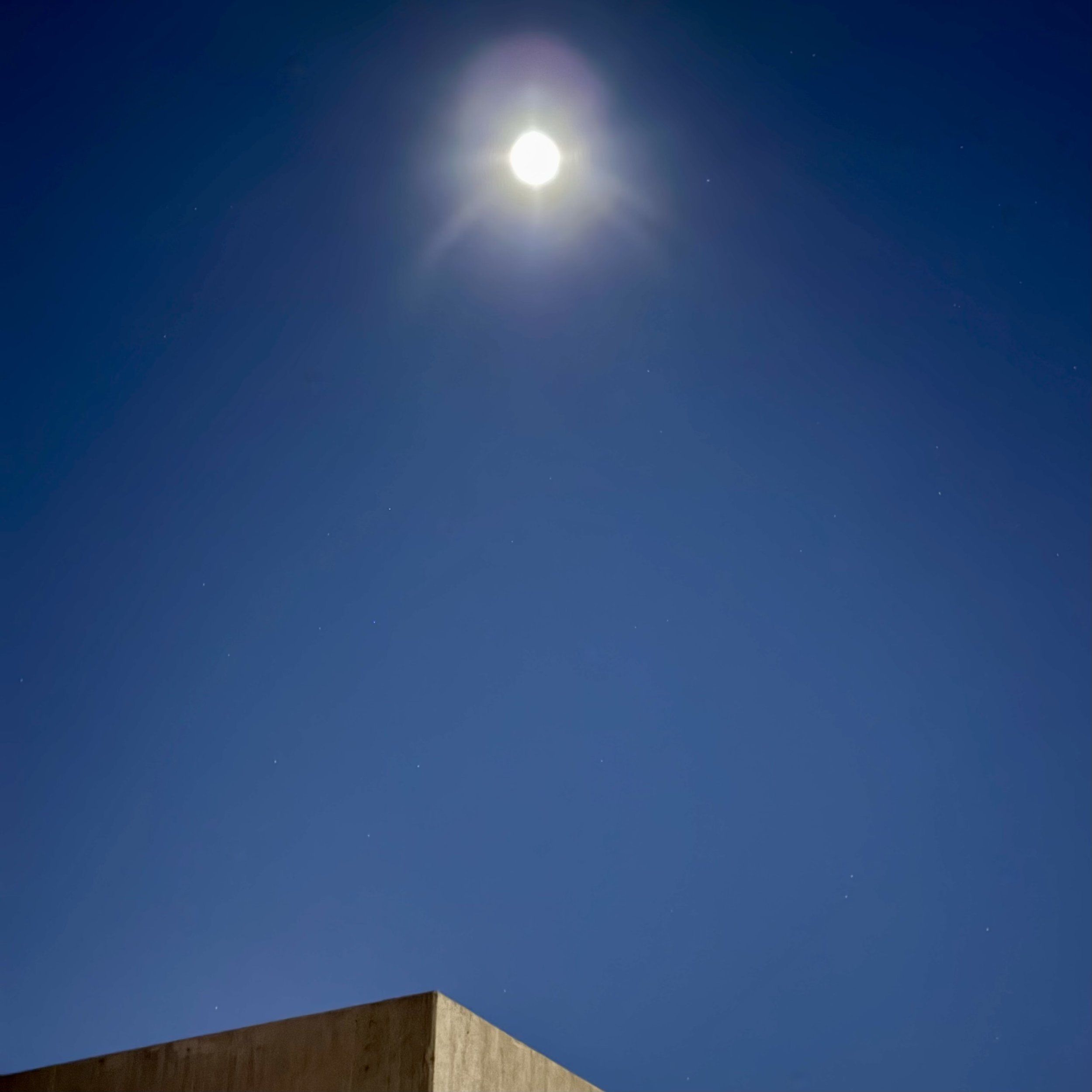
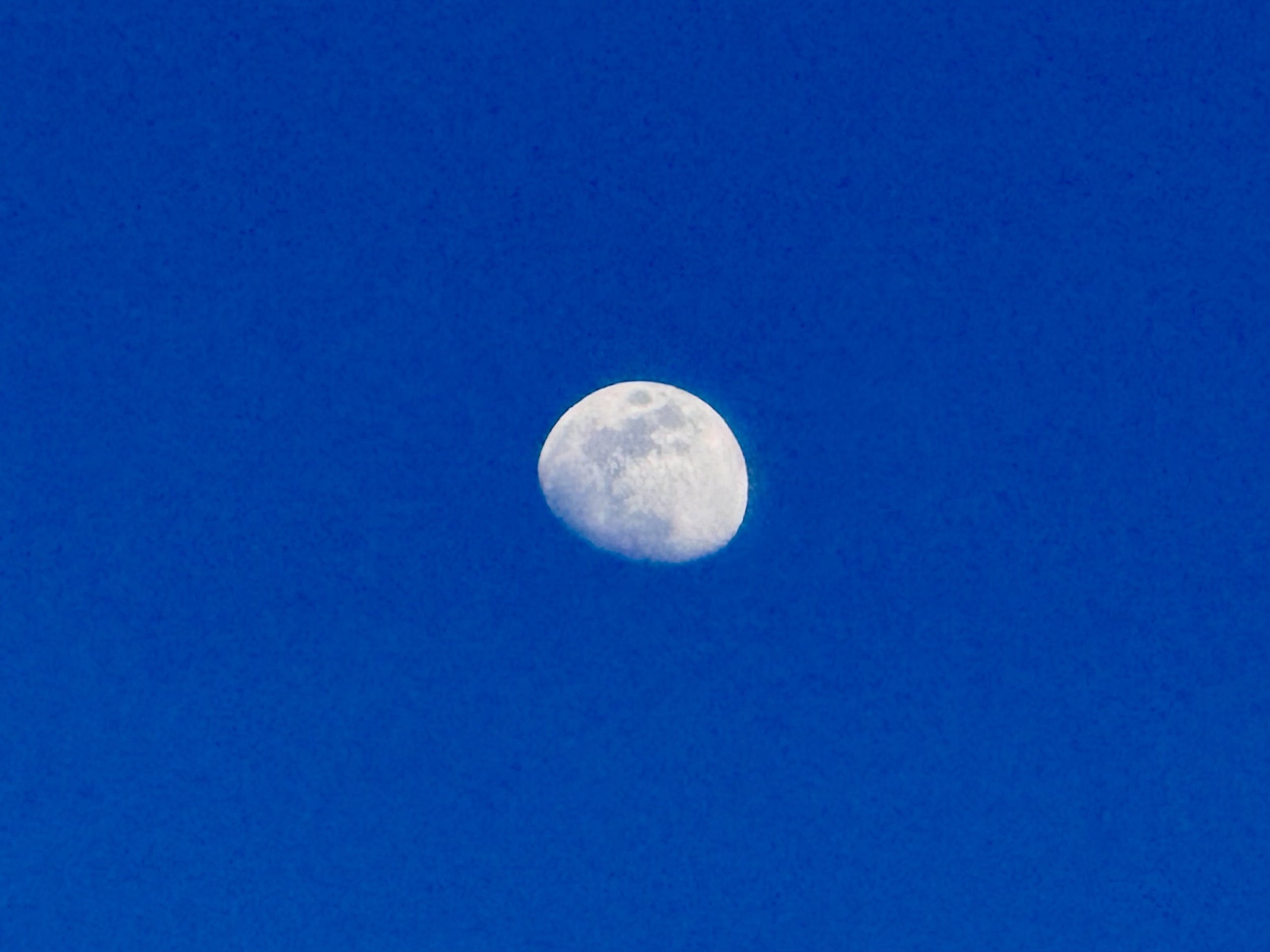
Capturing tonight's (April 30, 2026) full moon, was the perfect bookend to my month. I yielded to the circumstances and this is the result. Amazing.

Photo Credits:
Photos of the Artemis II launch, the Narcissus flower, and the moon on April 30th shot by me.
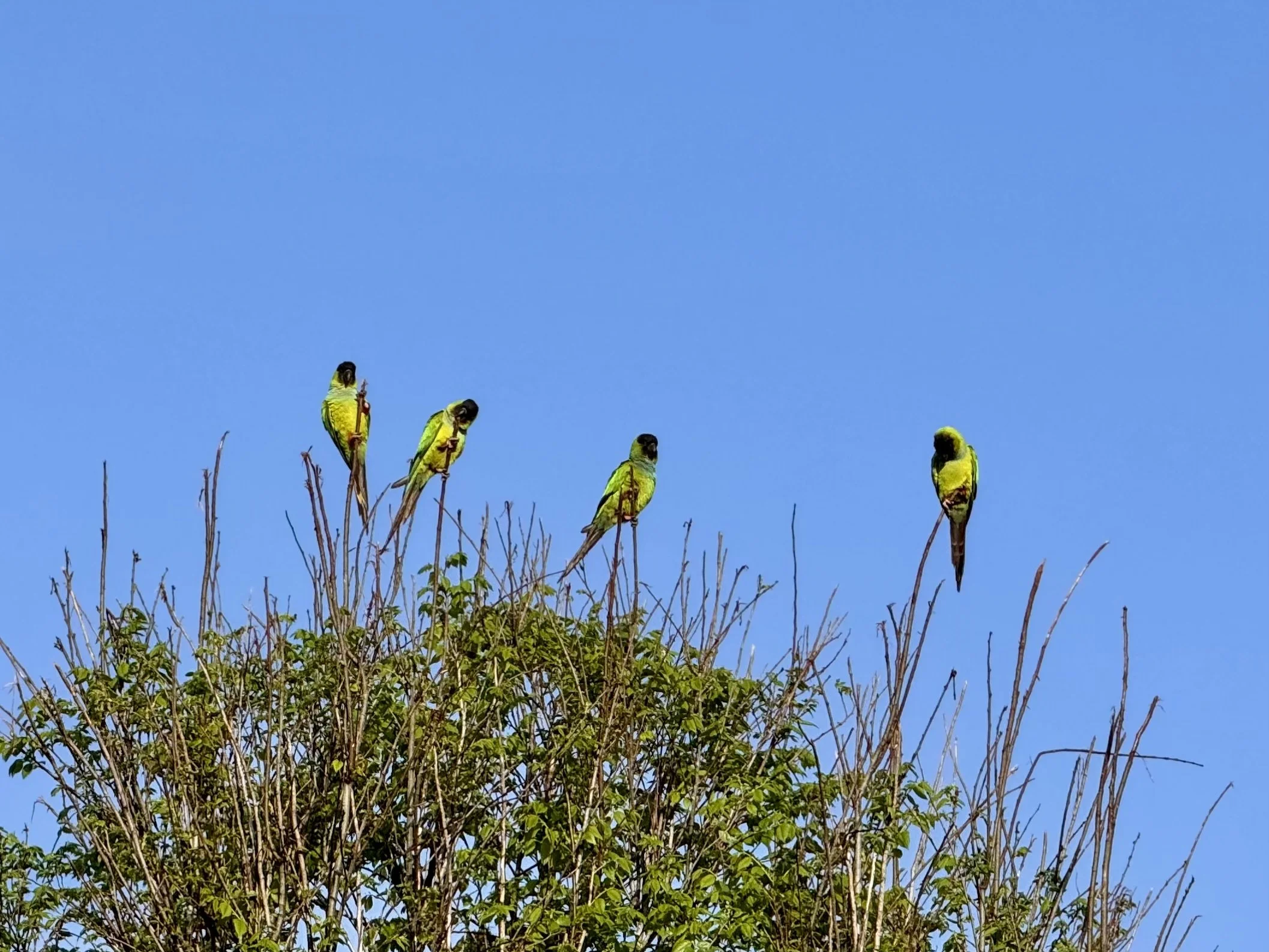
Photo of Integrity by Tarik Errabih, UNSW Canberra Space.


Yoga and the Art of Neighboring

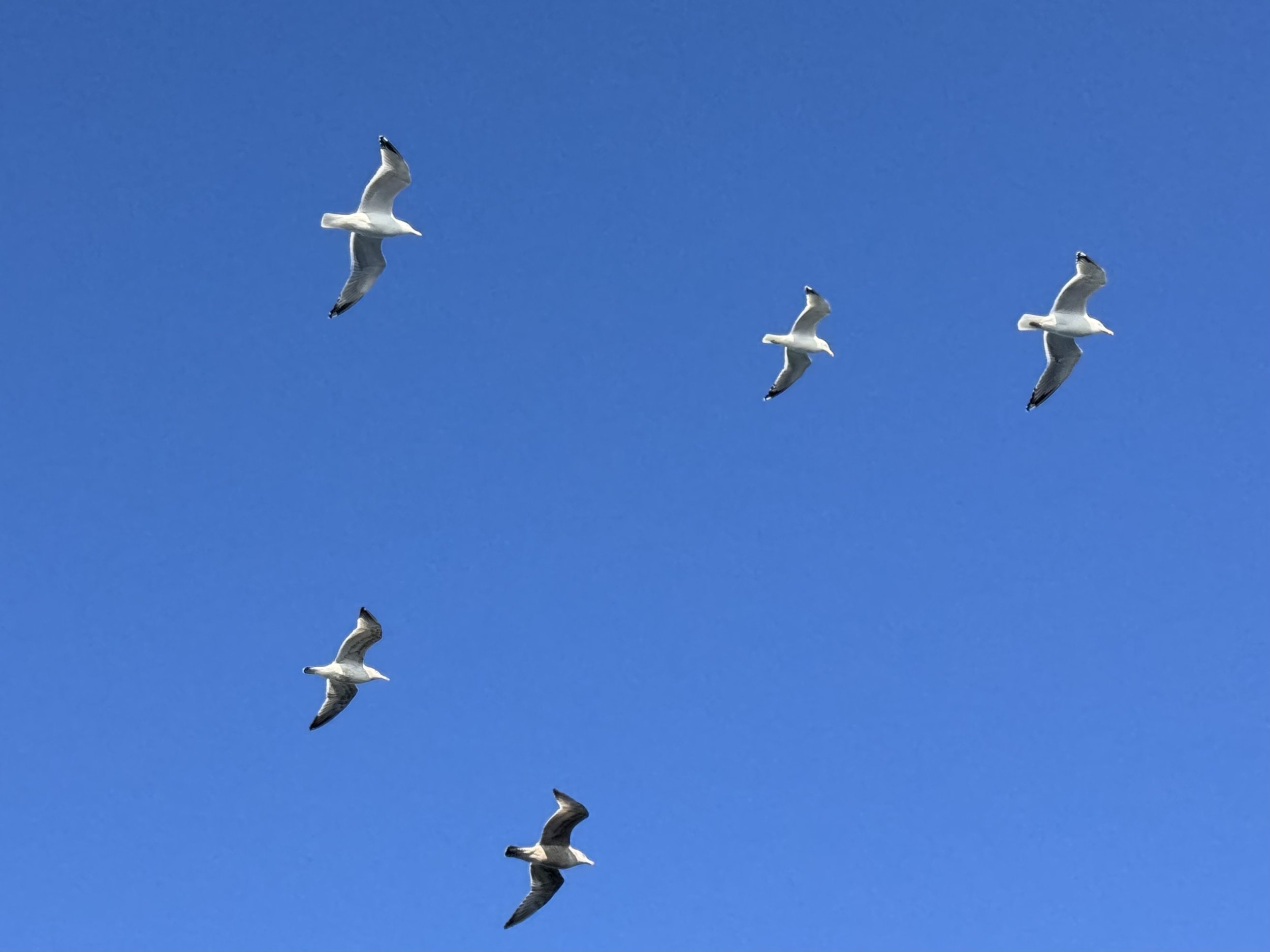
While riding on the Lewes to Cape May Ferry last week, my husband and I saw these birds flying together overhead. I immediately thought -- they clearly understand that their strength comes in numbers and in looking out for one another.

……………………

This is a sacred week for Christians, as we commemorate and celebrate the resurrection of Jesus Christ. When Jesus of Nazareth was asked, “what is the most important thing?”, he said: “Thou shalt love the Lord thy God with all thy heart, all thy soul, all thy mind and all thy strength. Love thy neighbor as thy self.” Jesus was reminding us that we are all interconnected and we strengthen that interconnection through the art of “neighboring” – looking out for one another.

The NY Times Opinion writer, Thomas Friedman, wrote a beautiful essay this month called Why Minnesota Matters More Than Iran for America’s Future in which he amplified how “neighboring” became a thing during the recent ICE raids in Minnesota. It is a long but worthwhile read. As someone who practices yoga and meditation, a few parts of his essay felt relevant to these contemplative practices. Here are several passages from Thomas’ essay (which I’ve edited for clarity) which anyone who practices yoga can relate to:

… [Recently,] I spent time in my native state, Minnesota, [and saw something] I’d never seen in [my] nearly 50 years [of being a journalist]: a spontaneous uprising of civic activism propelled by a single idea — I am my neighbor’s keeper, whoever he or she is and however he or she got here.

It was one of the most courageous battles ever fought by American men and women not in uniform. It was led by moms ready to donate their breast milk to strangers and dads ready to drive someone else’s kids to school because the parents, terrified of ICE agents, were too afraid to go out outdoors. It was neighbors ready to hit A.T.M.s to help out neighborhood restaurants and businesses deciding not to open — thus forgoing their income — for fear that masked ICE agents might drag away their cooks or dishwashers or desk clerks.

And the best part was this: At a time when we have a president so shameless that he insists on putting his name on every public building he can, these good Samaritans of all colors and creeds acted without fanfare. “There were hundreds of leaders of this movement,” Bill George, a longtime Twin Cities business executive, said to me, “and I don’t know a single one of their names.”

As yogis and meditators, I think the practice of “neighboring” is a real-life example of what the practices themselves are trying to lead us to realize – that we are all connected.

The Buddhist and Hindu story of Indra’s Net suggests that each one of us are a jewel in the infinite net of reality, and therefore in some way connected to each other. Each of us are a reflection of everyone else, and we can see a part of ourselves when we look at others. According to this article on Indra’s Net by Sand, “When any jewel in the net is touched, all other jewels in the node are affected. This speaks to the hidden interconnectedness and interdependency of everything and everyone in the universe ….”

In other words, if you really want to know and experience the Infinite, try finding it by looking at your reflection in other people. And if you really want your reflection to shine bright, keep your own jewel shining bright by doing good deeds for those around you at your part of the net so that others nearest to you can have their jewel remain shining bright as well. Understanding that we are all connected is a pathway to realizing the Infinite.

And less we become discouraged and believe we are powerless to the evil forces taking hold in our country, Thomas later writes to remind us: 

… [this] private ICE army — “governed by strength” and “force” — was sent packing by a bunch of moms and dads armed only with cellphone cameras and whistles, ready to walk out on a freezing morning in bathrobes and bunny slippers, to defend their neighbors, some of whom they barely knew.

We don’t have to do great and heroic things as individuals. We just have to “do small things with great love” – as Mother Teresa said – in conjunction with our neighbors. And when enough unknown, non-famous, non-headline-grabbing people consolidate their individual powers through their small quiet collective actions, something huge can result. As Thomas points out in the essay, “Neighboring” won this battle over an army that believed it could govern by strength and force.

Thomas shares many remarkable stories (all worth a read) about individual acts of humanity, individual acts of refusing to see those who are different than we are as “other.” And in so shining their individual jewels further through these small acts of kindness, together each of these individuals illuminated a collective light that was bright enough to push darkness away.

Thomas continues:

Minneapolis, St. Paul and even lots of small rural towns look more like the world today than ever before. And the world looks more like Minnesota today than ever before. And so the great governing challenge in Minnesota, to my mind, is a microcosm of the great governing challenge facing America today: Can we make “out of many, one” — our great national project since our founding — when the “many” is now so much more diverse, even more than it was just 10 years ago.

If Minnesota can model that, maybe America can model it, too. And if America can model that, it could become our greatest political export to the world in the 21st century — as much as democracy was 250 years ago.

Why? Because today, as my friend Dov Seidman, an author and expert on leadership, likes to say: “Interdependence is no longer our choice. It is our condition.”

All the big existential challenges humanity faces today are planetary in scale — how to manage A.I., climate change, nuclear proliferation, pandemics and global migrations with so many people on the move. All of these challenges require planetary-scale collaboration. Either we figure that out soon — or we’re heading for a really bad century together.

As our yoga practices deepen, we move incrementally closer and closer with each practice towards realizing “out of the many, one.” Yoga is nudging us toward experiencing, even if for just a brief moment, the non-dual nature of reality. 

And as yoga continues to proliferate and spread into more underserved communities, the community itself is becoming more and more diverse. Yoga has made great progress towards being “for everybody and for every body.”

And to Dov Seidman’s point, as yogis we are naturally inclined toward the realization that, indeed, interdependence is our collective condition. With each practice, we gain the insights that lead us to experiencing that awareness more and more.

I’d like to leave you with a wonderful story called “Night and Day” that I received from the School of Practical Philosophy:

The master asked his disciples: "How do we know when the night is over and the day has arrived?" The disciples pondered the master's question. 

One answered: "Master, night is over and day arrives when you can see a house in the distance and determine if that's your house or the house of your neighbor." 

Another disciple responded: "Night is over and day arrives when you can see an animal in the field and determine if it belongs to you or to your neighbor."

A third disciple offered: "Night is over and day has arrived when you can see a flower in the garden and distinguish its color."

"No, no, no," thundered the master. "Why must you see only in separations, only in distinctions, only in disjunctions? No. Night is over and day arrives when you look into the face of the person beside you and you can see that she is your sister, he is your brother. That you belong to each other. That you are one. Then, and only then, will you know that night has ended and day has arrived."

Unknown Author

To me, Yoga and the Art of Neighboring is a natural off-the-yoga-mat next step to our on-the-mat practice. Each breath we take in each asana we execute helps to clear our vision enough to the point where see less and less separation between ourselves and others. And off-the-yoga-mat and out-in-the-world, we become more and more inclined to look out for our neighbors, to help them when they need help, and in so doing, keeping our own jewel shining. That bright light emanating from our very own soul will illuminate the safety net that is always there around us, for us, and for each other.

May you be happy, …
May you be healthy, …
May you practice “neighboring” more and more, …
And may whatever positive outcomes that result from your neighboring, may they benefit folks closest to you and from there spread out to All Beings Everywhere.
 
Aloha and Metta,
Paul Keoni Chun

……………………

Images from this past month that reminded me of the art of neighboring

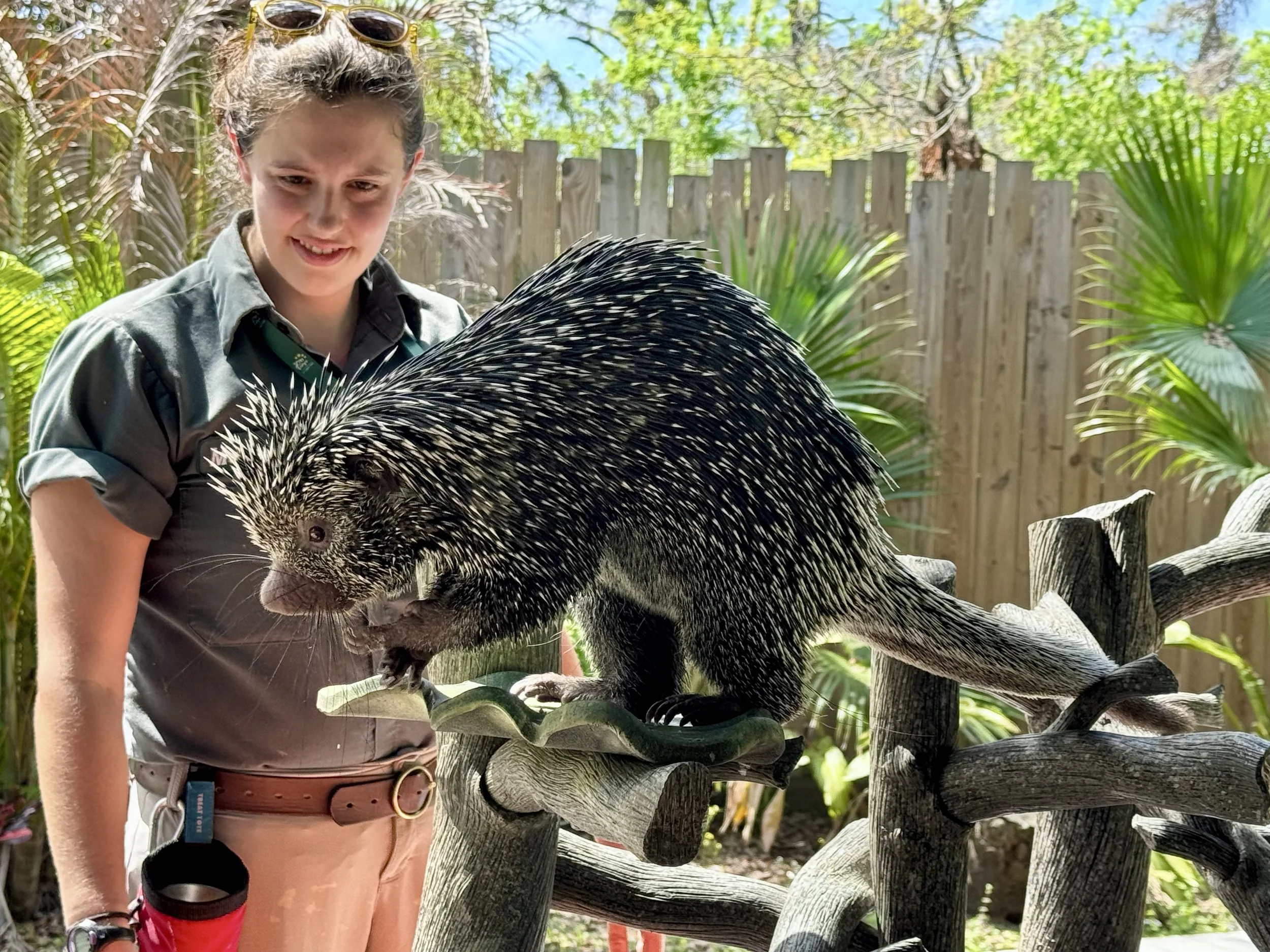
We visited the Zoo Tampa this month and were delighted to see this shy porcupine up close. The zoo staff really do look out for every creature under their care.

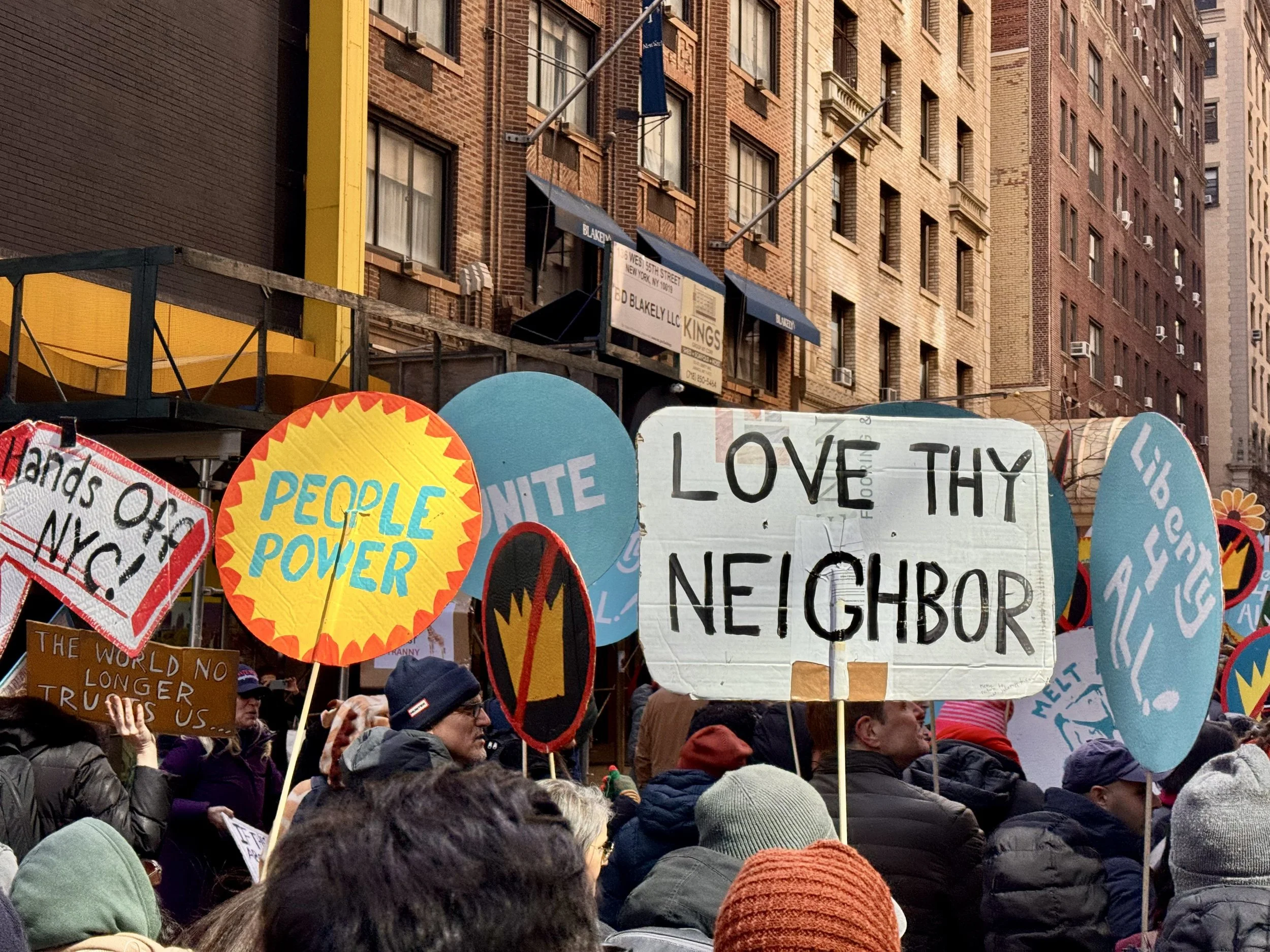
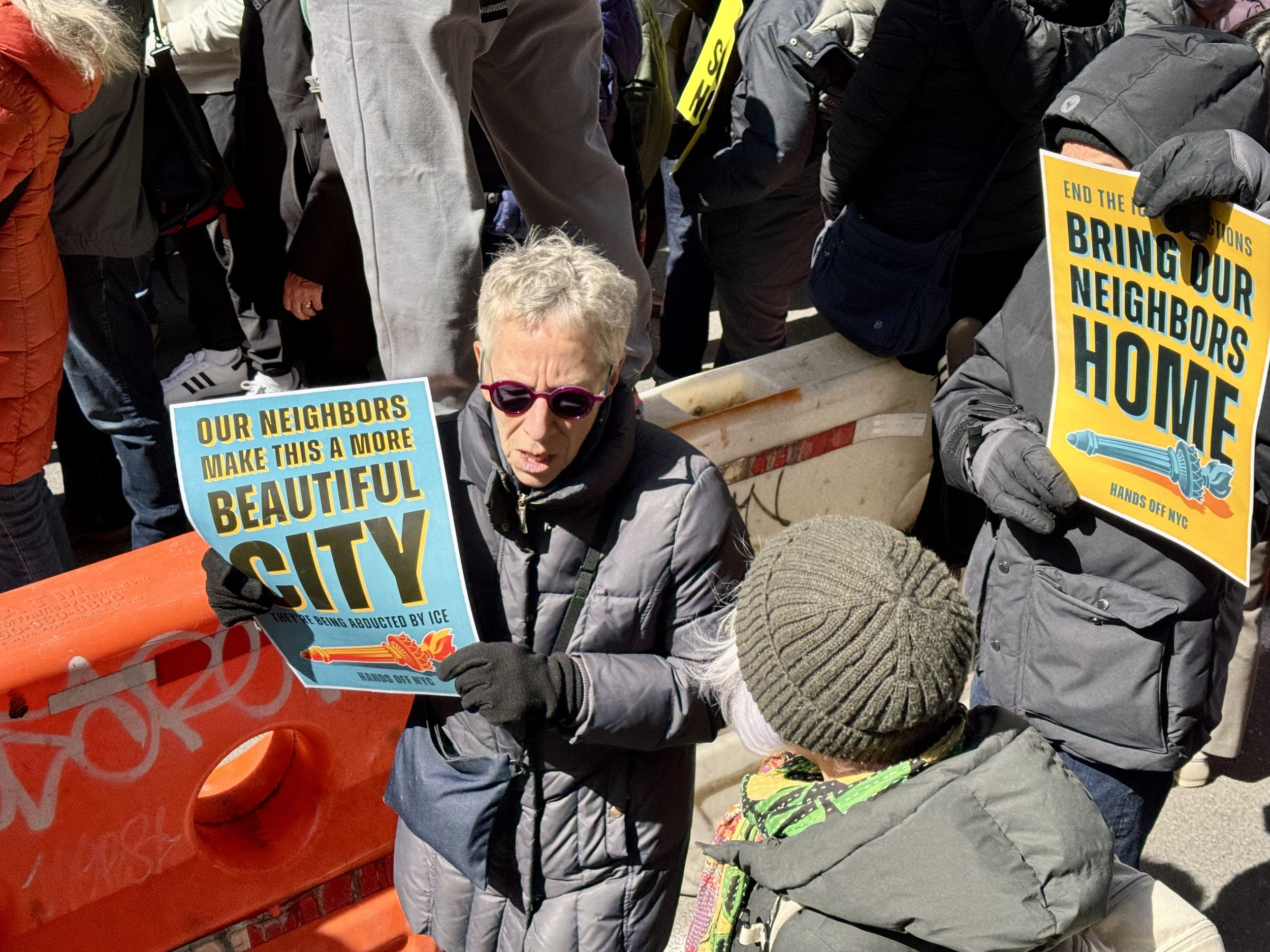
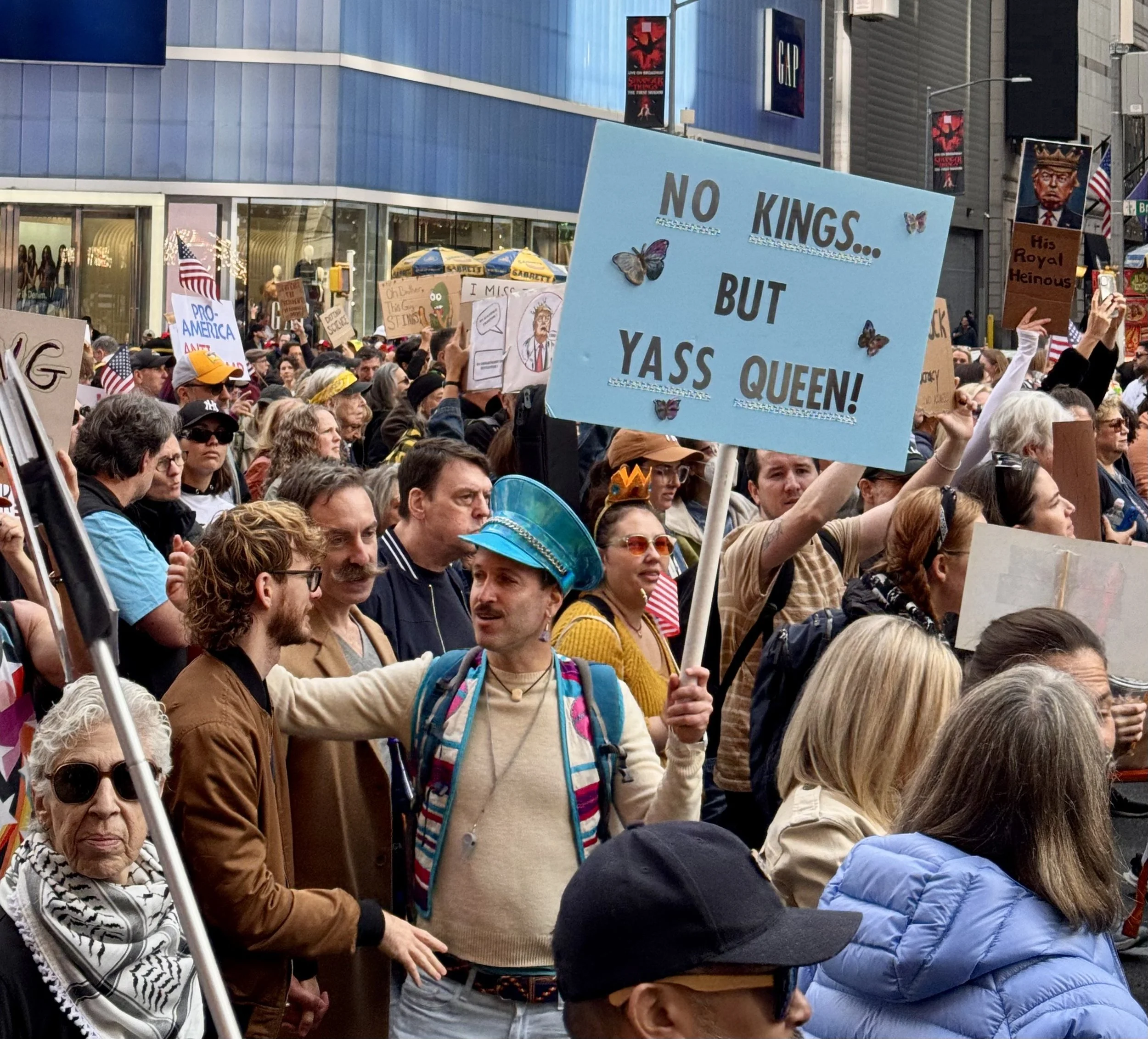
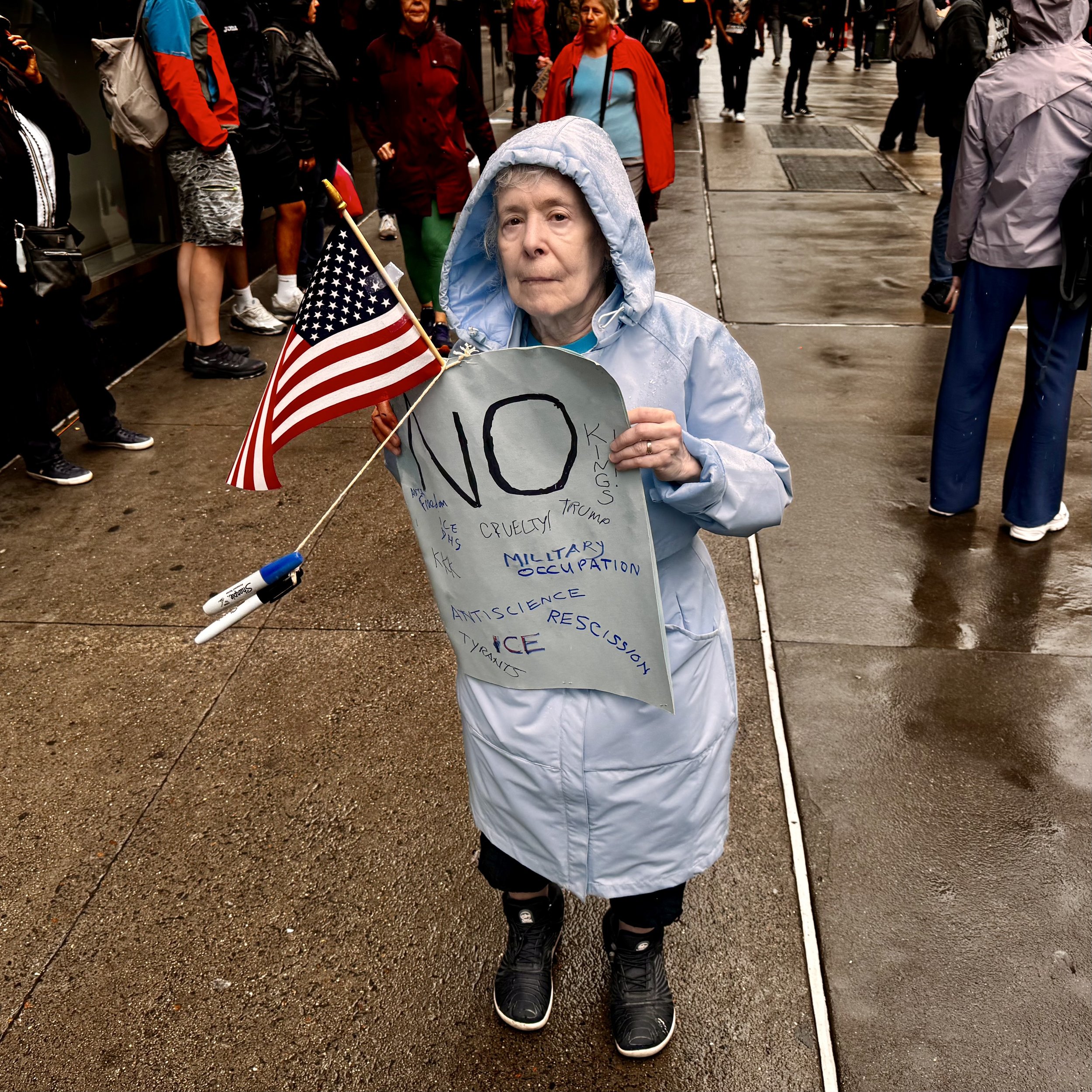
At the No Kings Rally in Manhattan on March 28, folks banded together to support their neighbors.

At the No Kings Rally, these folks were truly practicing yoga-off-the-mat. Surely, they see themselves in others and others in themselves.

Parakeets enjoying the morning sun at The Celery Fields in Sarasota, Florida. They probably have a greater chance of survival when they stick together.

Photo Credits:
Photos from around Delaware, New Jersey, Florida and New York all shot by me.
 

Yoga and the Power of Dandelions

Even in the darkness, the moon is always there for us, bringing us life-giving Light.

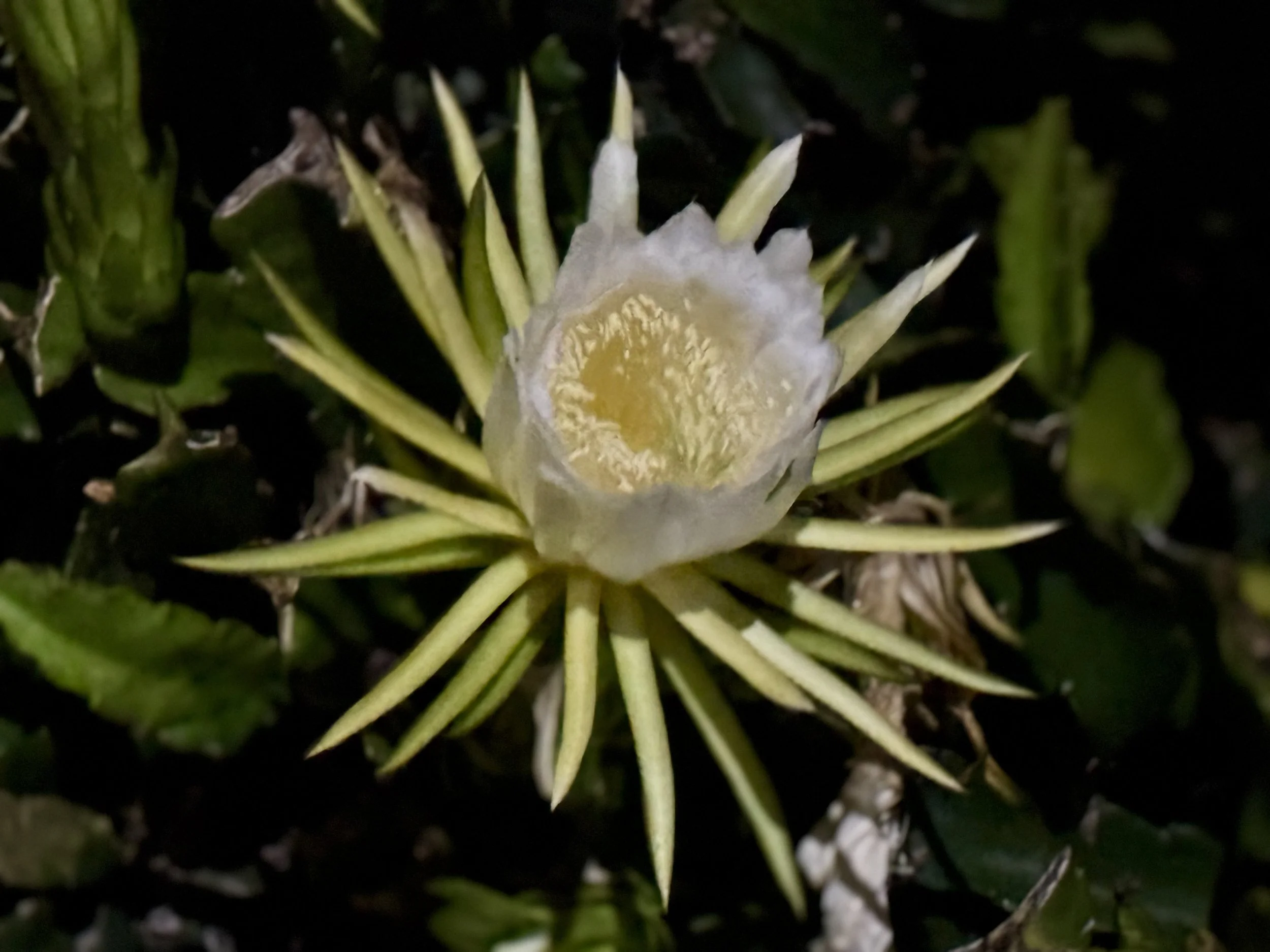
This Night Blooming Cereus at Punahou School (where Barack Obama graduated from high school in 1979) is awakened by the power of Moon Light. It demonstrates that things can still delight us even when the environment is dark.

……………………

So much happened in February that moved me. Starting with earlier this month, I was very moved as I watched the testimony that Renee Good’s brothers gave to Congress. Her brother, Brent Ganger, said:

“… When I think of Renee, I think of dandelions and sunlight. Dandelions don’t ask permission to grow. They push through cracks in the sidewalk, through hard soil, through places where you don’t expect beauty, and suddenly there they are. Bright. Alive. Unapologetically helpful. That was Renee. In sunlight. Warm. Steady. Life giving. …”

Dandelions are a symbol of resilience. They are a reminder that when things are difficult for us, we have the power and ability to demonstrate resilience.

February gave us multiple examples of resilience – of dandelion-ness. Here in NYC, for example, we experienced multiple sub-freezing days, and yet we endured.

Each and every one of the athletes of the Milano-Cortina Olympics had to have developed resilience in order to make it to the pinnacle of the global competitive stage.

Figure skater Amber Glenn said that the one word that she would use to describe her journey would be “resilience.” Despite the internal and external pressures she faced, she was still able to place 5th in the Woman’s event. An amazing accomplishment!

And fellow figure skater, Max Naumov, had to overcome the death of his parents under tragic circumstances just over a year ago in his journey to becoming an Olympian. Talk about resilience – way to go, Max!

Max advised us to “do things out of love, not fear.” In this month that we celebrate Valentine’s Day, let Max’s words serve to remind us of the fact that Love is always more powerful than hatred and fear. And let Max Naumov’s example also show us that no matter the outcome of our actions undertaken, if you lead with Love, you can still be happy afterwards.

A related aside – as I watched the Olympic figure skating, I constantly had to do deep diaphragmatic yoga breaths. And still I was a nervous wreck. Clearly, I have a lot more practice to do. Kudos to those Olympians for being able to perform at their peak under high pressure situations!

Elsewhere, Bad Bunny put on a SUPER super bowl half-time show. It was a bit of a history lesson for me as a non-Puerto Rican (though I’m married to someone whose heritage is Puerto Rican) and a glimpse into the indomitable resilience of the people of this beautiful island. It was a performance full of intentional joy, as according to Nadira Goffe on the Brian Lehrer Show the day after:

“Joy is resistance. Joy under the threat of persecution is a revolutionary act … in creating a sort of record of history of what’s happening to the place you are from is also a political statement.”

Bad Bunny chose Joy as resistance as he spoke on behalf of the people of his beloved island who don’t have the megaphone he has. Indeed, when we can be joyful in the face of persecution of any kind, that is indeed an act of resilience. Of dandelion-ness.

As someone who grew up on a different beautiful island – Oʻahu – and one that was also taken over by foreigners, I felt the performersʻ pride in where they come from. And as someone with native Hawaiian blood, I surely do hope that “LO QUE LE PASÓ A HAWAii” doesn’t happen to Puerto Rico.

Pema Chödrön’s teachings, as you may well now by now, always fill me with hope. She spoke about Humanity’s Basic Goodness in this way:

“When more of us learn to trust our basic goodness, society will get stronger. This doesn’t mean there won’t be hard times. It doesn’t mean violence, injustice, and poverty will end. It doesn’t mean the polar icecaps won’t melt and the water in the oceans won’t rise. But it does mean that there will be a lot of resilient people who will never give up on humanity and will always be around to help others. It does mean that when things get rough, it will bring out the best in people, rather than the worst. If we learn how not to lose heart, we will always find ways to make important contributions to our world.”

Certainly, there is a lot going on right now that we can use to bring out the best in us – if we’re wise enough and able to become skilled enough through our practices to choose that path. But less we lose faith in our abilities, here are a few more words that Renee Good’s brother Brent shared:

“… as Tolkien wrote: ‘it’s the small everyday deeds of ordinary folk that keep the darkness at bay. Small acts of kindness and love.’ That’s why the image of dandelions feels so right. People try to pull them up. Overlook them.  Dismiss them. But they keep coming back. Stronger. Brighter. Spreading seeds of hope everywhere they land. Renee planted those seeds in all of us. …

“… Renee is not gone from us. She’s in the Light that finds us on hard days. She’s in the resilience we didn’t know we had until we needed it. She’s in the laughter, the memories, the love that continues to grow. Like dandelions. Like Sunlight. And like Renee.”

Remember – even our smallest acts of kindness and love will make a profound difference. We don’t need to be overly ambitious. And when we forget the power that we hold, all we need to remind us is to see a little bit of sunlight, hear a little bit of laughter, remember a love that we had/have, see something that reminds us of life-giving dandelions. As we do so, we will see the “Renee Good” in our very own selves. That is an act of service to humanity that will pay dividends. 

Resilience is the ability to show up to our practices – be they yoga, meditation, and/or otherwise – over and over again, no matter what might be happening outside of us. Joy, Love and Laughter are the just-below-the-surface weapons we can always choose to deploy to face the darkness head-on. To me, that is Yoga and the Power of Dandelions in action.

I bow down to your resilience – your dandelion-ness.

May you be happy, …
May you be healthy, …
May you be a dandelion, …
May whatever results that come from your resilience, your dandelion-ness, may they benefit those nearest to you and from there ultimately benefit All Beings Everywhere.
 
Aloha and Metta,
Paul Keoni Chun

……………………

Images from this past month that reminded me of my power

No, not a dandelion. But as I was walking through Brooklyn Bridge Park yesterday, my eyes were met by this unexpected beauty. Symbols of resilience are all around us all the time.

On my stroll through Brooklyn Bridge Park yesterday, I couldn't help but notice that what might appear to be lifeless at the moment is still growing under the moon's ever-nurturing light. Like these tree branches, we are always capable of being resilient.

Photo Credits:
Photos from around NYC and Honolulu all shot by me.
 

Yoga and the Art of Letting Go

Here in NYC, we have to let go and accept that this cold spell is going to be with us for the foreseeable future.

……………………

Back on January 7, the PBS Newshour aired a segment about how several communities are struggling with rebuilding one year after the devastating fires that tore through L. A. One of the people interviewed was a Palisade’s resident named Peggy Holter who lost her townhome. Unfortunately, she did not have insurance so she did not even get a payout to replace her life possessions. And yet while she was initially devastated, a year later she seemed to have a change in outlook, as she recently said to correspondent Stephanie Sy:

“This stuff is not so important now … Well, I think the lesson is your happiness doesn’t depend on things … It’s pretty simple, really. But you realize, when it’s all taken away, you can still be very happy.”

The part of the story that really got to me. And gave me courage.

And it made me stop and look around my own apartment and think: could I really be happy if I lost all of this? While that question is a hypothetical one for me, I would like to think that the answer is yes.

And it was a reminder to me that an important core realization of yoga and meditation practices is that the essence of who we are is something far beyond and way more eternal than our material possessions. Step-by-step, with each practice, we come closer and closer to connecting with that realization more often.

Hearing Peggy Holter’s story and outlook reminded me of something I read long ago that the venerable Thai Buddhist monk, Ajahn Chah, had said:

“Do everything with a mind that lets go . . . If you let go a little, you will have a little peace. If you let go a lot, you will have a lot of peace. If you let go completely, you will know complete peace and freedom. Your struggle with the world will have come to an end.”

As I started my January – and my new year – I realized that I possess a lot of stuff that are feeling more like burdens, things that are weighing me down rather than uplifting me. I recently complained to my husband “I have piles around me that I need to sort through and things to get rid of.” So, I’ve begun to rededicate myself to lightening my various loads.

I am also realistic enough to know that this cannot be accomplished overnight – unless of course a fire should happen to tear through my apartment, which of course I would not want to happen. Physically removing things is actually the easy part. Psychologically removing them is harder. So many mental attachments have been built up around my possessions.

I was reminded recently that the practice of the 4th limb of yoga – Pranayama (breath control) – should be learned with patience and deepened over time. Otherwise, it could be counter-productive and even dangerous. As such, the part of Ajahn Chah’s statement that I have been reflecting on a lot lately is:

. . . If you let go a little, you will have a little peace. …” 

Just a little is all that is needed each time I practice letting go. To me, that is the essence of the art of letting go. Surely, drop by drop, the letting go will build up and eventually I will arrive at a point where I don’t feel so burdened. So, I say to myself: “Just try letting go of a little bit today. Don’t be overly ambitious.” And I remind myself that letting go takes not only time, but also compassion.

I’ve also been contemplating the national political situation and the “(gun) fire” and “ICE” that are causing so much suffering and cruelty. Four teachings from four distinguished teachers have helped me to put this time into perspective and helped me to see a potential way forward:

  1. Joseph Campbell said: “We must let go of the life we planned in order to make room for the life that is waiting for us.”

  2. The Japanese Zen Priest Kosho Uchiyama (1912-1998) said: “When we let go of all our notions about things, everything becomes really true.”

  3. The American Buddhist Teacher Jack Kornfield said: “When we let go of our battles and open our hearts to things as they are, then we come to rest in the present moment.  This is the beginning and the end of spiritual practice.”

  4. Lao Tzu, the author of the Tao Te Ching, taught: “When I let go of what I am, I become what I might be.”

Taken together, it makes me think that perhaps we have to start to let go of some of our ideas of what America has been, and awaken into new possibilities of what it could be. Armed with tools like yoga and meditation, the next “American Revolution” may in part be confronted with breath and expanded physical, mental, and heart-space awareness. Therein may lie some freedom during these turbulent times.

At any rate, individually and collectively, I think there is some letting go that needs to happen. The true art of letting go just might involve each of not only releasing outdated notions of what we have been but also doing whatever we can – however we can – to expand our minds and our hearts just a little more so that we can imagine new possibilities. With each breath we practice letting go. As a result, we create more space for new possibilities to unfold.

Echoing Ajahn Chah, the goal of yoga is to experience peace and freedom. Practicing letting go is one way of achieving that, and I hope that with each day you can achieve just a little bit more of it – not only for your individual benefit but for the benefit of society as a whole.

And as always, I am well aware – from personal experience! – that this is not an easy practice, and so therefore, I bow down deeply to your best efforts.

And so, with that, I will now let go of sharing my thoughts. And let you decide for yourself if any of this is useful and helpful.

May you be happy, …
May you be healthy, …
May you let go of just a little bit more in each day, …
May the additional space in your mind and heart as a result of your letting go somehow help those nearest to you, … and ultimately benefit All Beings Everywhere.
 
Aloha and Metta,
Paul Keoni Chun

……………………

Images from this past month that gave me pause

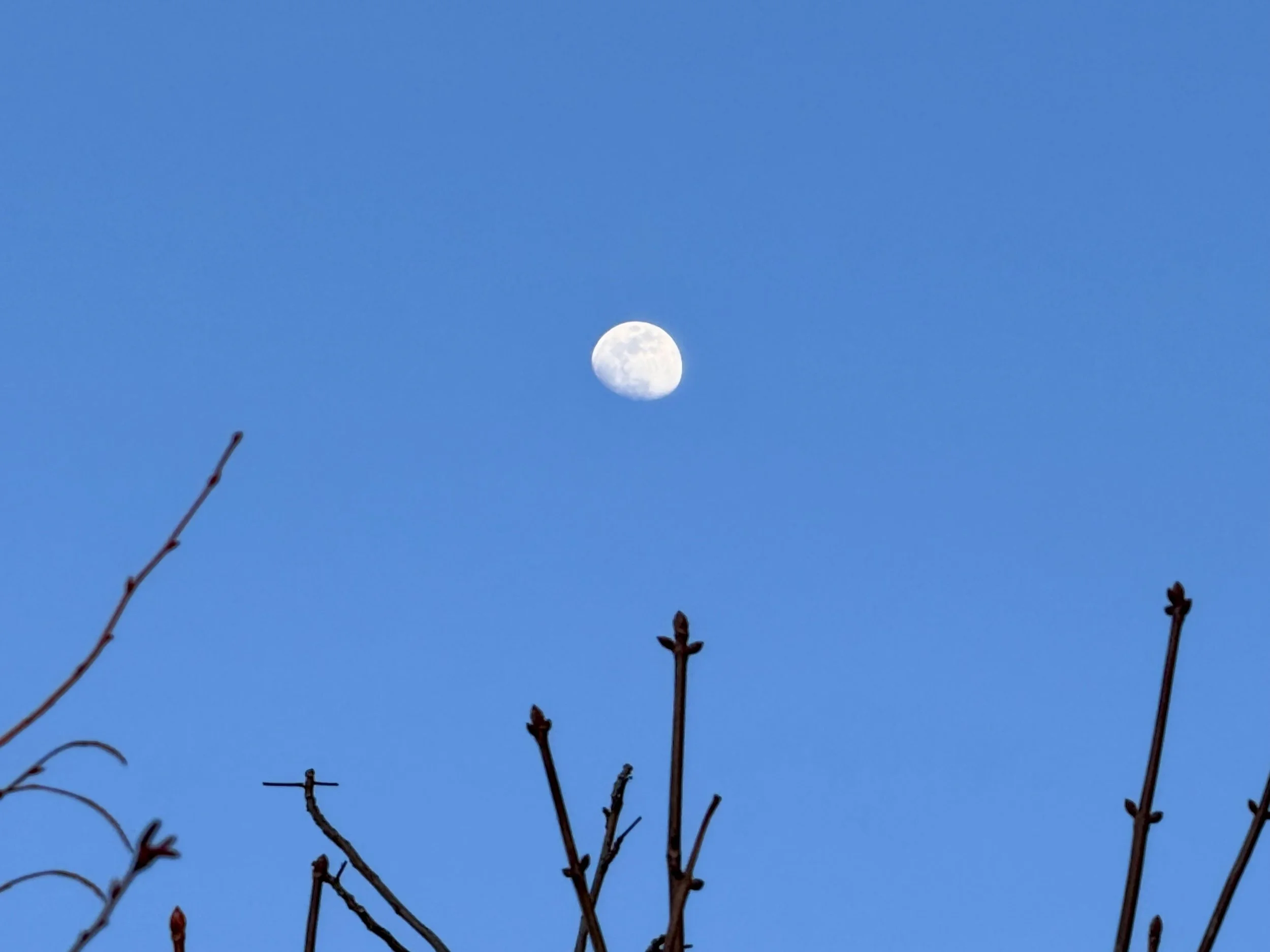
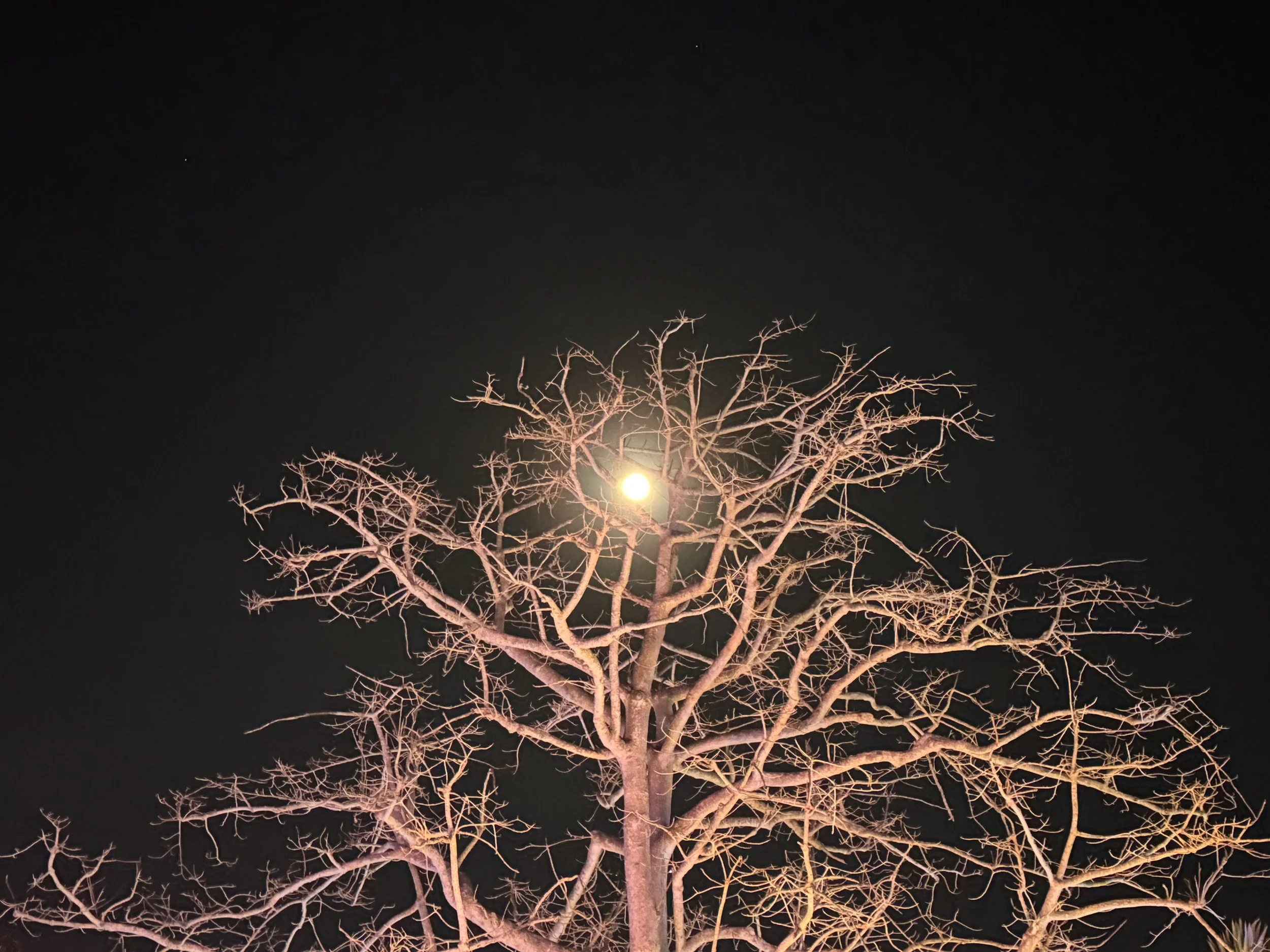
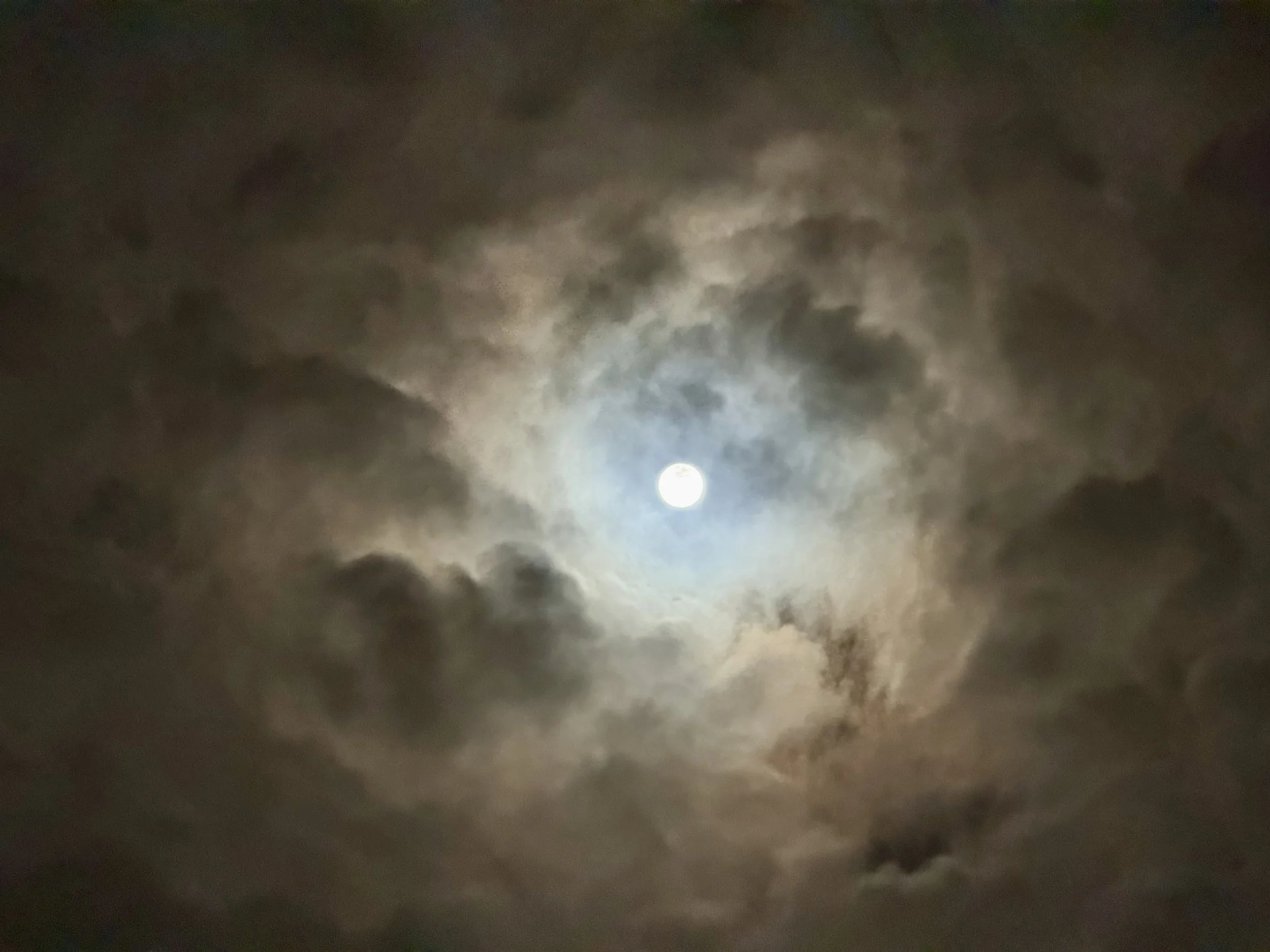
Moon Series
As seen from Marie Selby Gardens on Jan 2, the moon seems to be watching our every move. And it seems to be preparing for Artemis 2's arrival. Thankfully it doesn't appear to be letting go of its grip on the Earth anytime soon!

This is what democracy looks like: No Kings protest down 5th Ave on Jan 11.

This is what democracy looks like: The People's Filibuster: A Protest for Humanity on the steps of The Public Theatre on Jan 31.

Photo Credits:
Photos from around NYC and Selby Gardens all shot by me.

 

Yoga and the Art of Keeping the Flame Lit

Peter's Ornaments and a candle to light our way with Joy and Hope

……………………

My friend Peter passed away several years ago. This year, his wife gifted me and my husband Peter’s beloved collection of Disney ornaments. His wife told us “Peter will be most happy knowing his ornaments are in a good home.” As we were preparing our Christmas decorations, my husband arranged all the ornaments on our dining room table. He then placed a candle in the middle and lit it. My husband said the candle would help light Peter’s journey, in whatever form that might be at this moment. Then we said a few words of thanks to Peter for letting us have his collection.

To me, the lit candle also represents our own capacities to be a flame that illuminates the path of others. We live in dark times. And yet, there is hope. Each of us, in our own individual and special ways, can be a much-needed flame in the lives of those around us, both near and far.

Back in August, in an OnBeing podcast, a poem by Rainer Maria Rilke was read. It has stayed with me since. Host Krista Tippett had a conversation with Buddhist Teacher, Joanna Macy, and her friend, Anita Burrows, about Rilke’s writings and how they can help us navigate difficult times. Rilke’s poem Let This Darkness Be a Bell Tower moved me deeply:

Quiet friend who has come so far,
feel how your breathing makes more space around you.
Let this darkness be a bell tower
and you the bell. And as you ring,

what batters you becomes your strength.
Move back and forth into the change.
What is it like, such intensity of pain?
If the drink is bitter, turn yourself to wine.

In this uncontainable night,
be the mystery at the crossroads of your senses,
the meaning discovered there.

And if the world shall cease to hear you,
say to the silent earth: I flow.
To the rushing water, speak: I am.

If you’d like to experience a fuller effect of Rilke’s words, listen to Joanna Macy's gorgeous reading of this poem (2 min, 15 sec).

As a yoga and Buddhist meditation practitioner, thought-by-thought, this poem spoke to me in many ways:

  • In yoga, we practice deep breathing in order to create some space around whatever we are experiencing. The space can open up tight spots not only in our body of course, but also in our heart and mind as well.

  • This space can also help create more balance in our body systems and more equanimity in our heart and mind spaces.

  • We can be like waves in the ocean in the midst of a storm. We gather more strength (and size) by being tossed about more and more.

  • We can be like the water in the ocean. Though it be battered by the winds during a stormy night, it flows with them rather than resists them.

  • In savasana, we practice surrender. Similarly, in life we are really more like the bell itself, surrendering to whoever or whatever happens to be in control of the bell tower at any moment.

  • And whether the bell is being violently jerked around or gently moving from side to side like a hula dancer’s hips (“ke oni” style), yoga teaches us to move with life, move toward the resistance. Sometimes in a yoga posture, the resistance is light and sometimes it is intense. In either case, leaning into the resistance is what can transform us.

  • In yoga practice, we lean into the difficulty, knowing the heat or tapas is what will help change us for the better. The “wine” we turn into, so-to-speak, is really a mellow acceptance of the current circumstances of life, knowing full well that we also have within us the capacity to turn this wine into something sweet. Sweetness or bitterness – it is our choice in any given moment.

  • Pratyahara in yoga refers to the withdrawal of the senses. As our yoga practice deepens and we’re more capable of practicing this, the mystery there at the crossroads reveals itself and the meaning of our life can be discovered. It’s good to sit with silence from time-to-time in order that this mystery be shown – “shone” – to us.

  • No matter whether others “get us”, the silent earth always will. When the Buddha attained Enlightenment, he turned to the Earth as his witness. We can too.

  • And whether others are there to support us or not, it is our own acknowledgement of our “I am” that is all that really matters.

As Victor Frankl said, ''What is to give light must endure burning,” so too must we as yogis accept that life isn’t always going to be peaches and cream. But I know that peaches and cream all the time won’t keep my flame alive and burning brightly, so I’m glad not to have the “desserts” of life all the time.

Suffering will always exist. Perhaps that is the very essence of the human experience that we need to lead us ultimately to find liberation from suffering. The Buddha seemed to think so.

Carl Jung said:

As far as we can discern, the sole purpose of existence is to kindle a light in the darkness of being.

And, Maharishi Mahesh Yogi said:

Don't fight darkness. Bring the light, and darkness will disappear.

Together these statements remind me not only to accept that darkness exists but also that there is a Light within me. And, it is my job is to keep my own inner flame lit. Yoga and meditation continue to help me do that. And, as I am in the latter part of my “third-quarter” of life and have given up a lot of the striving that marked my earlier years, keeping my flame lit is a big priority for me now.

What guides me most now is the Buddhist practice of Dāna or generosity. I try to be as generous as I can in as many ways as I can be. Every drop in the bucket counts. Every smile offered to a stranger counts as something which helps me keep my flame alive … and other’s as well.

Winter will always exist. Darkness will always exist. That doesn’t mean we can’t keep our own flame lit. We can choose to do what we can in each moment to keep our own flame lit. Or not.

I don’t know who this person Melanie Camp (RYT 200) is, but she said something that I think is profound:

“No matter how dark the tunnel, it always leads to light.”

Yes, we live in dark times, but remembering this gives me hope. And I hope it can give you hope as well.  

My husband and I watched several classic Disney animated movies over the holidays, including Snow White and the Seven Dwarfs. It’s hard to believe it was made way back in 1937. It was as enjoyable as ever. Though the wicked Queen cast a dark spell on Snow White, ultimately it was dispelled by the flame of a kiss from her true love. Light and love will always win over darkness. To me, recognizing and remembering this is yoga and the art of keeping the flame lit.

I bow down to all you are doing right now to keep your flame lit.

May you be happy, …
May you be healthy, …
May you do all you can to keep your flame lit, …
May your Light illuminate the Paths of those nearest to you, and ultimately benefit All Beings Everywhere.
 
Aloha and Metta,
Paul Keoni Chun

……………………

Images from this past month where Light illuminated darkness

The moon as viewed from my apartment window illuminated our way back on December 4th.

Rockefeller Center on December 19. The Angels heralded the star of wonder, star of Light that guided the Three Wise Men to baby Jesus.

We were treated to a spectacular sunset at our home in Florida on December 30th. As day turned into night, Nature's flame shone bright.

Snow flake illuminating 5th Ave.

My friend Bob made this little 15" Christmas tree to brighten -- indeed, lighten -- up my apartment in NYC.

Photo Credits:
Sketch of me by David Buffam.
Photos from around NYC and Florida all shot by me.
Special thanks to Bob Love for the beautiful Christmas tree.


Yoga and the Power of Awe

Fall's magnificent colors connect me to something much bigger.

……………………

Earlier this month, a documentary on PBS called Giants Rising caught my attention as I was flipping through the channels. I immediately set my DVR to record it. The documentary is about Redwood trees. They grow in northern California and southern Oregon. The documentary shares not only amazing facts about this natural wonder but also the positive effects they can have on human beings. Did you know that Redwoods can grow to be over 300 feet tall and can live to be over 2000 years old? And that for such tall trees, their roots are only 6 – 12 feet deep. However, the roots grow outward up to 100 feet, connecting with other trees’ roots. Together, Redwood trees cooperate to intertwine and form a strong foundation that can support their enormous sizes and weights. Truly astounding! And certainly, an example that humans can learn from and try to emulate. Nature reminds us that, yes, we need one another in order to grow to our fullest potential.
 
As it relates to yoga, one of the benefits of being in the presence of these giants of Nature is that they can inspire a feeling of Awe in us. Dr. Paul Piff, a social psychologist at U.C. Irvine, has conducted studies on the effects that Redwood trees can have on humans. Here are a few things he said in the documentary:

  • We’ve done some studies where we actually put people … surround them with big trees and then studied what that does to them. They report having this experience of awe or this experience of wonder and as a result they feel insignificant and it feels so good. … What is it about the human mind that so cherishes experiences that make it feel less important?

  • In the emerging neuro-scientific understanding of Awe, what we’re seeing is decreased activation in the self-reflective parts of the brain … suggesting that Awe is associated with an increased attention to the outside environment.

  • … we know that Awe and time in nature has a lot of beneficial effects. … It slows the heart-rate down and gets people to experience a sense of calmness and contentment. … It quiets that buzzing of stressors that people carry around with them on a daily basis and reminds you of the bigger, more complex things in the world ….

  • We found that having people spend just 60 seconds looking up at big trees brought about this experience of Awe and as a result made them more compassionate, more ethical, more mindful of other’s needs … less likely to prioritize their own. And even made them more willing to help a stranger who was in need of help ….

  • We think that Awe might have evolved as an emotion for humans because it helped us connect to others … be more cooperative. Our ability to forgo self-interest in the favor of larger, common goals. That is critical to how we survive as a species. I think Redwoods and experiences in Nature are one of the primary ways in which people get to be reminded I’m a small part of this bigger world. And I need to do things to help protect it and to help make sure that others get to experience it as well. 

As I was viewing the documentary, I couldn’t help but think that trying to connect to something bigger than the smaller self is why we practice yoga and meditation. There seemed to me to be some similarities between the experience of Awe and yoga practices. Take for example the chanting of OM, which we often do at the beginning and ending of yoga practice. When we chant the sound Om, we begin with the sound “Ahh.” Similarly, when we are in the midst of something Awe-inspiring, we might instinctively utter a similar sound – the sound “Awe.” 

According to the website Gaia:

  • the mantra Om is one of the most ancient and revered mantras in the spiritual traditions of India

  • Each repetition of Om is a reminder of our relationship with creation and a call for harmony and inner peace

  • The syllable is pronounced “AUM” and consists of three sounds: A (ahh), U (ooh), and M (mmm). These three sounds symbolize different aspects of divinity and existence. The sound “A” represents the beginning, creation; “U” symbolizes preservation, and “M” represents transformation or destruction. When combined, these sounds represent the complete cycle of existence.

  • Reciting the Om mantra has multiple benefits for both the mind and body [including]:

    • Reduces stress and anxiety: The vibration of Om induces relaxation, decreasing tension and mental restlessness.

    • Improves concentration: The focus required to correctly chant Om helps enhance attention and mental clarity.

    • Encourages spiritual connection: Repeating Om can intensify the feeling of spiritual connection and unity with the universe.

As experiencing Awe – whether it is a result of walking in Nature or perhaps standing in the presence of a masterpiece of Artwork – can bring us back to a feeling of being connected to something bigger than our small selves, so too can chanting the sound “Aaahh,” which from the yoga perspective connects us to creation itself. So much of what has been created in the past before we were ever born on this Earth – think of the Grand Canyon or the World Heritage Site in Ohio known as the Octagon Earthworks which were created around 2000 years ago by the Native Americans known as the Hopewell Civilization – can inspire us to feel a connection to Spirit. And as yogis, we want to try to remember as often as we can that we are more Spirit than we are flesh and blood. 

While Redwoods can surely be the catalyst for us to experience Awe, we can also experience Awe in so many things in our daily life. For me, living here in NYC, things such as seeing a puppy’s infectious energy on its daily walk, an infant smiling with wonderment in my elevator, a classic building from another architectural era, or the sheer breadth and variety of human faces I see while I’m in a subway car – all these create a feeling of Awe for me. Sometimes they even cause me to utter the sound “Awe!” Creation itself in its many forms is so amazing!

While it is certainly important to our health and well-being that we are at times self-focused – like when we’re working out or trying to eat healthy or trying to earn enough money to stay ahead of the game – it is equally important that we balance that by connecting to humanity as a whole and our shared common goals and interests. So, whether it’s through experiencing Awe by looking at a Redwood tree or chanting the sound Om in yoga class, we can restore this important balance to our lives. Whatever serves the smaller personal needs should ideally serve the larger societal and planetary needs. 

My best advice – if you’ll receive it – is that you balance the hustle and bustle of your day with moments to pause and look around you. See the many creations so readily available in your present environment that can bring about a feeling of Awe within you and help reestablish your connection to something much bigger. If you can establish this connection, not only will you be practicing yoga off your mat but you will also be contributing to slowing down the collective heart-rate and bringing balance and harmony to those around you.

I wish you many experiences of Awe during this magical holiday season.

May you be happy, …
May you be healthy, …
May you experience Awe, …
May whatever the results of your experiences of Awe are, may they ultimately benefit All Beings Everywhere.
 
Aloha and Metta,
Paul Keoni Chun

……………………

Images from this past month that put me in a state of Awe

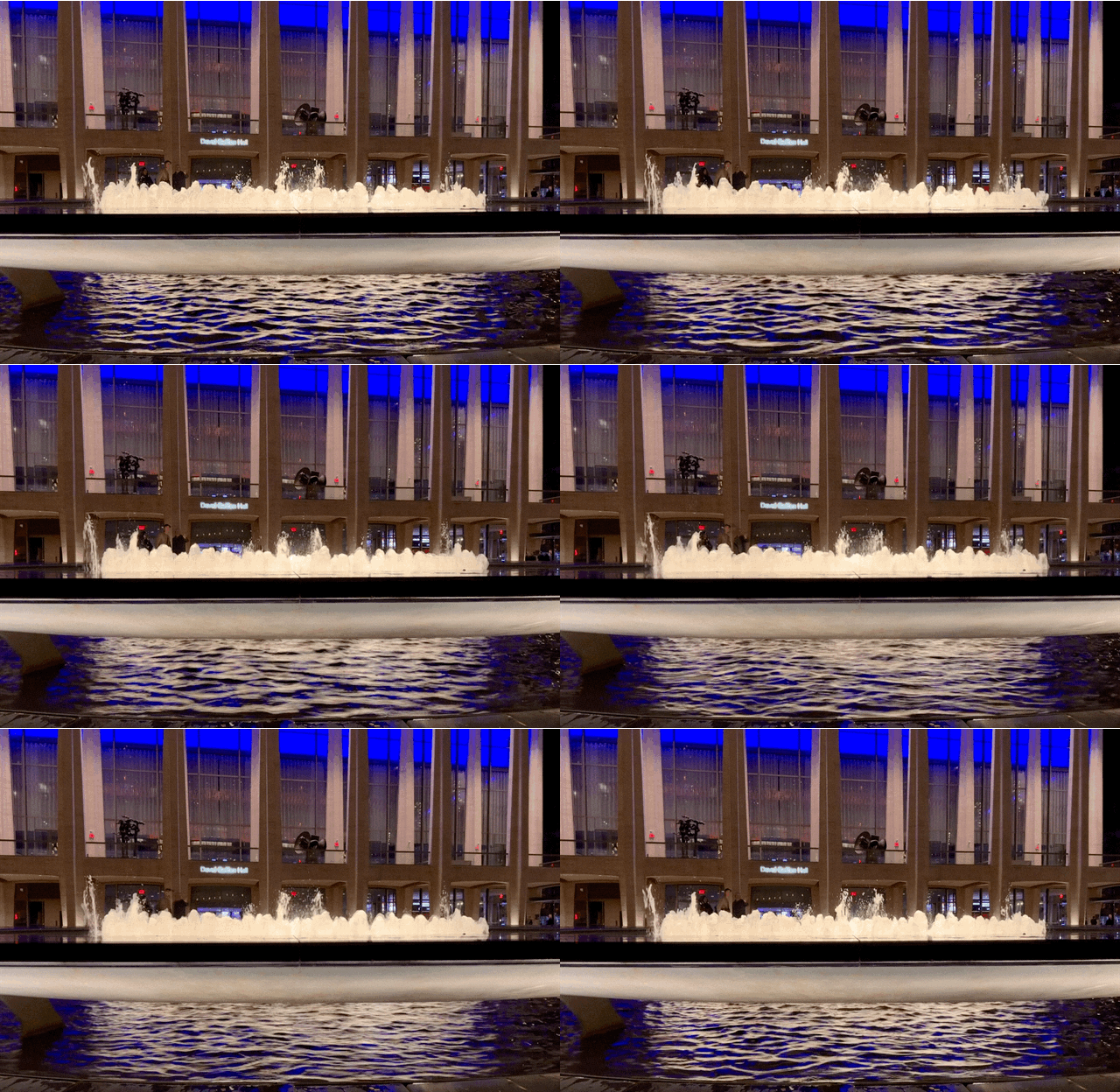
Fountain at Lincoln Center. Simple beauty, simply awe-inspiring.

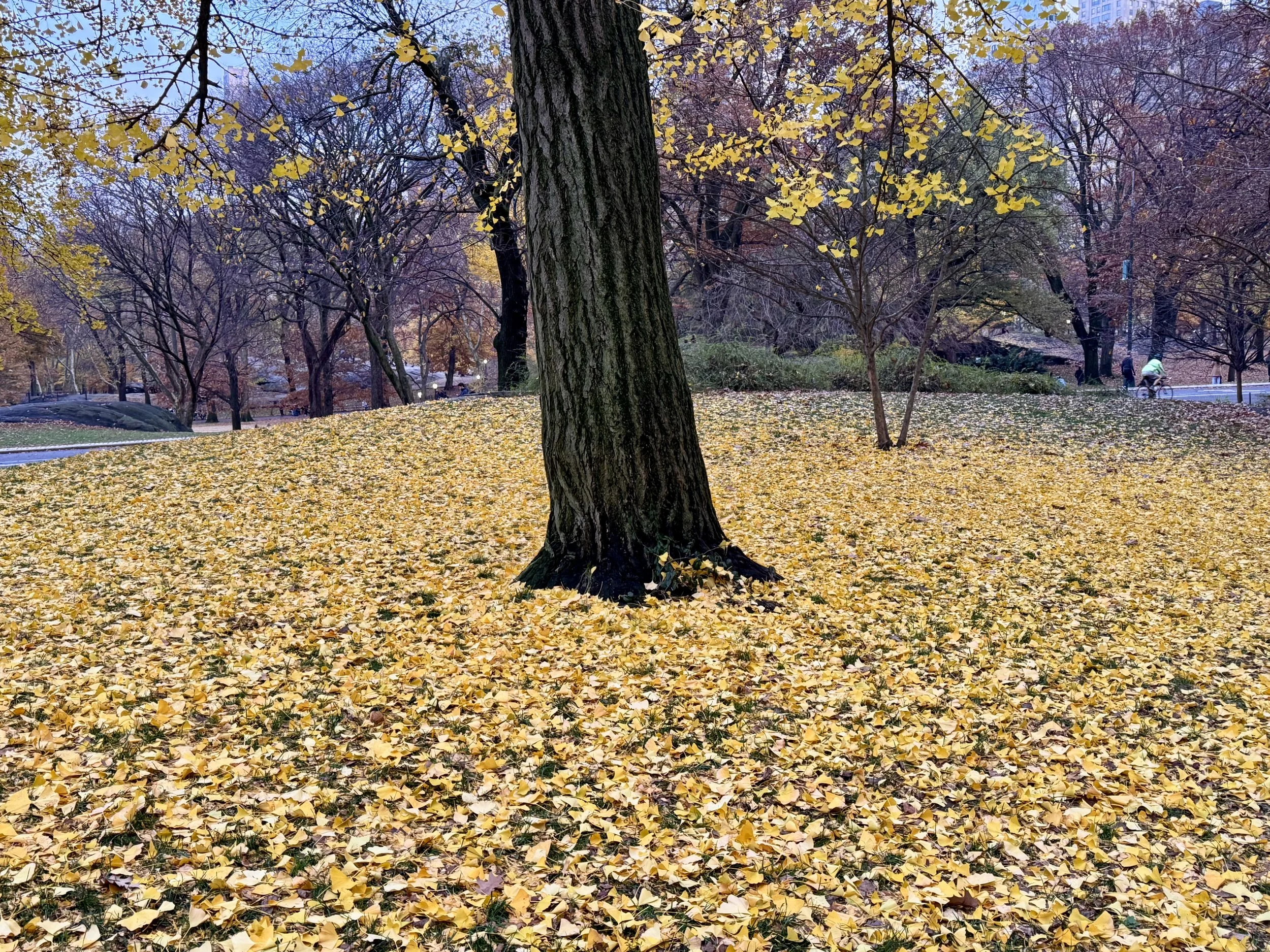
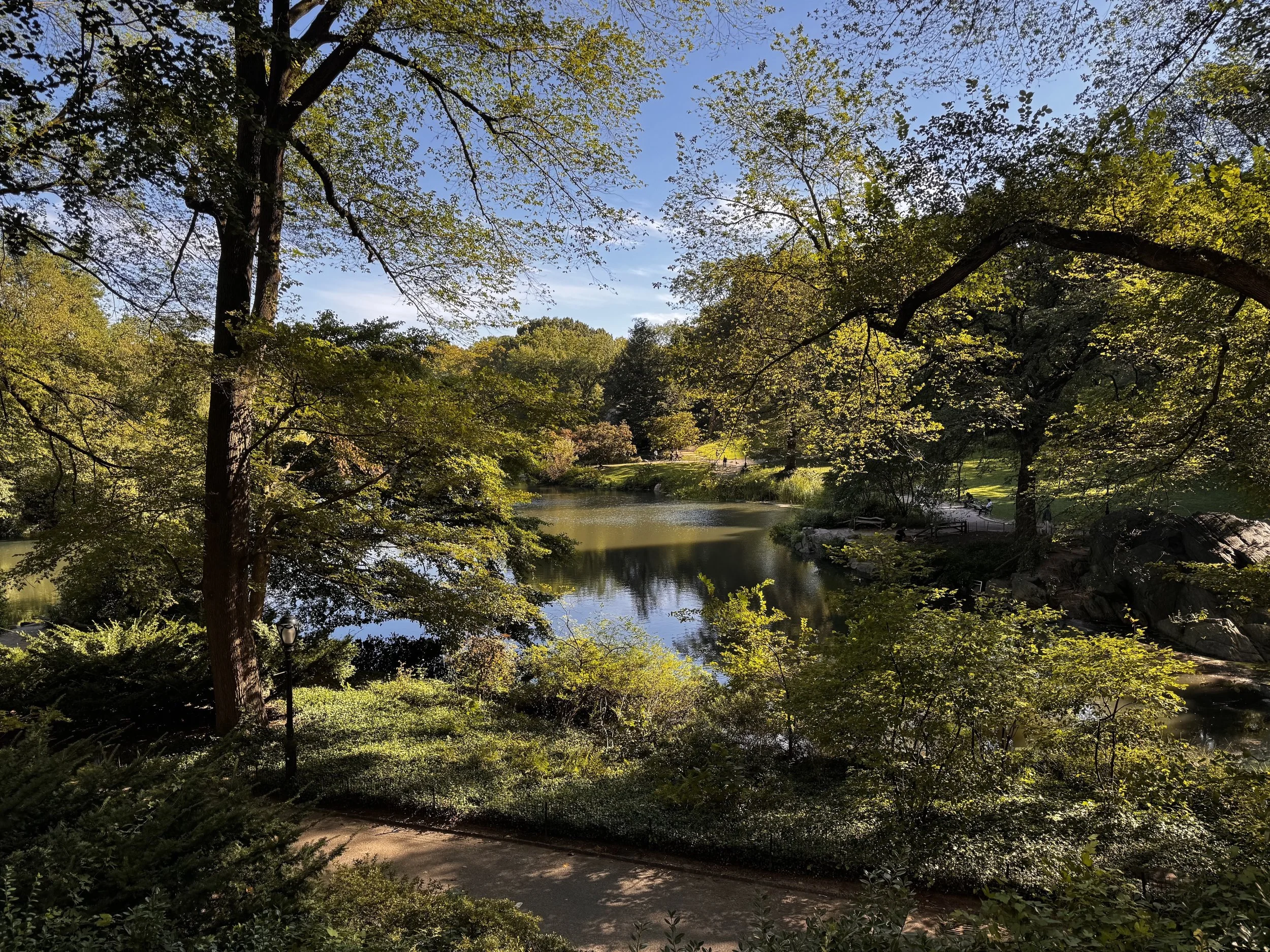
Central Park on Nov 26. Nature at its barest can be so breath-taking.

The Lake in Central Park at dusk. The time of day when magic things happen.

The Shops at Columbus Circle. 'Tis the season for all things Joy!

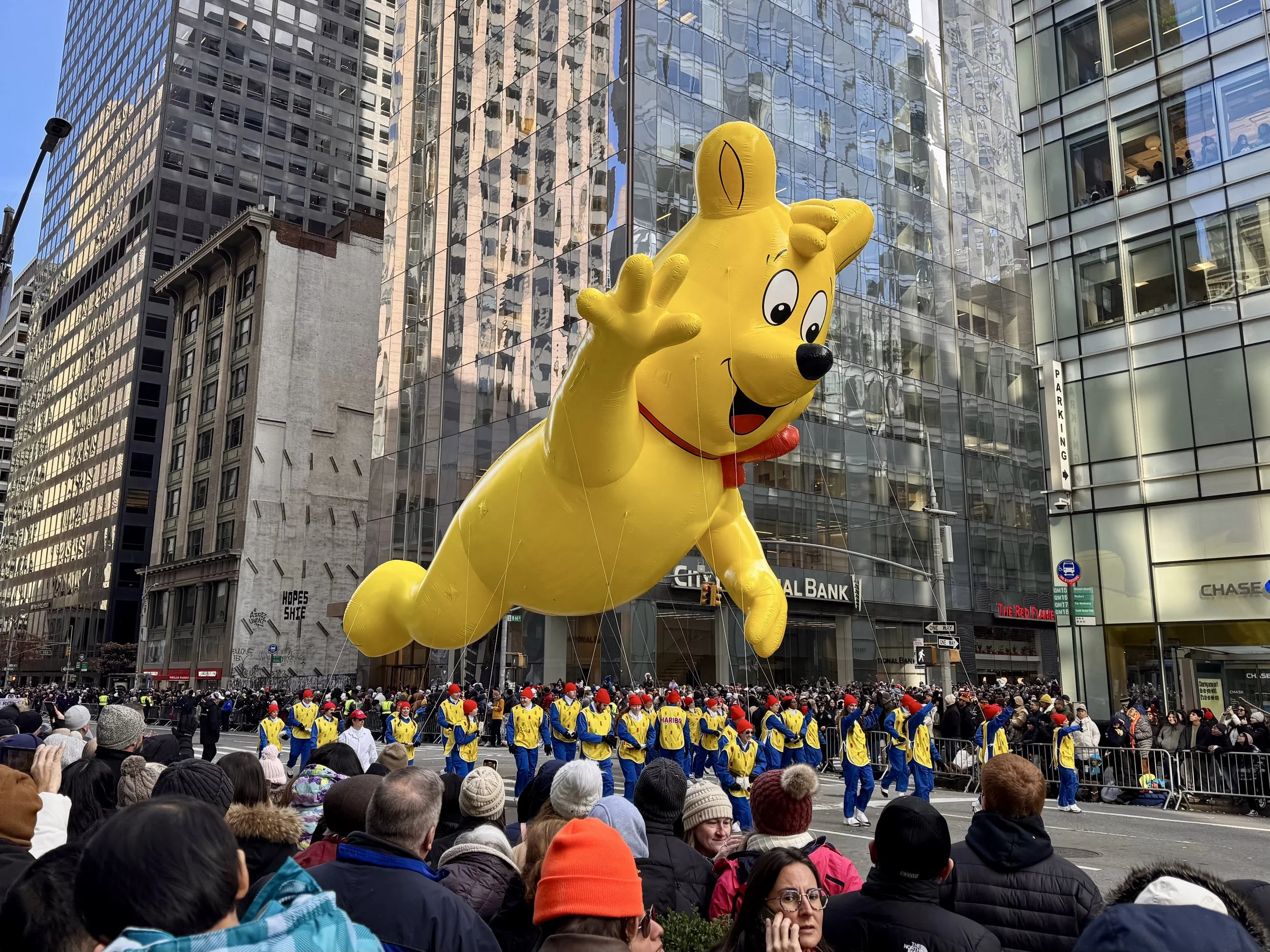
I felt like a kid again at this year's Macy's Thanksgiving Day Parade.

Photo Credits:
Photos from around NYC all shot by me.

 

Yoga and the Art of Living Without Hope and Fear

The ghouls delighted at Selby Gardens at Old Spanish Point! As for me, I faced my fears head-on!

……………………

Whew, what a month it has been. I arrived back in NYC on October 1st facing a lot of unknowns in my personal and professional life. On top of that, a lot is happening out in the larger world that has filled me with anxiety. I must say, I started out the month feeling very apprehensive.

 But what got me through the month was one very specific teaching from Pema Chödrön. She’s offering an online meditation course called “A Field Guide for Dark Times.” I was lucky enough to receive a free teaching that pretty much set me on my way and helped me to get through everything I needed to accomplish. Specifically, in the teaching she said the following which really stuck with me:

 … perceive the world just as it is, free from hope and fear

 I – like you, I am most sure – operate often in life while under the umbrella of hope and fear. We hope for certain outcomes, we fear others.

 But, I wondered, what would it feel like if I could try to act without hope and fear? So that’s what I set off to try to do. Every day I would wake up thinking “ok, here’s what I have to try to accomplish today in order to get me closer to my goals.” And at the end of my morning mediation practices, I would quietly say to myself: “may I act without hope and fear.” That became my mantra.

 I’m happy to say that this personal mantra really did help as I navigated some situations that normally would have made me feel fearful. And I achieved outcomes that were not only favorable but also better than I could have imagined at the outset of this month.

 The outcomes aside, though, the real benefit to me was that it spurred me to take action on my desired goals, gave me that kick-in-the-pants I needed. Though I was often wading into unknown territories for me, still it spurred me on just to begin wading … then swimming … then sprinting towards my goals.

 As I was practicing trying to live without hope and fear, I also recalled another teaching from Pema that I heard many years ago and have previously shared in my e-Letters. She said:

 The best spiritual instruction is when you wake up in the morning and say “I wonder what’s going to happen today,” … and carry that kind of curiosity through your life.”

 This approach to life can really help to open up our minds and move it in the opposite direction from feeling stuck mentally, which is a state of mind we can often find ourselves mired in. In fact, if I am being honest with myself, I’d have to guess that around half the time my mind is feeling constricted and stuck and the other half open and free. So, yoga and the art of living without hope and fear involves a daily recommitment to doing whatever we can to try and maintain a curious mind, an open mind. The results, I have discovered, can be profound.

 Pema has a suggestion she calls Positive Insecurity for what we can do when find our mind closing down:

 Whenever you’re in a hot spot or feeling uncomfortable, whenever you’re caught up and don’t know what to do, you can find someplace where you can go and look at the sky and experience some freshness, free of hope and fear, free of bias and prejudice, just completely open. And this is accessible to us all the time. Space permeates everything, every moment of our lives.

 So here are some thoughts and ideas that came to me as I was contemplating Pema’s teachings and what yoga and the art of living without hope and fear means to me:

 ·      Create as wide a mental space for yourself as you can. Be open to any and all possibilities, even outcomes you couldn’t even imagine at the moment.

·      Pema might say that the benefits of being able to engage with the world without hope and fear is that it may just spring forth within you an openness to things just as they are – good or bad – which may then bring out even more compassion within you.

·      Scary as things may seem to be in the outer world at the moment, we really don’t know what’s going to happen on the planetary level. If we can perceive things as they are without hope and fear, perhaps this is the first individual step we can take in helping the planet begin the long path back towards healing.

·      Our work in yoga is to use the raw materials of our own selves and our own habitual patterns in order to find some liberation. We can face our own inner monsters with a kind of curiosity and openness. If we can approach them without hope and fear, chances are we will come out on the other side a bit less scarred … and scared.

 Lastly, Pema reminds us:

 The spiritual journey involves going beyond hope and fear, stepping into unknown territory, continually moving forward. The most important aspect of being on the spiritual path may be to just keep moving.

 I hope yoga can help you to keep moving. And because I am well aware of how scary this journey can feel, as always, I bow down to your best efforts. Pa Dum Dum. … Imua!

May you be happy, …
May you be healthy, …
May you take actions without hope and fear, …
May whatever you accomplish somehow serve those nearest to you, and ultimately benefit All Beings Everywhere.

Aloha and Metta,
Paul Keoni Chun

……………………

Images from this past month that I encountered without hope and fear.

No Kings rally in NYC, Oct 17. Without hope of any particular outcome and fear of reprisals, I did what I could do.

Probably my favorite sign of the day! Clearly they had no fear!

Yup, I entered the Corn Maze at Stony Hill Farms ... and survived to tell the tale! I didn't encounter any Children of the Corn, phew!

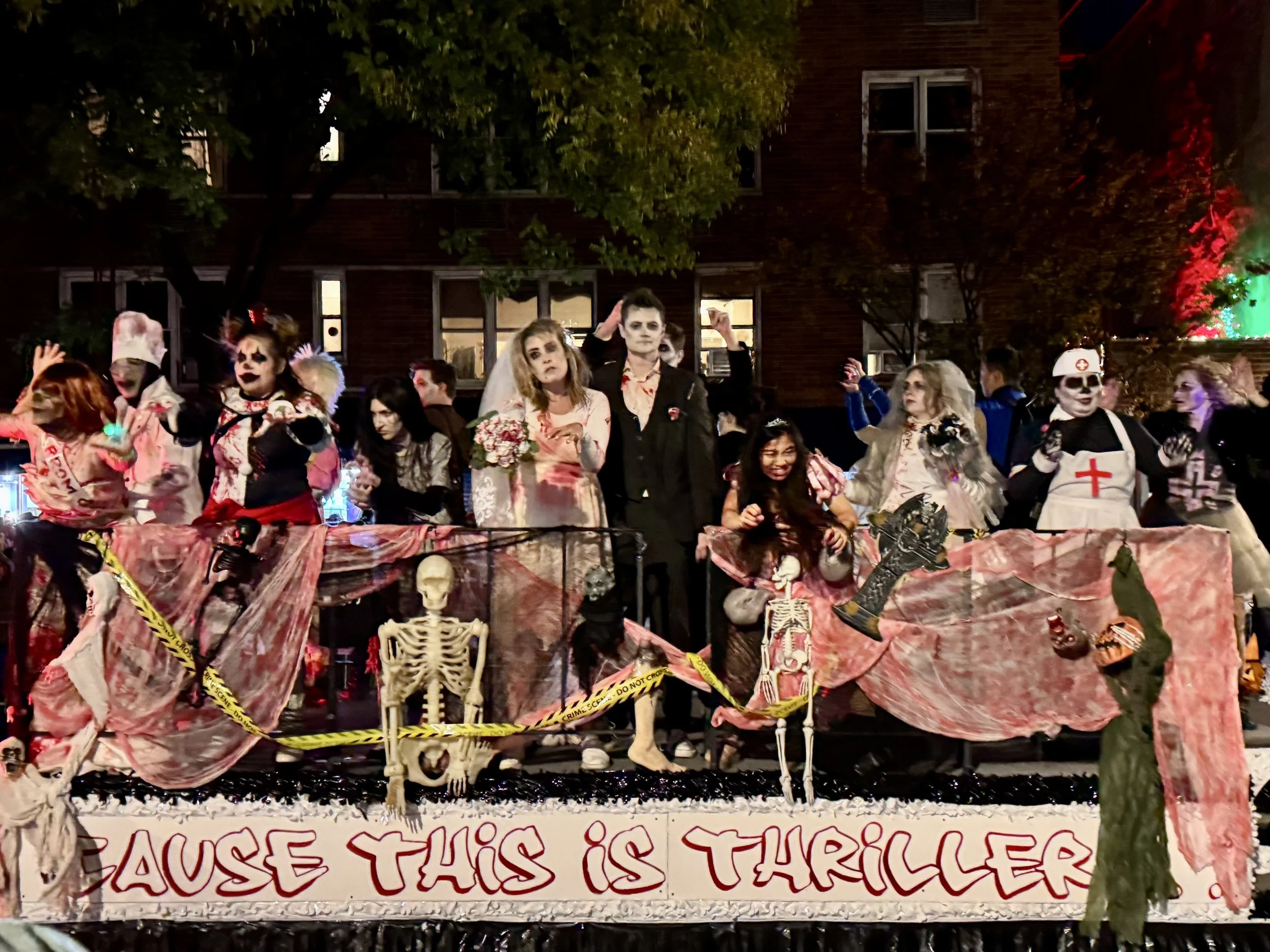
It was another thrilling night at the Village Halloween Parade. Even the ghosts and goblins were free from hope and fear as they carried on as they have been doing for eternity! 

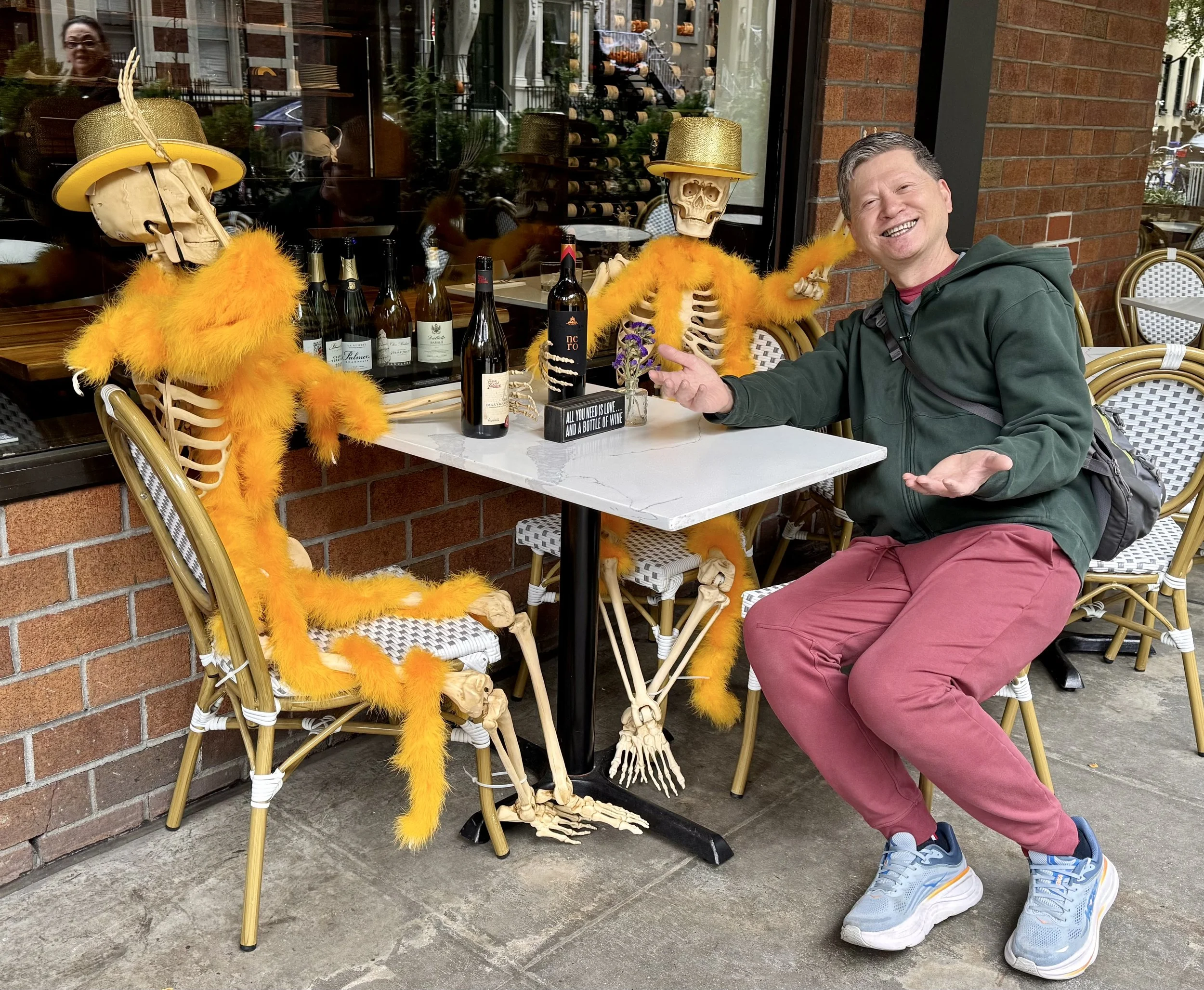
Without fear and hope, I hung out with a couple of my buddies at The Purple Tongue.

Photos from around Florida, NYC, and New Jersey all shot by me, with the exception of the photo at The Purple Tongue which was shot by Jen Yip.


Yoga and the Art of Living the Questions

It's been 24 years since that fateful day forever to be known as 9/11. The main question I think we need to ask ourselves always is: "what have we learned from it that we can use to help the world at-large in some small way in each and every day?"

……………………

When I was in my young teen years, I remember taking biology as a freshman in high school. I recall one of the first assignments we were given was to write a short essay answering the question: “what is life?” While I don’t remember what specific questions were swirling in my head, I do remember pondering that question from many different angles and working myself into a psychic frenzy. I remember peppering my mom with questions, and while she couldn’t answer all of them for me, she gave me her full motherly attention as she helped me in her patient and supportive way to try to find answers. I would love to have that essay now to see what answers I came up with back then so that I can compare them to the answers I would come up with in the present moment, now that I have had a long and full life. 
 
I’ve had a sense all through my life that on the scale of inquisitiveness from low to high that I am probably on the higher end of the spectrum. I remember I used to drive my first dance teacher crazy. He’d say: “you think too much.” Sometimes, these days, I’ll drive my husband crazy by asking too many questions leaving him to reply “I don’t know.”
 
But now, I’ve come to see that perhaps asking questions is not such a bad thing. And also, concluding “I don’t know” is also a good thing.
 
Last month, I was drawn in deeply to an On Being podcast in which host Krista Tippett interviewed the Buddhist Teacher and Ecological Philosopher, Joanna Macy (1929 – 2025) and her friend, the Psychologist and Poet, Anita Barrows. Both Joanna and Anita had translated works from the Austrian poet and novelist, Rainer Maria Rilke (1875 – 1926). In this conversation, they discussed several passages from their new translation of Rilke’s Letters to a Young Poet. Rilke had an ongoing back and forth with a young poet, Franz Kappus, who was also a 19-year-old military cadet. Their back-and-forth dialogue was set against the tumult of the turn into the 20th Century 125 years ago. Perhaps the conditions back then were not too different than the current tumult of our relatively nascent 21st Century? Certainly, there are parallels – namely that the conditions for a world war may once again be on the horizon.
 
The discussion over the 4th Letter really caught my attention. As translated by Joanna and Anita, Rilke says to the young poet and soldier:
 
I ask you dear sir
to have patience with all that is unresolved in your heart
and to try to love the questions themselves.
like closed rooms.
like books written in a foreign language.
Don’t try to find the answers now.
They cannot be given anyway because you would not be able to live them.
For everything is to be lived.
Live the questions now.
Perhaps you then may gradually one day into the future live into the answers.
 
Oh, how I wish I had read this poem as a young person. It might have spurred me to embrace the not knowing as a potential path towards more freedom. And it might have helped me to let go of some of the angst arising from all the not knowing. 
 
In the commentary after the reading of this poem, Joanna Macy exclaimed: “what a wonderful way to relate to uncertainty!” I wholeheartedly agree! 
 
Krista Tippet’s went on to say that her life practice is to “hold the questions, treasure the questions … nurture [them], walk with [them].” Joanna Macy said if you do this the answers will come towards you. She says: “Open to the reciprocity of life … it’s a living world … we can listen to it … we can open to it … it’s a mystery … and we meet the mystery, then it talks.” Then, from that vantage point, we can listen for the answers.
 
Here are some key takeaways I gleaned from this discussion:
 
1) Ask good questions. Perhaps the better the questions, the better the answers will eventually be.
 
2) This is a call for me to come back to the present moment over and over again. Stay grounded in the silence of the present moment. It is only in resting my mind there that the answers can start to move towards me and I can begin to perceive them.

3) Know at the outset that the answers may take a lifetime to come towards me and/or a lifetime for me to be ready to perceive them.
 
4) Needing to know the answers is like a prison I can easily choose to free myself from.
 
Complementing this practice of “living the questions” and “one day living into the answers” is a teaching that Pema Chödrön offered, which also really resonated with me. Pema wrote:
 
Groundlessness, uncertainty, insecurity, vulnerability – these are words that ordinarily carry a negative connotation. We’re generally wary of these feelings and try to elude them in any way possible. But groundlessness isn’t something we need to avoid. The same feeling we find so troubling when we open to it can be experienced as a huge relief, as freedom from all restraints. It can be experienced as a mind so unbiased and relaxed that we feel expansive and joyful.”
 
From this I gleaned that there is an exquisite freedom to be had in swimming in groundlessness. Yes, the practice of living the questions may start out feeling unsettling, but at some point, it could turn into a joyous adventure. Not being fixated on any particular outcome may give way to the realization of something magical and unexpected that was initially unimaginable.
 
Deepak Chopra says “uncertainty is my path to freedom ....” I think that is a remarkable statement for anyone to be able to make, and perhaps has led him to being as successful as he has been.
 
My main questions now? Here are a few:
 
1) What is to explain all the evil acts that are leading to immense suffering in the world at this time? 
 
2) In what ways within my capacity can I help to alleviate some of that suffering?
 
3) Will democracy survive?
 
4) What will I have for dinner?
 
With regard to questions 1, 2, and 3, Rilke might have advised me that I may not be ready for the answers now because I “would not be able to live them.” But if I am willing to simply “live the questions [for] now” and remain open to any and all possibilities, perhaps I will gain enough insight over time so that I “may [then] gradually one day into the future live into the answers.”
 
As for the answer to question 4, I will soon find out. One thing is for certain, I am enormously grateful that I can even anticipate having dinner, as I am well aware that many people around the world cannot do the same at this time. This makes me feel incredibly sad.
 
Over the course of the past month, as I have lived with these practices, I often wondered “what will the final draft of this e-Letter read like?” Well, readers, here it is. These are the answers and personal life experiences that, in my silent moments as I contemplated these teachings, came to me to share with you.
 
As always, I hope these lessons from a few venerable souls I admire are helpful to you as you live your questions. And, as always, I bow down to your best efforts to listen to the silence.

May you be happy, …
May you be healthy, …
May you live the questions, …
May you live into the answers, …
May whatever realizations come to you from the silent spaces of your awareness somehow serve those nearest to you, ... and ultimately benefit All Beings Everywhere.
 
Aloha and Metta,
Paul Keoni Chun

……………………

Images from this past month that inspired me to live the questions

I also wondered what images from this past month would I end up wanting to share with you. Here's what came to me:

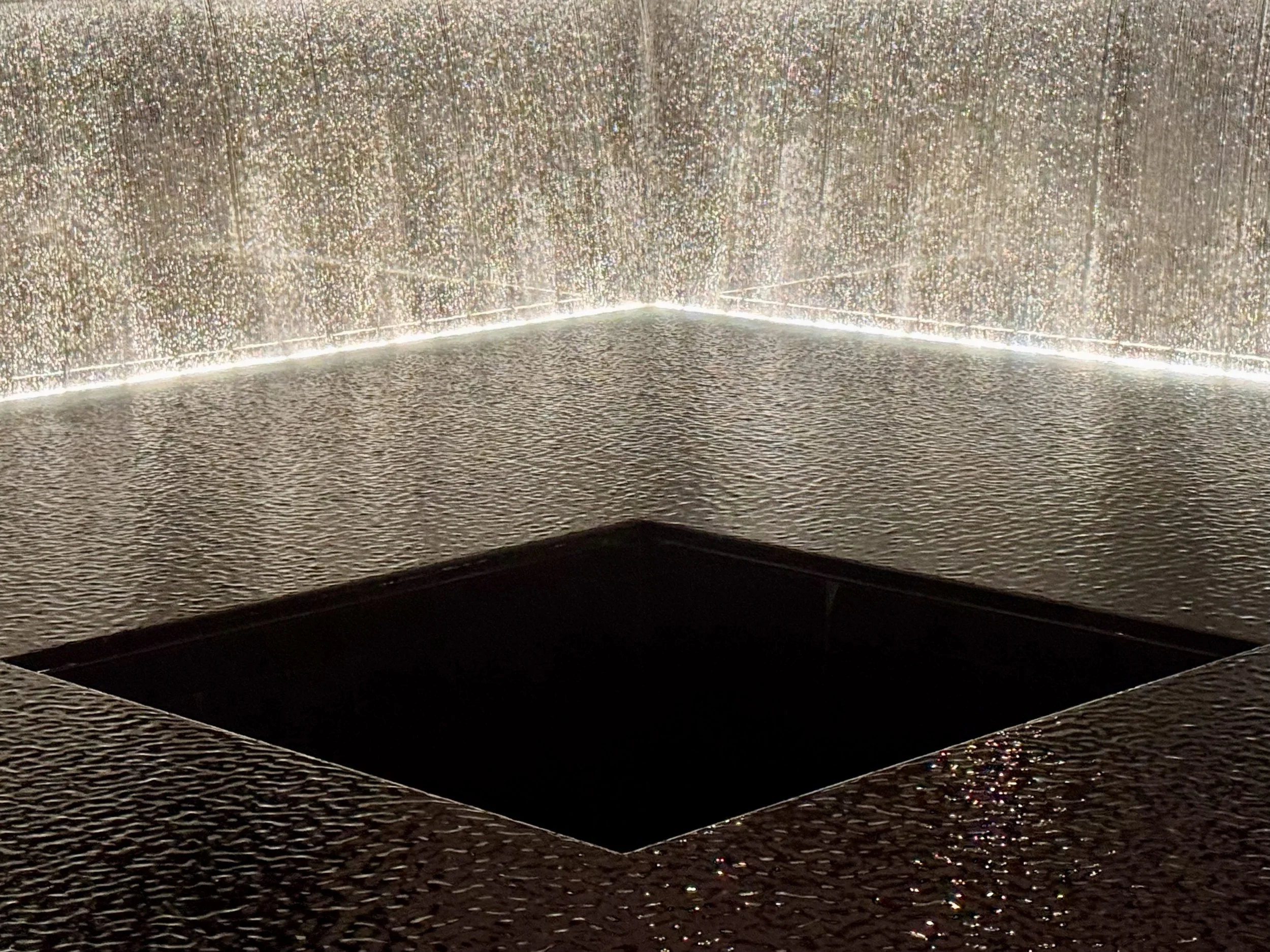
Tribute in Light, 9.11.25, in Lower Manhattan. As we continue to ask "Why, God, why?" may we also pledge to "never forget" and ask this question daily: "how can we serve?"

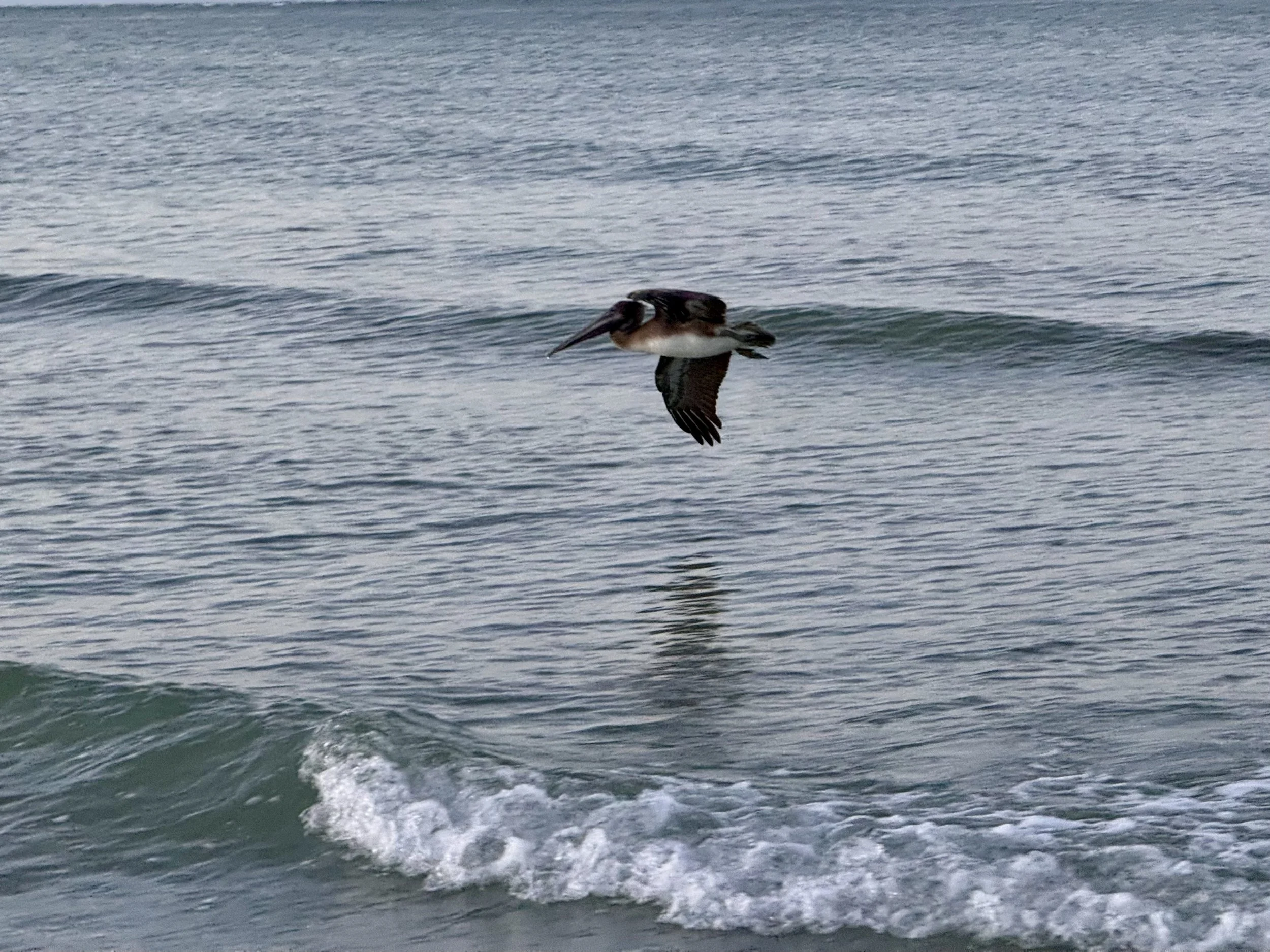
At South Lido Key Beach, this bird is asking "what's for breakfast?" Nature never ceases to amaze me!

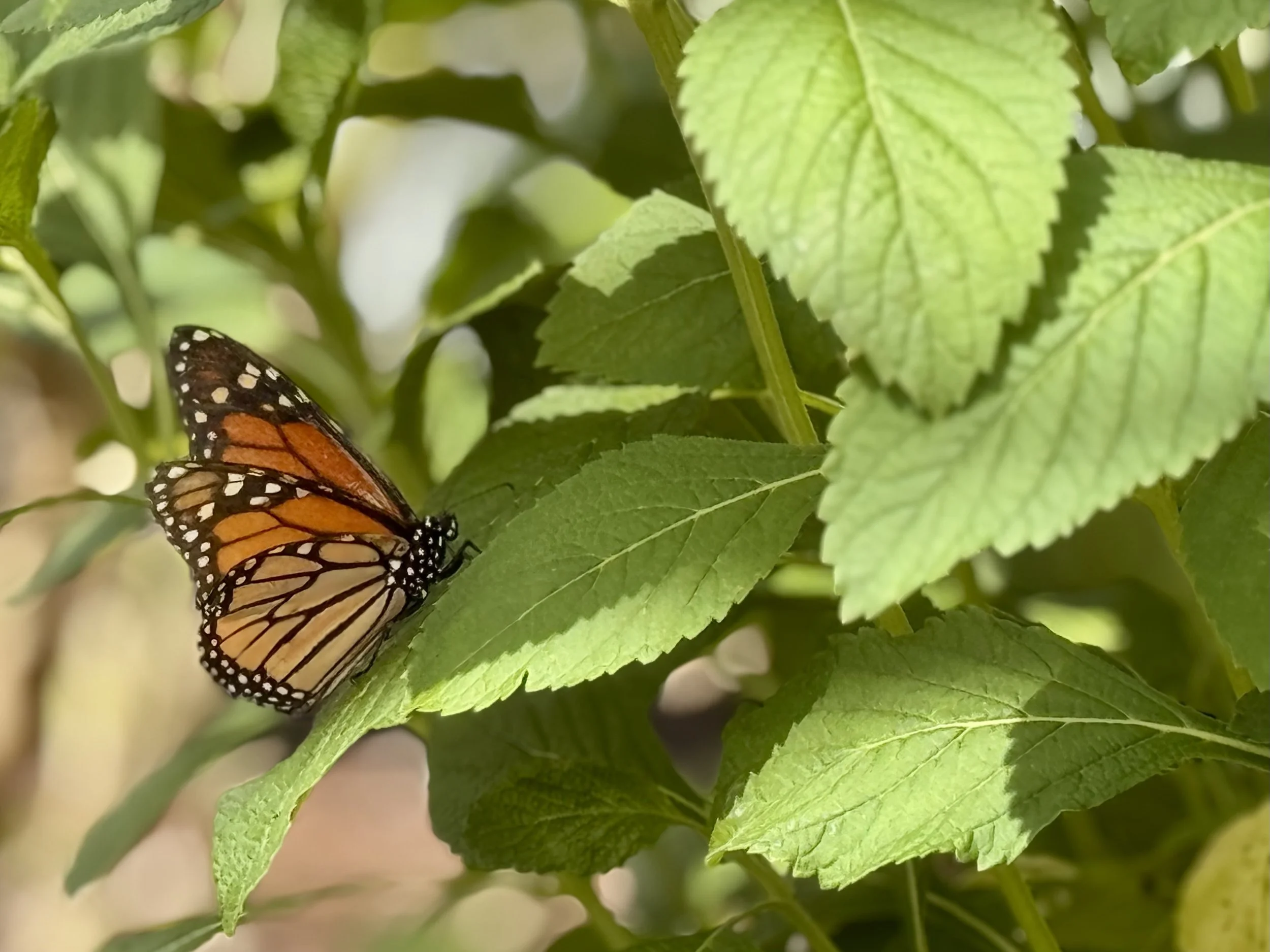
At Selby Gardens Historic Spanish Point in Osprey, FL, Nature delighted me at this Butterfly garden. I learned earlier this month at a Stanford Open Minds event that leaves are an engineering powerhouse. How they take energy from the sun to ultimately create food to sustain life on Earth is an incredible feat. And then Nature created creatures like this butterfly to assist in pollinating other plants and flowers -- that is another miracle. My main question is: "how does Nature do all these remarkable things?!" I surely hope to one day live into the answers!

View of the windward side of the Koʻolau Mountains from the Nuʻuanu Pali Lookout on Oʻahu. i will never cease to ask "how did Nature create this spectacular beauty?!"

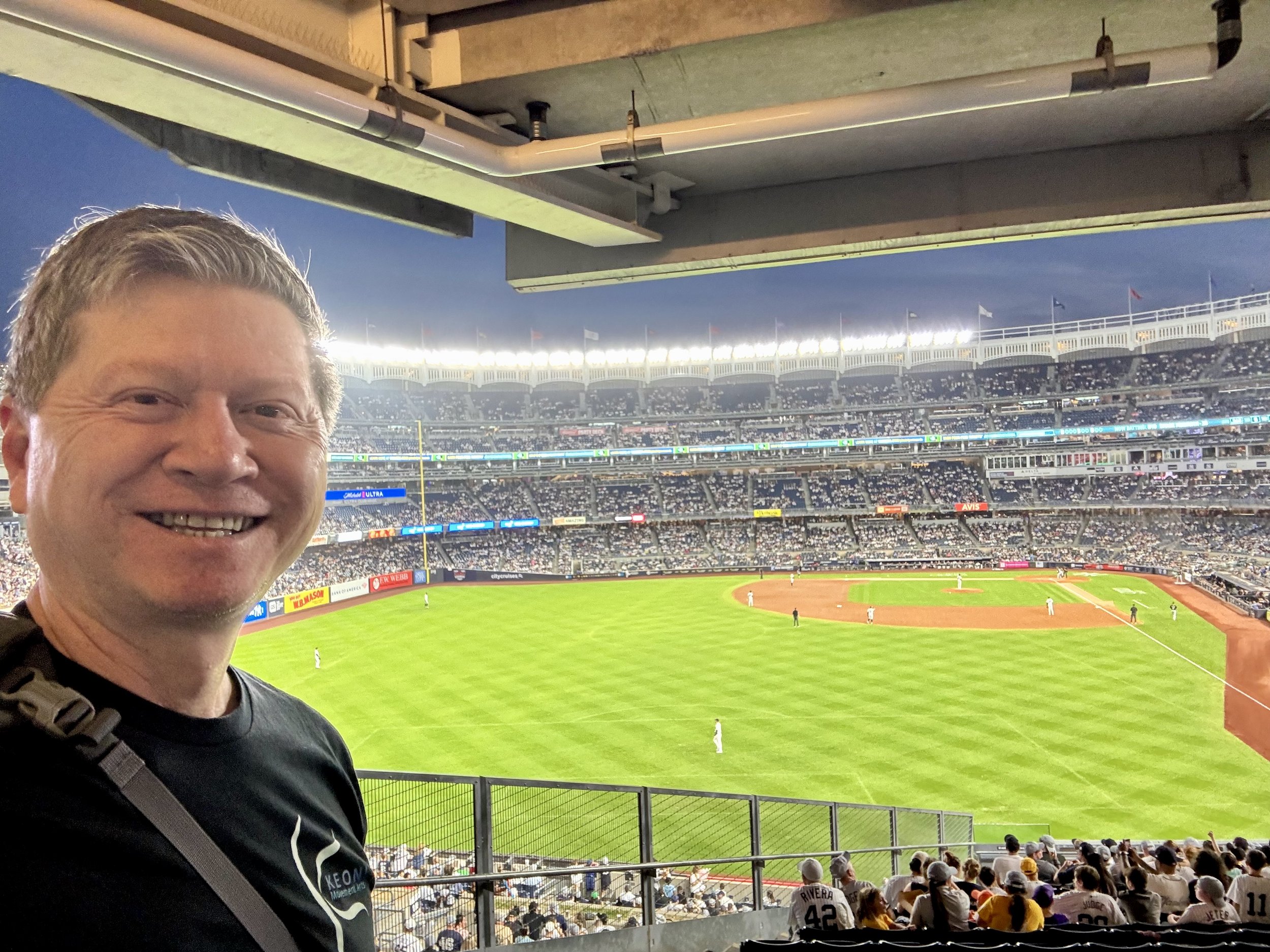
I got to see the Yankees play the White Sox back on 9.23. They came back to win the game in the bottom of the 9th! The question on many New Yorkerʻs minds at the moment is "will the Yankees win the World Series in 2025?!" Soon we will live into that answer! Letʻs go, Yankees! 

……………………

Photo Credits:
Photos from around NYC, Florida, and Hawaiʻi all shot by me.
 

Yoga and the Power of the Infinite

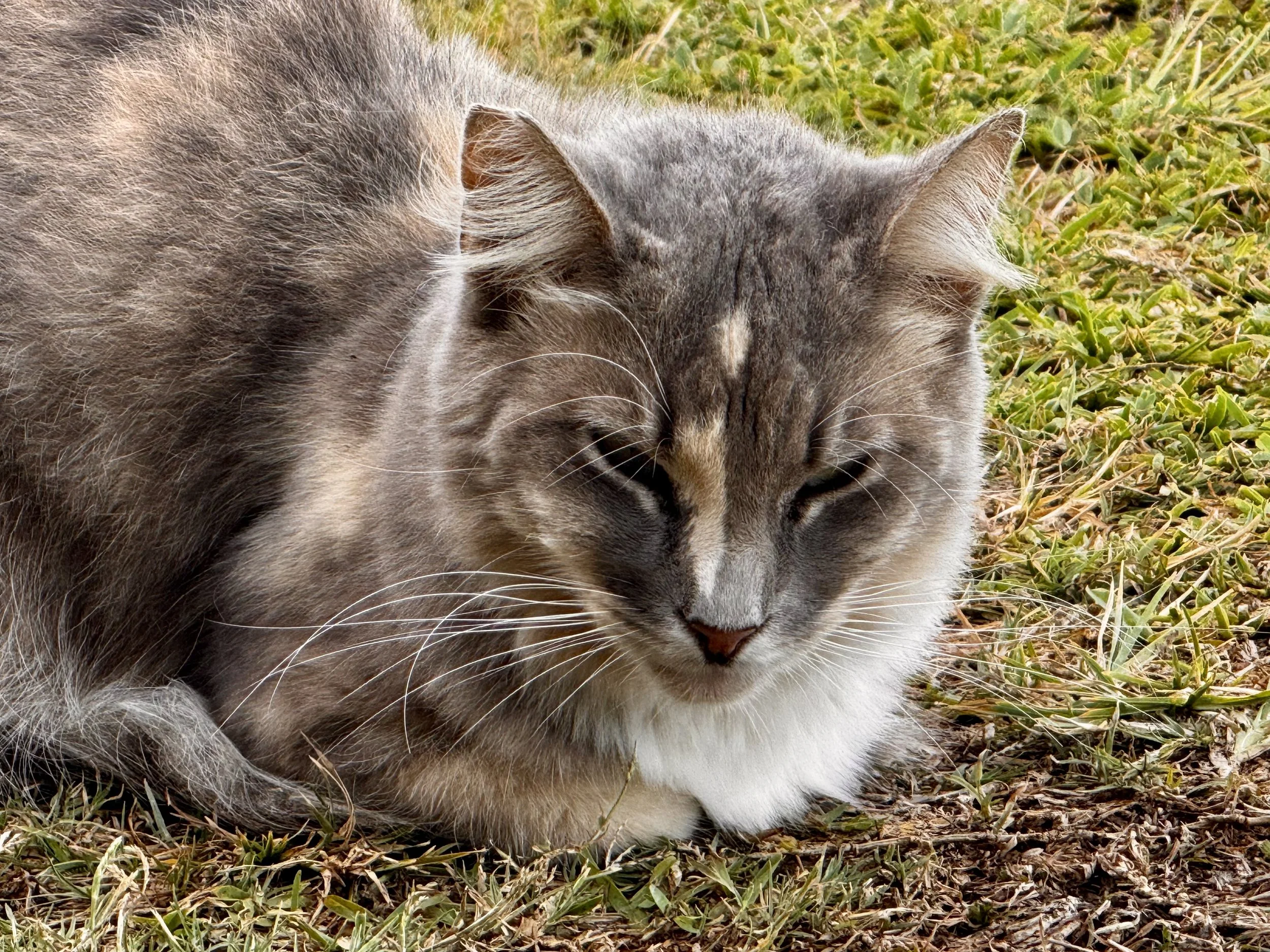
I happened upon this cat catching the early morning sun on the grass at the Waikīkī Yacht Club in Honolulu. I tried to get its attention but it paid me no mind. It looked so relaxed and seemed to be resting its attention on the Infinite. 

……………………

I receive a weekly email from the renowned yoga master Sri Dharma Mittra with insights on how to master your mind, body, and life through yoga practices. Recently, one popped into my inbox that stayed stuck in my head. Here is what Dharma Mittra’s instructed:

Rest your mind on the Infinite, then that becomes realization.

I’m not sure why this lingered with me and resonated in a deeper way. Perhaps it’s because I’ve been feeling so much deep sadness lately about all the evil acts that are taking place in the world. So much doesn’t feel normal right now and it’s hard to make sense of it all. 

But the key realization that’s come to me is that what is happening now is all finite. That realization – really that re-remembering of something I’d forgotten along the way – was the starting point to me feeling some liberation.

I did a little more digging into the Yoga Sutras of Patanjali and discovered one lesson that I wasn’t previously aware of. As translated by Swami Jnaneshvara Bharati (a.k.a Swami J), Chapter 2, Verse 27 reads:

prayatna shaithilya ananta samapattibhyam
The means of perfecting the posture is that of relaxing or loosening of effort, and allowing attention to merge with endlessness, or the infinite.
Two means of perfecting meditation posture: Steady and comfortable posture comes through two means:

  1. Loosening of tension or effort to sit in the posture

  2. Allowing attention to merge with the infinite

Specifically, this guidance is to be applied to perfecting seated meditation posture – the original yoga posture. The reason we practice all the other yoga postures is to perfect our ability to be sit in meditation posture for longer periods of time. And the longer we can sit in meditation, the closer we may come to Self-Realization.

In his commentary on this sutra, Swami J writes:

Focusing on the infinite: To focus on the infinite simply close your eyes, sit as comfortably and erect as you can, and allow your attention to expand. Attention likes to wrap itself around an object. Allow that object to be the whole of infinity. The mind will not be able to do it, but the effort to do so will easily be seen to bring a stability in the sitting posture. With a bit of experimentation, you can feel the effects of this yourself.

So, I experimented with this instruction as I was doing my regular meditation practice. First, I tried to relax something in my posture. Then, once I felt comfortable, I closed my eyes and placed my attention higher up around my eyebrows and forehead where I perceive my mind to reside. I have practiced meditation for 20 minutes a day, 5 days a week for a number of years now – it’s been so long I can’t remember when I began. I’ve used a few different techniques over the years. With this particular technique, I have to say that while I still noticed thoughts coming into my awareness, they seemed to leave more quickly and easily as my mind took small steps in the direction of merging with the infinite. These certainly felt like baby steps in the right direction. 

Then I experimented and took this teaching one step further into practicing other yoga postures beyond seated meditation. (I know – I took a few liberties with this sutra.) Recently, I was in a yoga class and the teacher guided us into a challenging posture. In that moment, I thought what if I just relaxed something? What if I didn’t try so hard? Well, the effect that was that I felt more ease and stability in the posture and it became easier to try to rest my mind on something bigger – the infinite. I discovered that by not exerting maximum effort in the yoga posture, I was able to find more balance – not only physically, but mentally as well. Having that sense of lightness and ease – as opposed to struggle and tension – allowed my mind to merge ever so slightly with something bigger than just my small self.

Because our yoga practice on the mat or cushion is such a metaphor for life in general, the realization I’ve been having is that in the “yoga postures of life” it can be beneficial for us to find ways to loosen the tension or effort when we find ourselves pushing up against challenging life situations. Then, once we regain a sense of balance in our body and mind, we can slowly begin to see that there exists something far more infinite than the finite and ephemeral situations we are currently finding ourselves in. By relaxing a bit to life as it is being presented to us in any moment – whether it be in a yoga asana or the “posture” of our current circumstances – it will be easier to rest our mind on the infinite and get out from the prison of our current cognitive muck.

This verse from the Chandogya Upanishad reminds us that Joy and the Infinite are intertwined:

Where there is creation there is progress. Where there is no creation there is no progress: know the nature of creation.

Where there is joy there is creation. Where there is no joy there is no creation: know the nature of joy.

Where there is the Infinite there is joy. There is no joy in the finite.

Here’s what came to me upon reflecting on this teaching: Progress indicates that creation is present. Creation indicates that joy is present. Joy indicates that realization of the Infinite is present. Realization lies in recognizing the limitations inherent in the finite. Practically speaking, this lesson invites us to live for Joy. And equally as important it suggests to us that we always try to recognize the limitations of the finite – the material things and tactical pleasures that we believe will last but that in reality are ephemeral.

The English Poet William Blake said:

If the doors of perception were cleansed everything would appear to man as it is, infinite.

As yoga practitioners, this serves to remind us that we practice yoga to clean the lens of our clouded perception of reality so that ultimately, we can realize the infinite possibilities available to us through our further Self-Realization. It will also remind us to try to see more clearly the reality that exists beyond the false illusions and promises of the material and tactical pleasures.

I know many of us are feeling somewhat stuck as we witness the current events that are throwing our world into tumult and upheaval. But I think as yoga practitioners, the key instruction might just be to relax just a bit to the way things are right now and focus on the infinite. All the Sturm und Drang of life as it is unfolding right now is really of the finite world. This is an open invitation to focus on the infinite and joyful possibilities that await us. Consider this as you meet these current realities with what I suggest should be a calculated and strategic kind of resistance. Perfect your “positions” through some softening of your “posture” and allowing your attention to merge with something far greater than the ephemeral tumult of our times.

As yogis, remain awake to your Higher Nature.

More personally, I hope that whatever you are struggling with right now that perhaps in loosening some tension around it and allowing your attention to wrap around something bigger – something more than finite – that this will help bring you some stability and ease so you can do your most important life work. I continue to bow down to your best efforts.

May you be happy, …
May you be healthy, …
May you loosen some tension in and around you, …
May you place your mind on the infinite, …
May whatever new realizations come to you somehow serve All Beings Everywhere.

Aloha and Metta,
Paul Keoni Chun

……………………

Images from this past month that inspired

These sights in August convinced me that there is something far beyond the finite and that the infinite is actually rather close at hand.

View from Ala Moana Beach Park in Honolulu. When I was a little boy growing up in Honolulu, I would stare out at the vast ocean. What lay out there, I wondered. In my little boy mind, it all seemed so infinite.

Another view from Ala Moana brought me back to childhood memories. I would stare up into the sky and wonder what's up there? The sky seemed so infinite, so beyond my little boy comprehension.

Central Park in all its stunning glory on an early August morning recently. Only something far more infinite than me could have created such ephemeral beauty for us New Yorkers to enjoy!

And Belvedere Castle in Central Park earlier this month seemed like a magical place full of infinite possibilities as it was bathed by a beautiful sunset.

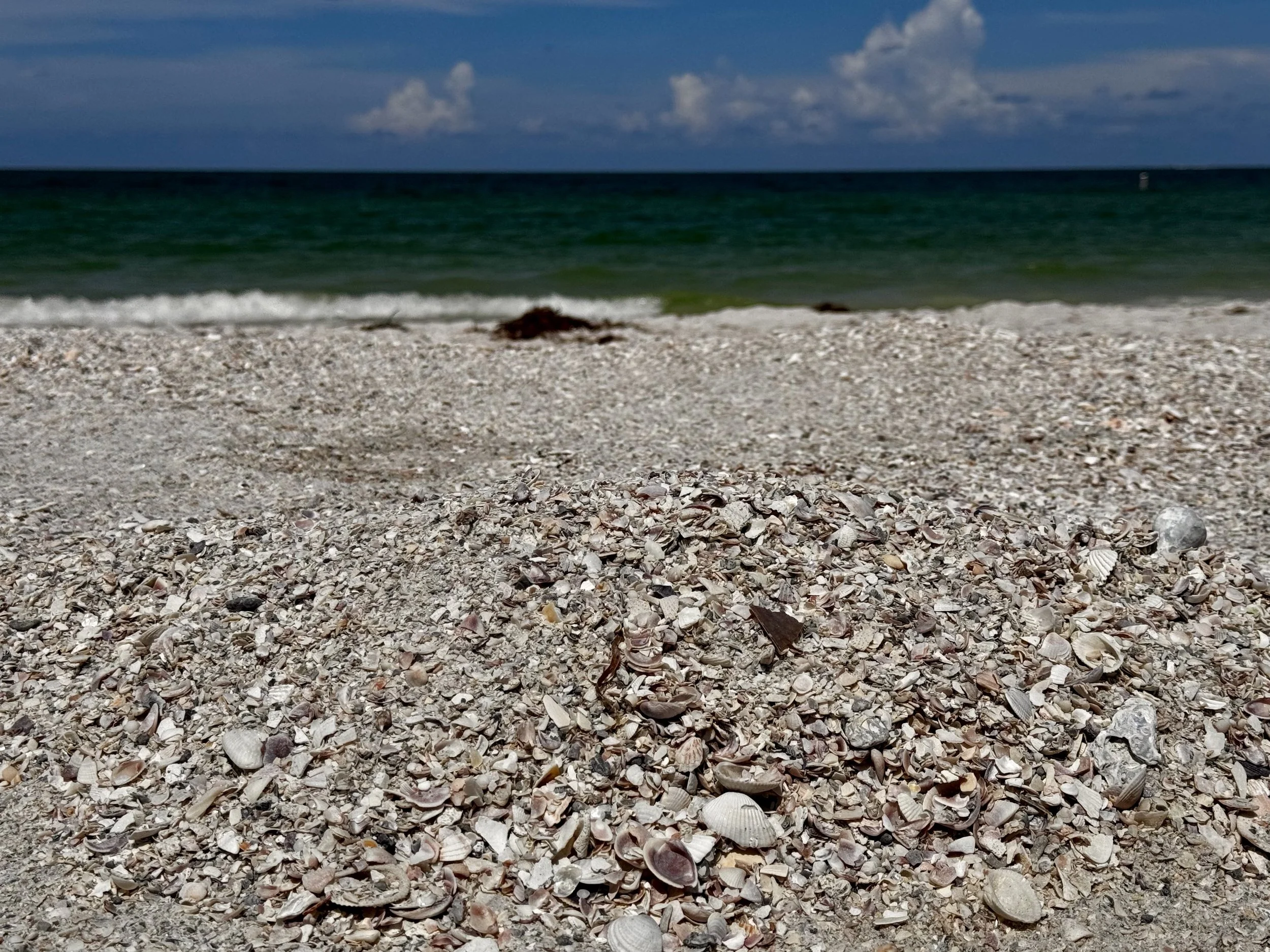
View of the Gulf Coast from Pass-A-Grille Beach in St. Petersburg, FL earlier this month. The waters beyond that were once home to these small shells seemed so infinite. I thought how many eons must it have taken for these shells to finally appear on this beach. It's so fun for me to experience moments like this that expand my mind towards the infinite.

……………………

Photo Credits:
Photos from around Florida, NYC and Honolulu all shot by me.
 

Finding Freedom through Yoga ... and Mel Robbins

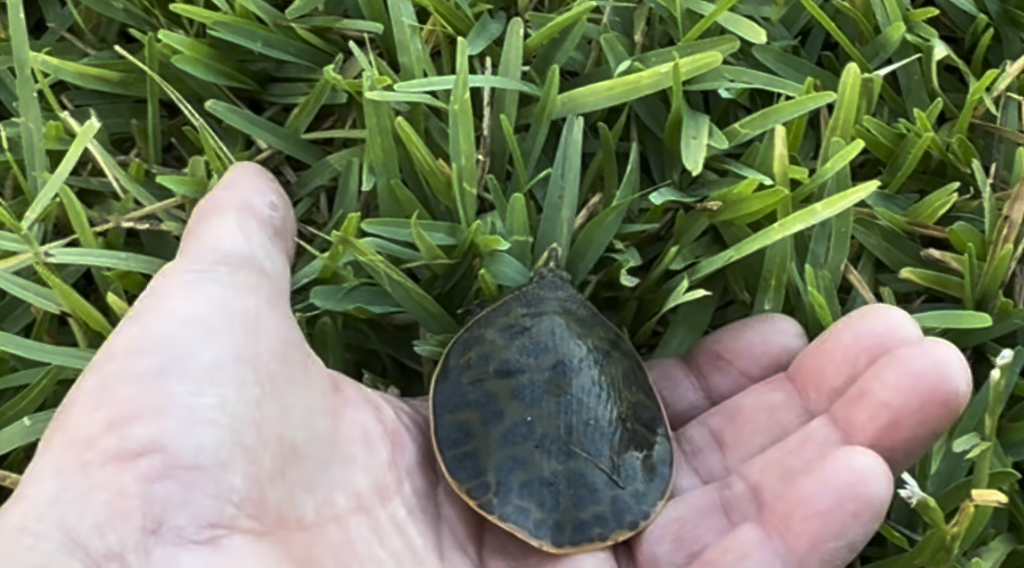
I found this little turtle in the rain gutter near our home and took it out back close to the lake. By releasing our grasp on life, we and others can experience freedom.

……………………

Sometime in the recent past few months, I came across this article in the New York Times: Mel Robbins Wants You to Lose Control. It was so intriguing that it led me to go on and listen to this Modern Love Podcast: Let Mel Robbins Share Her 5 Tips for a Healthy Relationship several times in order to try to glean some helpful insights.

Who is Mel Robbins? She’s an author and podcaster. She’s written a New York Times best-seller book The Let Them Theory. In previous career iterations, she’s been a lawyer and CNN legal analyst, life-coach, and radio show host. 

Here is one of the key quotes from the NY Times article:

“The book’s premise? If you stop trying to manage other people’s opinions, actions and moods, then your well-being and relationships will improve. Friends hanging out without you? Let them! Relatives griping about you? Let them! Your date ghosts you? Let them! Don’t stress about what you cannot control; focus on what you can.”

And I as a yoga teacher would add: if you are teaching a class and you see a student going off the rails doing their own flow that is different than what you are presenting, just LET THEM! True story – I was teaching a group yoga class recently and a student in the front row was doing his own thing as I was leading the class through my Hanumanasana sequence. So, I did as Marsha P. Johnson (see my recent June blog) would have done – I paid him no mind! It freed me up to honor my own truth and not get distracted by other people’s actions.

The NY Times article goes on to say:

"The first half of the 'let them' idea is about freeing yourself from the burden of trying to manage other people. As for the second half, Robbins turns to another concept: 'let me.'”

"It goes like this: after releasing what you cannot control, you say 'let me' and take responsibility for your next steps. Without that idea, you run the risk of simply shutting down and isolating yourself, the book warns."

Later, the article quotes Dr. Robert Waldinger, a psychiatry professor at Harvard Medical School who has appeared on Robbins’s podcast:

“I think what Mel is saying is that, most of the time, life goes better if we let people make their own choices.”

I for one can admit that I’ve tried to control and manage other people. Actually, I think it’s a very common human tendency and I highly suspect that I am not alone. Perhaps it’s tied into on our need to feel like we’re in control in our own lives, a way of keeping the ground beneath us stable and steady. 

But the freeing part of all this is that the energy we spend directed towards other people’s actions can be used and applied to our own actions. One the negative side, we might indeed shut down and isolate if managing other people has been firmly rooted in the foundations of our own identities and that foundation now feels groundless. However, on the positive side, “Let me” might lead us to take responsibility to strengthen our own foundations with new mindsets, beliefs, and practices. Thich Nhat Hanh reminds us:

"Freedom is not given to us by anyone; we have to cultivate it ourselves. It is a daily practice … “

And later he goes on to say:

“… No one can prevent you from being aware of each step you take or each breath in and breath out."

I like this teaching because it reminds us that we are the only ones that can truly set ourselves free. No one else can, and trying to control other people moves us farther away from this realization. 

In Yoga, the concept of “letting go” is addressed in the practice of Aparigraha. Yoga Teacher Molly Lannon Kenny wrote a short essay entitled: Aparigraha: loosening the grip and finding freedom. In it, she writes:

"Aparigraha is one of the yamas, or the first limb, of Yoga.  Although it is most often translated as "non-attachment," a more correct translation would be something like "non-grasping," or non-hoarding.  Our tendency to hold on tightly is something intrinsically human, and provides us with a false sense of control. ..."

"... The sense of control is indeed, however, false and leads us to feelings of constriction and scarcity.  We ended up having less space, less spaciousness, and we cling to superficial beliefs that cloud our ability to reach for something much deeper to believe in."

As a reminder to all of us who practice yoga, the yamas make up the first limb of yoga. They are practices we should bring to our yoga mat even before we step on to it.

To me, the "let them" theory ties into yoga and Buddhist practices in that by not grasping onto an idea of how someone should be acting or a fixed idea of what a yoga posture should look like we can experience relief in our bodies and clarity in our minds. And it frees us up – as Thich Nhat Hanh said – to be more able to be aware of each step and each breath.

Freedom is a goal of yoga. Cultivating spaciousness in our bodies and minds is why we practice. Freedom and spaciousness in the face of the many life illusions thrown our way allows them to dissolve.

When we loosen the grip on how we find ourselves viewing things, it allows for the heart to expand, and for our basic goodness to flow to the surface of our awareness.

In these very hyperpolarized times, I hope that the “let them” theory, the practice of aparigraha, the slowing down to experience each in-breath and each out-breath can all help you to find more freedom.

I leave you with one final quote from James Baldwin, who said:

"If we can liken life, for a moment, to a furnace, then freedom is the fire which burns away illusion." 

I hope yoga can help you lift the veil of illusions you’ve been living under and ultimately reveal a reality that is truly transcendent.

May you be happy, …
May you be healthy, …
May you let them, … 
May you loosen your various grips, …
May you breathe with awareness, …
May your newly acquired freedom in some way unique to you serve All Beings Everywhere.

Aloha and Metta,
Paul Keoni Chun

……………………

These sights in July freed my soul.

Water lilies of some unknown variety at Marie Selby Botanical Gardens. Similar to the lotus blossom -- which in yoga symbolizes rebirth and enlightenment -- the dark muddy water is the important ingredient needed to bring forth such immense beauty.

Q: why did the Sand Hill crane cross the road? A: I have no idea why but as Mel Robbins would say "let them." As long as they are not harming anyone, they are free to do whatever their innate nature wants them to.

A salute to freedom at the Macy's Fourth of July Fireworks. I've never seen the Brooklyn Bridge look any prettier all dressed up in lights!

Like Tanya McQuoid in The White Lotus, things of beauty set my soul free.

View from Parrish, FL on July 25th. The seeds of change they are 'a blowin' in the wind.

……………………

Photo Credits:
Photos from around NYC and Florida all shot by me.
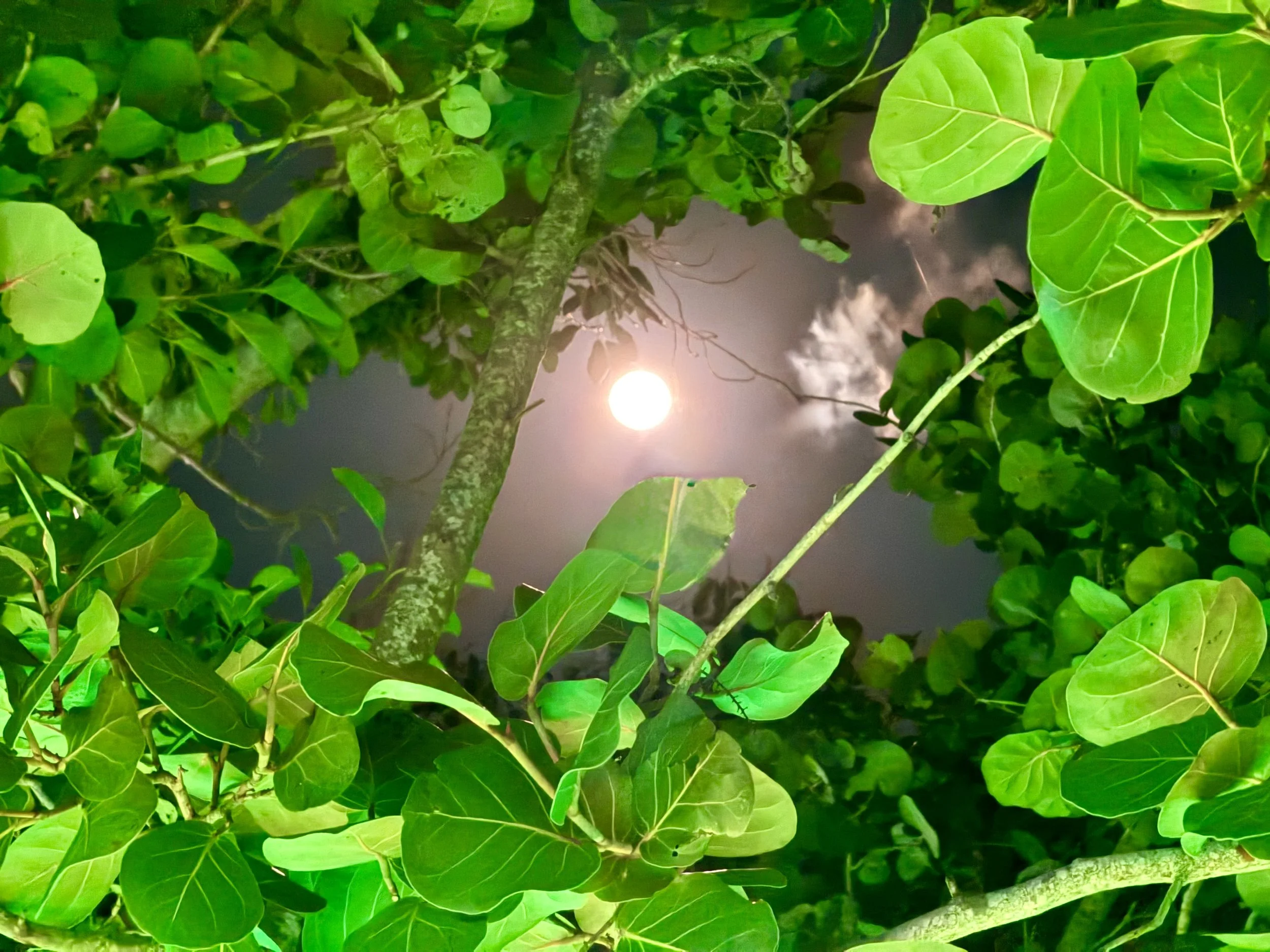
 

Yoga and the Wisdom of “Pay It No Mind”


Marsha P, Johnson State Park, Williamsburg, Brooklyn

……………………

This month, the ground-breaking movie Brokeback Mountain was re-released in theatres in celebration of its 20th Anniversary and in honor of Pride month. I remember seeing it five times back in 2005 and 2006 – as a younger gay man then, personally it really hit home. Last week, I went back to the theater to see it again – twice. And each time, I came away devastated.
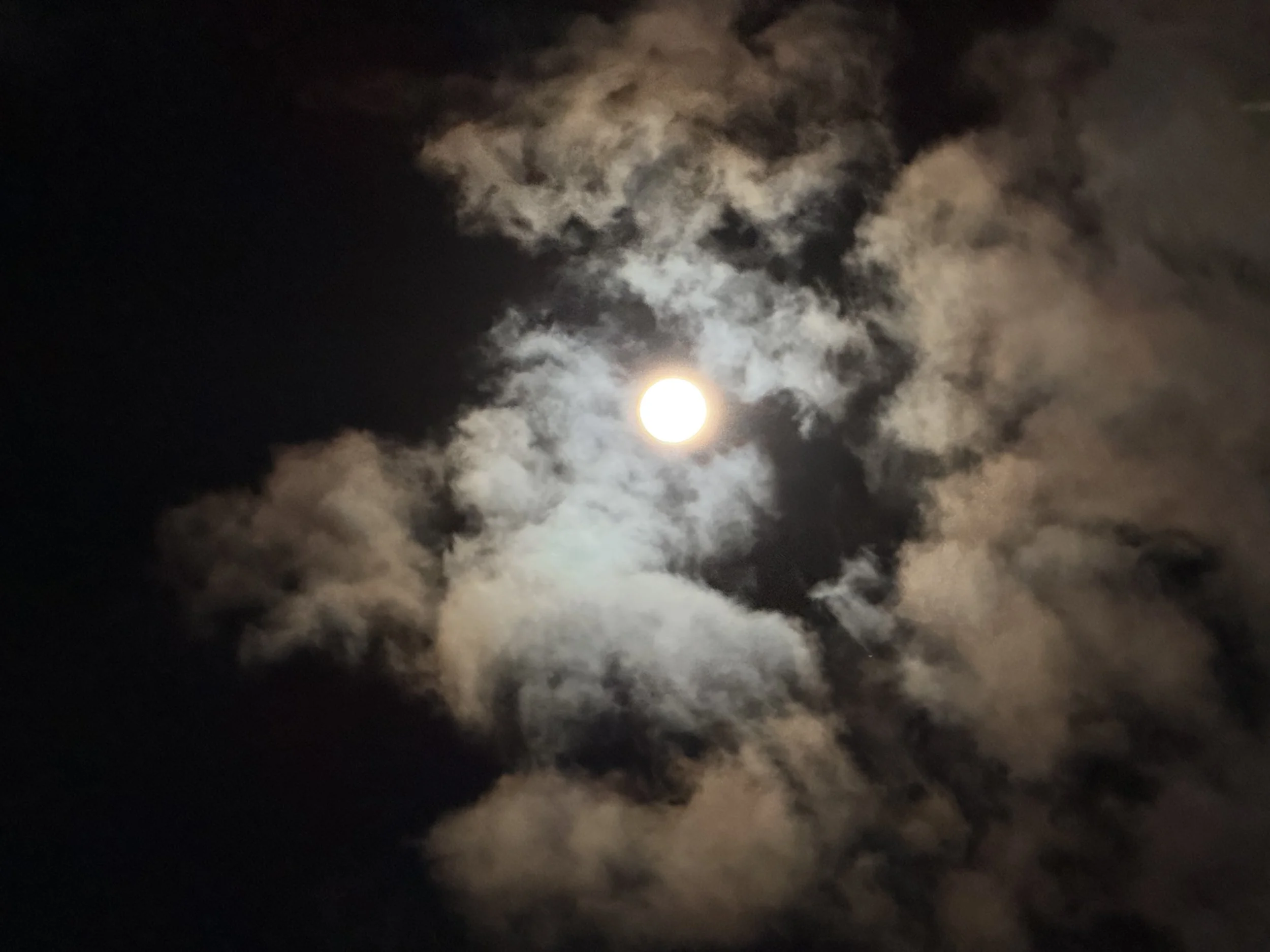

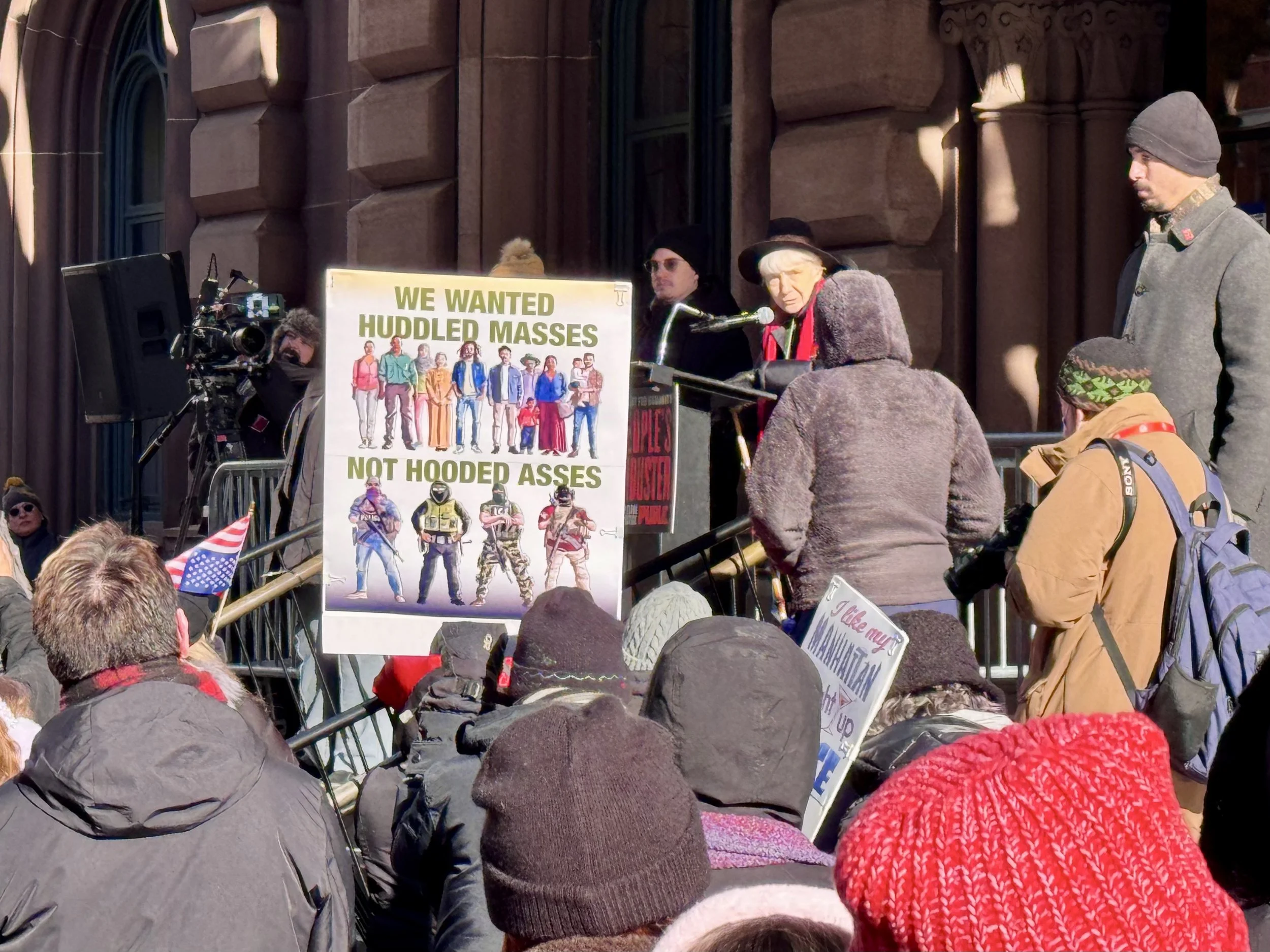
Brokeback Mountain is the story of two gay cowboys – Ennis Del Mar (played by Heath Ledger) and Jack Twist (played by Jake Gyllenhaal) – who couldn’t openly express their love for each other back in 1963 Wyoming. So, they had to repress their feelings. This particular scene from the movie so devastatingly shows how when one cannot be one’s authentic self it can lead to self-hatred and violence. Each time I’ve watch it, it’s brought tears to my eyes. 

Meanwhile, in NYC in the late 60’s, the Gay Liberation Movement was starting to take hold. Gay people were starting to become fed up with not being able to live their lives authentically.

One of the leaders of this movement was Marsha P. Johnson, A New York State Park was named after her, with this description on its website: “On February 1, 2020, the park was renamed in honor of Marsha P Johnson, a transgender woman of color who was a pioneer of the LGBTQ civil rights movement and a prominent figure in the Stonewall Uprising.” 

Recently on June 18, I saw this segment on the PBS Newshour about a new biography called "Marsha: The Joy and Defiance of Marsha P. Johnson", written by author, artist, film maker and transgender activist, Tourmaline. PBS News journalist, Amna Nawaz, interviewed Tourmaline and cited that people would often ask Marsha “what does the P. stand for?” Marsha’s response:

“Pay it no mind.”

Amna asked Tourmaline “What did that phrase mean to her? Why was that so defining?” Tourmaline’s response:

“It was so important because Marsha was born into a world with immense harsh conditions, right? She moved to New York City, Times Square in 1963, and at the time, if you were a trans person, you could be arrested and put in jail just by going outside and living out your truth.

There were these three articles of clothes laws that the New York Police Department used to arrest and punitize trans and gender nonconformed people. So Marsha was really aware of the conditions of her life, and she dedicated her life to be a leader for her entire community.

And, also, it was really important for her to not get tangled up in the noise of it all. So she said, pay it no mind to the people who didn't understand her beauty. She said, pay it no mind to people who could never see the value of her community, who didn't understand the beauty of trans and gender non-conforming people, turning up the volume of their entire life.”

Sounds like 1963 New York City was not too much different than 1963 Wyoming. However, in comparing Enis to Marsha, at least Marsha had allies and grew up in a supportive and loving family. Enis did not. All he had really was the lonely silence of the vast ranges of the Rocky Mountains. If only Enis could have lived authentically as himself, perhaps he would have found not only true love, but also true happiness.

So why is living authentically so important to us as yogis? This quote from Alan Cohen may have the answer. 

"The road to enlightenment is paved with authenticity, not imitation."

Our goal as yogis is to reach enlightenment. In the beginning, our experiences of enlightenment may be few and far between. But with practice, we can experience it more often. 

And one way we can experience fleeting moments of enlightenment is when we can be our most authentic selves. Being authentic brings lightness to our demeanor and joy to our hearts and minds.

Imitation, on the other hand, suggests conforming. And conforming to other people’s ideas about who we should be can feel so repressive and restricting, and bring great suffering.

So, to me, yoga and the wisdom of “pay it no mind” is that this practice can free us up to be who we are most authentically. It can free us from having to hide the most vital part of our individual selves, the most sacred part of our selves that reflects God in the human form.

The world will not always “get us”. Many in the world may never see our authentic beauty. But as Marsha P. Johnson would suggest, we don’t need to get tangled up in other people’s noise. As long as how we are expressing ourselves isn’t harming anyone else, we can be free to live as we feel we truly are meant to live.

Perhaps if there were more people living their authentic life there would be fewer repressed feelings in the world, and as a result there would be less reason for people to resort to violence. Ennis resorted to violence towards Jack as an outward way of expressing his inner violence toward his own true authentic self. I can’t help but muse: “what if Marsha P. and Enis met?” … Perhaps Hollywood can write a happy ending!

For us as yogis, anything we can do to reduce violence in the world is a good thing. And if being authentically true to ourselves helps to reduce violence both outside and within ourselves, then that is a way of truly serving the world.

And if you need any help along the way remembering who you truly are, perhaps these words from Dr. Seuss can guide you back to your authentic self:

“There is no one alive who is Youer than You.” 

Happy Pride.

May you be happy, …
May you be healthy, …
May you pay it no mind, …
May you live authentically, ...
May your authenticity serve All Beings Everywhere.

Aloha and Metta,
Paul Keoni Chun

……………………

These sights in June made me feel lighter and enlightened.

NYC's Pride March was a day of celebrating our authentic selves in its many varieties. 

Marsha P. Johnson would have been proud of this person's activism at the NYC Pride March. Oh, Mary! - Cole Escola would be too!

The Empire State Building got all decked out for Pride!

Even the rain couldn't dampen this older adult person's sense of civic duty to stand up for democracy on No King's Day back on June 14.

A dramatic sunrise as viewed from Atlantic City, NJ on June 11. Things may seem dark at the moment, but remember that Light is always a more powerful force. Enlighten yourself through continuing to cultivate your authenticity!

Photo Credits:
Photos from around NYC and Atlantic City all shot by me.


Yoga and Lessons from Dr. Martin Luther King Jr.

Amen, Pope Leo.

……………………

Last month, I wrote about the transformative life-work of the great yogi, Mahatma Gandhi. No doubt, his practice of non-violent resistance probably started out like a tiny redwood tree seed. But through his persistent and consistent practices over many years, it grew into something akin to a redwood tree – the tallest tree in the world. His example was so great and mighty, that it had a tremendous influence on Dr. Martin Luther King Jr. Gandhi’s teachings and practices guided Dr. King as he sought to bring about changes that would right many of the wrongs of racial injustice that were infecting our collective lives here in America for far too many years.

Earlier this month on May 2nd I read this guest essay in the NY Times Opinion section by Jonathan Eig: For Those Who Wish to Fight Back but Don’t Know How. It talks about Dr. King’s beliefs, moral values, and actions, and offers suggestions for strategies we might be able employ now to meet this moment’s injustices – injustices that can be compared to what Dr. King lived through.

That the essay came out on the day of my 66th birthday was a gift in and of itself! And coincidentally, as it turns out I went to see Redwood on Broadway that night and learned more than I previously knew about this remarkable tree. For example, did you know that a redwood tree’s roots are actually quite shallow, but it’s roots are connected with those of the nearby redwood trees and collectively they form a foundation so strong that it allows for each redwood tree to grow to astounding heights – the tallest is 380 feet!

Dr. King was aware of the interconnected nature of all beings when he wrote these famous words from his Letter from Birmingham Jail:

“I am in Birmingham because injustice is here,” he wrote. “Injustice anywhere is a threat to justice everywhere. We are caught in an inescapable network of mutuality, tied in a single garment of destiny.”

Similarly, in yoga literature, the metaphor of Indra’s Net reminds us that we are all jewels in this vast universe of awareness and each of us are connected to every other jewel in the universe. And like any net, when you pull at one part of it, it is felt at all other parts – perhaps quite minutely, but felt nonetheless. So, any actions we take that can help move the needle forward in correcting injustices will be felt somewhere out there. It might be felt only minutely at first, but like Dr. King’s efforts, as it gathers other “jewels” to take action, the net effect grows greater and greater until it reaches a tipping point where there is enough of a pull for systemic change to happen.

This particular paragraph in Jonathan Eig’s guest essay contained several ideas and strategies that are part of yogic and Buddhist philosophy and thus struck a chord within me:

“What would Dr. King do today? In his sermons, speeches and essays, he gave us the answer. He told us that while elected officials may try to divide us by stoking resentment and rage, we shouldn’t let them. He reminded us of our essential goodness and encouraged us to trust and rely on the goodness of others. He told us not to expect immediate results. We often forget, in telling Dr. King’s story today, how many of his organized protests were judged failures in their time, from Albany, Ga., to Chicago. Even his efforts in Birmingham were faltering for weeks, with participation falling off and media interest fading, until the city’s youth joined the protests and reinvigorated the movement.”

Buddhist teachings and practices intend to remind us of our essential goodness. And also – though probably more difficult to realize – that all of us are essentially good. Yes, this includes our “enemies.” And this is why Dr. King advocated for “non-violent” resistance, even in the face of violence. Non-violence in yoga is the practice of “ahimsa” or non-harming. In yoga, it is the very first step on the path towards Self-Realization. It would be safe to say that Dr. King was likely a very highly “Realized” individual. But perhaps even more important to Dr. King was that by acting non-violently he was acting with love. He truly did understand that love and hatred are inherent in all beings and he, like Mahatma Gandhi, worked on himself to try to harness the power of his innate love in order to do good in the world and at the same time suppress his innate hatred in order to not undermine his life-work.

Jonathan Eig also points out that many of Dr. King’s efforts appeared to be failures in the early stages. Perhaps while experiencing these failures, Dr. King was consciously also practicing the lessons imparted by these important verses from the Bhagavad Gita – ones that I have shared many times before:

You have control over actions alone, never over its fruits.  Live not for the fruits of action, nor attach yourself to inaction.  Established in Yoga, O Arjuna, perform actions having abandoned attachment and having become balanced in success and failure, for balance of mind is called Yoga.
-- Krishna speaking to Arjuna in Chapter 2 of the Bhagavad-Gita, verses 47 and 48

Or, as I read somewhere some time ago, more succinctly here the Bhagavad Gita is advising us to:

Perform your actions in the world skillfully and lovingly, yet know that you are not entitled to the fruits of those actions.

In my own life, this is a reminder to me to just try and do my best to act skillfully with love out in the world. It’s a reminder to me to let the results be what they are going to be. And most importantly it reminds me that in order to be effective I have to hold onto my physical and mental balance – my equanimity. And one way to achieve this feeling of equanimity is by letting go of worrying how things are going to turn out.

I actually tried to live this lesson in my own life recently when I was helping a family member who is experiencing health related challenges. I’m sure you’d agree that it is never easy to help other people who are in difficult situations – perhaps especially if the person is a family member. But I kept reminding myself that the results of my actions are none of my business really. Rather, I tried to focus on just taking the most loving and skillful actions I could think of to take.

In a far greater way, Dr. King took the most loving and skillful actions he could think of to take. Sadly, he didn’t live long enough on this earth to see many of the profound and positive changes his actions resulted in creating, but I am certain he is smiling from heaven!

So, the lessons I’ve learned from the Bhagavad Gita and Dr. King’s example that may be helpful to everyone are:

  1. The goal is not necessarily to get what we want, but rather the goal is to take action, daily. Getting what we want depends on outside factors. Taking actions daily depends on inside factors, and we can control those.

  2. We can get paralyzed into inaction out of fear that we may not get the desired outcome we wish for. We have inklings and ideas of what actions we should and could take, but we can get stopped in our tracks out of fear that they may lead nowhere. Letting go of the fruits of our actions can help us overcome our fear of acting.

So, as you take whatever skillful actions you can think of to fight injustices near and far, I hope that yoga and Buddhist teachings as well as the life example of Dr. Martin Luther King Jr. can inspire you to keep moving forward each day. Here again is Jonathan Eig’s essay to assist you along your way.

And as I finished by saying last month, I know full well that this is not easy work. And because of that, I again humbly bow down to your courage. 

May you be happy, …
May you be healthy, …
May you act skillfully and with love out in the world, ...
May you act with equanimity, …
May whatever the results of your actions are somehow benefit All Beings Everywhere.

Aloha and Metta,
Paul Keoni Chun

……………………

These sights in May helped me to maintain my equanimity.

While not exactly a redwood tree, this tree I found in Central Park fit the bill just fine. Tree-hugging is good for the soul.

After all those showers, hooray for May flowers!

Photo credits:
Pope Leo’s words from an unknown source.
All other photos shot by Paul Keoni Chun.


Yoga and Lessons from Gandhi

Bougainvillea in bloom, one of my favorite plants in Hawaii. Spring makes me smile!

50501 Protesters on Madison Avenue earlier this month. As far as I could tell, folks were respectful and peaceful.

……………………

Last month, I wrote about the yama Satya, which is the yoga practice of avoiding lying, speaking the truth. One cannot leave out of any discussion about Satya without mentioning Mahatma Gandhi. I read somewhere once that Gandhi is considered by some to be the greatest yogi that ever lived. He spent his whole life fighting against injustice. But most importantly, he did so by first cultivating his own powers and perfecting his own ability to practice Satyagraha, which as I will share further below is a practice often translated to mean non-violent resistance. 

In to my inbox recently arrived an email with a link to an article in Psychology Today by Zoe Weil entitled: What Can Gandhi Teach Us Right Now? It was a captivating and topical read. Indeed, during this time of upheaval in our country and all the ripple-effects they’re having in the larger world, there is a lot we can try to emulate from the way Gandhi lived his life that may help us now.

Zoe, the article’s author, said a friend posed this question: “Do we just be still without any action to what is happening in this country?” Zoe’s response was: 

“Gandhi would hardly want us to keep still. After all, he worked tirelessly. He also worked strategically, wisely, and forcefully, with force embedded in his guiding principle of satyagraha, often translated as ‘nonviolent resistance.’ But satyagraha means so much more than this. The word combines satya, meaning truth, and agraha, meaning insistence, firmness, and adherence. In other words, Gandhi’s force for change was an unshakeable commitment to opposing injustice with truth.”

The key practice for us as yogis is to cultivate a deep insistence on knowing what is true and what is not. The firmer we are in our pursuit of truth, the bigger challenges we can take on, and the better will be our chances for success in cracking open doors that will lead to systemic changes that alleviate suffering in the world.

Apparently, Gandhi had worked on himself so much that he got to the point where he was able to say:

“I hold myself incapable of hating any being on Earth. By a long course of prayerful discipline, I have ceased for over forty years to hate anybody. I know this is a big claim. Nevertheless, I make it in all humility. ….”

All I can say is “Wow.” I don’t know that I will ever be able to make that claim in my current lifetime, but perhaps through my yoga and meditation practices I can at least crack open some inner doors in order to move in that direction.

Just as importantly, Gandhi goes on to say:

“… But I can and do hate evil wherever it exists. [For e.g.,] I hate the systems of government that the British people have set up in India. … But I do not hate the domineering Englishmen ….” 

Gandhi worked on himself and achieved extraordinary abilities. Chief among them, perhaps, was his ability to separate people from their actions and the institutions that influenced them so that he could hate the actions and the institutions while still being able to love the person. He was able to make to make that critical distinction between the person and the evil acts themselves, and the systems and institutions that caused people to do evil things.  

Similarly, yoga encourages us to separate who we really are from who we think we are. From the yoga perspective, we are not really the thoughts we think or the body we inhabit, but rather we are the observer of all these human experiences we are having. Practicing meditation, particularly, can help us to separate out the act from the actor, the thought from the awareness of the thoughts. Importantly, it can help us to still be able to love ourselves and others more while still not always loving everything that we or others do.

Gandhi said: 

“I have learnt through bitter experience the one supreme lesson to conserve my anger, and as heat conserved is transmuted into energy, even so our anger controlled can be transmuted into a power which can move the world.”

And to add to this, Zoe said:

“… truth for Gandhi meant never doing evil to combat evil; never using violence to oppose violence; and never succumbing to hate to resist hate. It meant no less than living, acting, and teaching with an abiding core of love.” 

Just as the heat of our yoga practice of tapas helps us to burn away the impurities in our mind and body, so too can the heat of our anger be mixed with our capacity for love to transform the unjust situations we are trying to change in an almost alchemical kind of way. The key practice: Control your Anger. If one can do that, then metaphorically speaking one can use the heat from one’s anger to compost any unjust situation one sees into a rich soil that will produce positive outcomes and change systems and institutions for the better.

A key point of the article is that Gandhi is someone we can try to live in the spirit of, similar to how Christians may try to live in the spirit of Jesus or Buddhists in the spirit of the Buddha. We may not be able to attain the same level of enlightenment that Gandhi, or Jesus, or the Buddha achieved, but we can be inspired by them enough that we can keep taking baby steps forward rather than backward.

If you’d like to delve a bit deeper and perhaps gain further insights, here again is the link to the article: What Can Gandhi Teach Us Right Now?

Keep moving towards an unshakeable understanding of the Truth. The Truth is there in plain sight if you can slowly clean away the fogginess from the lens through which you perceive reality. This takes work. Fortunately, yoga and meditation – and prayer even, if that’s your thing - are things that can help get you there. 

Zoe reminds us to “do the inner work as tirelessly as the outer work to achieve all of the above.” 

This is not easy. I bow down to your courage. 

May you be happy, …
May you be healthy, …
May you practice truth-telling with a firm insistence, ...
May love be at the core of your resistance, …
May the rich compost you create through your sincere and humble efforts benefit All Beings Everywhere. 

Aloha and Metta,
Paul Keoni Chun

……………………

These sightings in April resonated.

Three views of the Hawaiian sky at different times of the day invites the question: who are we really - the menace of the dark clouds? ...

Or the promise of the puffy white clouds? ...

Or the clearness and immeasurable possibilities of the unobstructed deep blue sky? Remember: where you put your attention is how you'll perceive reality.

Or perhaps the joy of a happy Hawaiian Gecko?!


Yoga and the Power of Satya – Truth

Plaque at the New England Holocaust Memorial on Boston's historic Freedom Trail. One of many truths that can never be erased.

……………………

Last week, I traveled up to Boston to experience in-person the World Figure Skating Championships. It was the ultimate Artist’s Date! 

Along the way to TD Arena, I passed through a brief stretch of the Freedom Trail and came across the New England Holocaust Memorial. During this time in the world where forces want to erase many truths of human horrors, it is especially important that we honor truth-telling.

Turns out, we, as yogis, are especially called upon to practice truth-telling. According to the Yoga Sutras of Patanjali, before the physical practices of yoga (that we are all so familiar with), there are the yamas – moral restraint practices – and the niyamas – positive duties and observances. They are the so-called “Ten Commandments” of yoga.

The second yama is satya – the practice of restraining from lying. In essence, it is the practice of truth-telling.

Sutra 36 particularly caught my attention with respect to the benefits of truth-telling. SwamiJ interprets it this way:

2.36 As truthfulness (satya) is achieved, the fruits of actions naturally result according to the will of the Yogi.
(satya pratisthayam kriya phala ashrayatvam)

  • satya = truthfulness, honesty

  • pratisthayam = having firmly established, being well grounded in

  • kriya = actions

  • phala = fruition, results, effects

  • ashrayatvam = come as a result of, are dependent on, are subservient to (the Yogi)

Satya brings whatever is willed: For one who increasingly practices honesty or truthfulness in actions, speech, and thoughts, his or her will is naturally fulfilled.

I am encouraged to know that any opportunities I have to tell the truth will ultimately bring about that which I will. And, at the moment – as is the desire of many others, I’m sure – more than anything else I wish to will into existence resistance against erasure through truth-telling.

The Holocaust, of course, is just one example of many where history is being lost or forgotten. It’s hard to believe that 1 in 5 young Americans think the Holocaust was a myth. But history is full of other examples of human aggression and injury that are in danger of being forgotten. Prominent examples include slavery denial and the Genocide of Indigenous Peoples. Less well known – and one that is close to my heart – is the overthrow of the Hawaiian monarchy in the late 1800s.

However, the Sutra also warns:

  • In … reminding oneself (2.332.34) that such behaviors, words, or thinking will only bring personal misery and suffering, the ensuing letting go process allows a natural flow of goodness or positive fruits to come.

In other words, lying will only bring about personal misery and suffering. That in itself should be more than reason enough to avoid lying.

On this point I’m also saddened to think about all those who are yet going to suffer because they’ve turned away from the truth. But that’s a long and whole other discourse. Sigh.

One other important thing to remember about practicing satya is that it is inextricably tied into the practice of the first yama – ahimsa – or non-harming, non-violence. SwamiJ says this:

Relation of Truth and Non-Harming: One of the challenges, if not confusions, that often happens with practicing satya (truthfulness) and ahimsa (non-harming) is how to balance them. It's important to remember that non-harming is the central practice of the five Yamas, and that the other four Yamas are in service of that. To not harm or hurt others is the central goal that the others serve. Learning how to delicately balance not lying while not being painfully honest with others is a real art of Yoga.

Practicing both ahimsa and satya in our daily lives really is the ultimate yoga practice. In some ways, it’s a more difficult practice to achieve than being able to stand on one’s head for a minute. 

With respect to your yoga asana practice, try not to let your ego get the best of you. Try practicing yoga postures that your body is truly capable of doing. And along the way, do the least you can to harm your body by listening to it carefully in every moment. Your body has a natural wisdom that is available to you at all times, if you will just listen to it.

With truth-telling in such short supply at this time, I hope that your ongoing yoga practice can not only help you to be clearer about what is true and what is not, but also be able to speak the truth eloquently, compassionately, and wisely. That is part of our job as yogis.

Speaking truth to power in a nonviolent way is the ultimate power. 

Speaking truth to power in a nonviolent way is the ultimate position of strength.

May telling the truth in a nonviolent way set you free.

We must never forget.

May you be happy, …
May you be healthy, …
May you advance your yoga practice through truth-telling, ...
May you speak truth in a non-harming way that will ultimately ripple out to positively benefit All Beings Everywhere.

Aloha and Metta,
Paul Keoni Chun

……………………

These sightings in March resonated.

I was near Wall Street earlier this month when I happened upon this peaceful protest. I did my five-minutes worth of truth-telling. Thank goodness for our right to protest.

As seen from midtown Manhattan, the moon cast an eerie glow over us. Almost looks like a painting.

The promise of spring is upon us.

Speaks for itself.


Yoga and the Power of Mixing Compassion with Equanimity

Walking near the Moynihan Train Hall this past month, I looked up and witnessed to this natural wonder. I look at this as a sign that though things may seem dark at the moment, as long as our heart is beating, there is hope.

……………………

I shared before that I had done an online meditation course with Sharon Salzberg on the topic of Equanimity. (She’ll be offering the course again in March.) I wish to share more of the wisdom I gleaned from the course, as I think it could be very helpful to us in this moment.

Sharon taught that Equanimity – Upekkha – is one of the Brahma Viharas, which are boundless states of awareness that our hearts are capable of experiencing. Another one is Compassion – Karuna. It feels liberating to me just knowing that my heart is capable of experiencing these supreme states. It builds feeling of courage in me to try to see how far my heart can go in these directions.

Sharon describes karuna – compassion – this way: 

Compassion can be thought of as the trembling of the heart in response to suffering and a movement of the heart towards that suffering to see if we can be of help.

Certainly, our collective hearts have been trembling quite a bit lately in the face of the suffering we’re seeing in the larger world. Reading this definition of compassion again, my first thought is what a gift it is that our heart can tremble. Whether it is melting at the sight of a puppy at play or feeling pain at the sight of someone suffering, this very fact that our heart can feel something is the entry point into greater states of awareness.

The key words for me in this statement are: “if we can be of help.” I can definitely say that there have been times when I’ve seen someone in distress and have tried to rush in to help, only to discover that my helping wasn’t really helping. Perhaps you can relate with me here. It pays to ask first: “do you need my help?”  

Sometimes, people can be in distress but there’s really nothing we can do to help them. And that’s where our wisdom practices can kick in – we can balance caring deeply without becoming overwhelmed. Sharon says it like this: 

The combination of compassion and equanimity allows us to care profoundly and yet not become overwhelmed or unable to cope because of that caring.

This can serve as a reminder that it is possible for us to care too much, and in a way that will ultimately be detrimental not only to ourselves but even to the person(s) we’re trying to help.

Sharon also says:

We can dedicate our lives to the alleviation of suffering and yet combine warmth and spaciousness, wisdom and kindness. 

And:

There is a balance between opening one's heart fully and accepting the limits of what one can change.

I’m glad for this reminder that there are limits as to what I can do to effect change. As my heart trembles at what I am seeing and reading about in the news, I have to remind myself to cultivate spaciousness at the same time. It’s a delicate balance, but I am trying to practice being aware of what’s going on and at the same time “cocoon” them into a larger space so that I don’t become overwhelmed. I know that I cannot be effective if I’m overwhelmed. 

I also know that this moment requires me to maintain and upkeep warmth and kindness in my heart, especially when I’m in a situation where there’s nothing I can do to change someone or some situation for the better. These times require me to call up wisdom – in this case the ability to see if I can be of help. On this point, Sharon teaches:

Myth: Compassion means only ever saying yes.
Fact: Compassion doesn't dictate a fixed response.

The wisdom to know that we can’t and shouldn’t always say yes – even if people ask us for help – is so important for us to keep at the forefront of our awareness. It will give us some space, and it will ultimately make us more effective as we try to figure out how we can help. Or if we can even help at all.

And there is so much wisdom in remembering that each situation we face is different, and that no fixed response is required. This will give us the flexibility to navigate these uncertain times with a certain power – the power that’s derived when we alleviate ourselves from the need or desire to have to come up with a response. Sometimes it’s OK to not do anything even as our heart trembles in the face of suffering. Sometimes, as the New York Times article “The Secret to Better Running? Walking.” suggests, doing the “run-walk method” is not only a strategy for runners, but also one that we can adopt in our daily lives. As the author discovered in her running practice, breaking up her running routine with short periods of walking actually led her to having faster overall race-times. Conversely, when she just pushed through and kept running, her race-times ended up being slower. Same in life. Each time we go out and try to tackle the challenges of our life the inner and outer variables will be different. So, some days we’ll accomplish more if we “run” and on other days it’s best if we “walk.”

We need to balance this perilous moment in Earth’s history with an acknowledgment that there are limits to what we can change – at least immediately. I think it’s wise to stay engaged, but be careful to not become overwhelmed. Again, we risk not being able to be effective if we become too overwhelmed.

So, as you negotiate these times in your own unique and particular ways, I hope that yoga and meditation can keep your heart open and spacious, warm and kind. And I hope that you will see your heart’s trembling as the doorway to even more liberation.

May you be happy, …
May you be healthy, …
May your heart tremble, ...
May the trembling of your heart inspire you to take wise actions that will benefit people nearest to you … and ultimately, ripple out to benefit All Beings Everywhere.

Aloha and Metta,
Paul Keoni Chun

P.S., as I compose this, my heart is trembling as I witness President Volodymyr Zelensky’s utter bravery in the face of having been attacked for stating what most people in the world know to be true. May we all have such bravery to state Truth to power.

……………………

These sightings in February truly made my heart tremble.

With the Freedom Tower in the background, the Bell of Hope behind St. Paul's Chapel in Lower Manhattan serves as a reminder that hope will always triumph over tragedy.

This plaque inside St. Paul's Chapel reminds us that meekness is a sign of wisdom and - paradoxically - strength.

Things may seem bleak at the moment, but there are still patches of blue, spacious sky to behold. That's where I'm placing my attention.

This month I was invited to teach chair yoga to people with disabilities at the Center for Family Support. My heart is trembling thinking that they will be greatly affected if Medicaid benefits are reduced. The suffering is starting to hit closer to home. 

Photo Credits:
Scenes from around New York shot by me.
Scenes from the Center for Family Support shot by Leslie A. Colón.